HOW TO DO DUMBBELL FARMER'S WALK
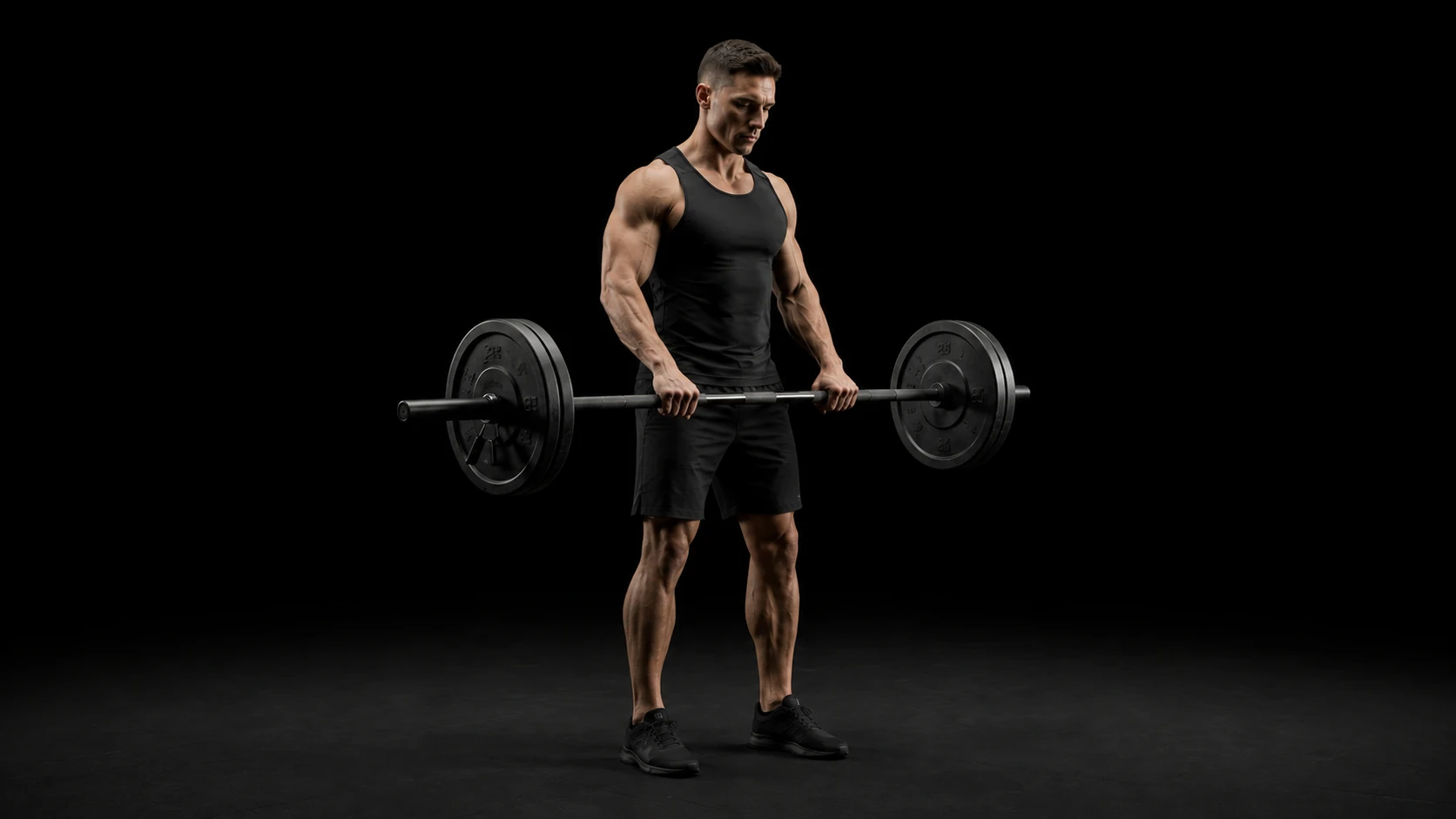
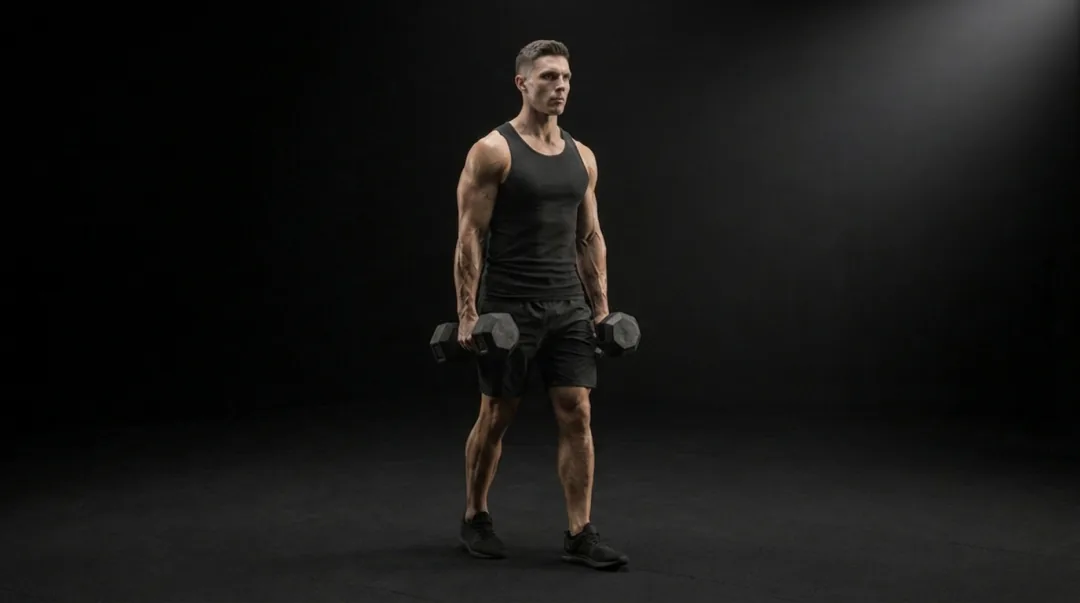
- Clear a straight walking lane. Hinge to the bells, grip hard, and stand tall the same way you would for a dumbbell deadlift.
- Pack the lats so the weights hang beside the thighs, not swinging into them. Ribs over pelvis, eyes forward.
- Walk with short, controlled steps. Heel to toe, no race-walking, no shrugging the bells toward the ears.
- Set the bells down with a hinge. Dropping them from lockout is loud, rude, and a missed last eccentric.
COMMON MISTAKES
- Shrugging the whole walk. Traps on is not the same as ears-to-shoulders. If you are shrugging, the load is too heavy or the walk is too long.
- Leaning back or letting the bells pull you into a fold. Stand between the weights. A behind-the-body lean is how carries turn into a low-back test.
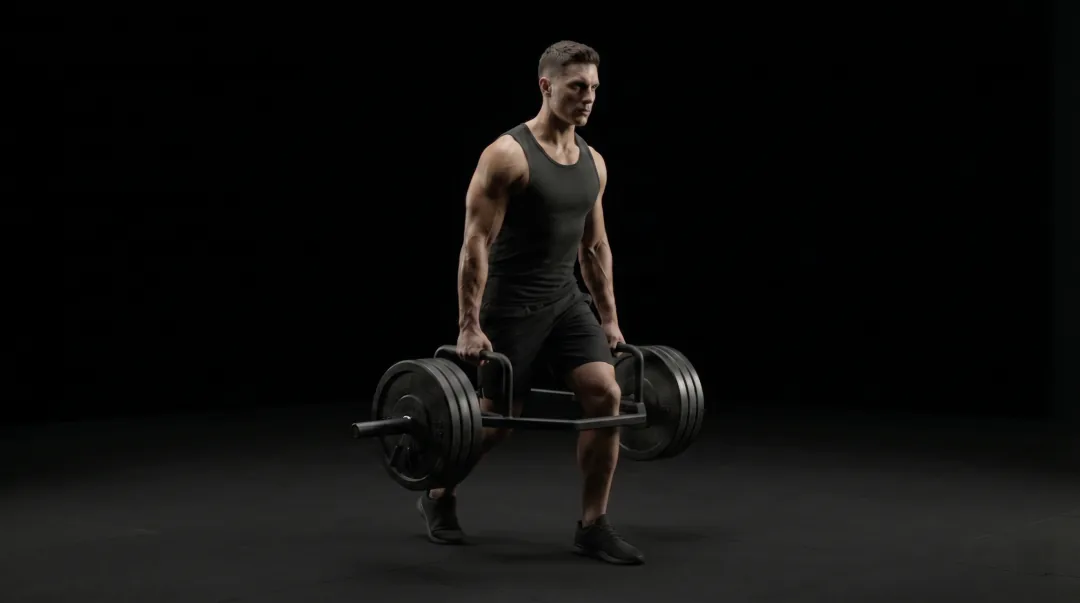
- Logging trap-bar farmers as dumbbell farmers. Hex-bar carries are a different slug and usually a different load. trap-bar-farmers-walk exists — use it.
- No distance, no time, just “3 sets”. A 10 m shuffle and a 40 m grind are not the same session. Pick meters or seconds, put it in the log, and keep the path length the same week to week.
VARIATIONS
- Trap bar farmer's walk — Heavier, more stable, different slug.
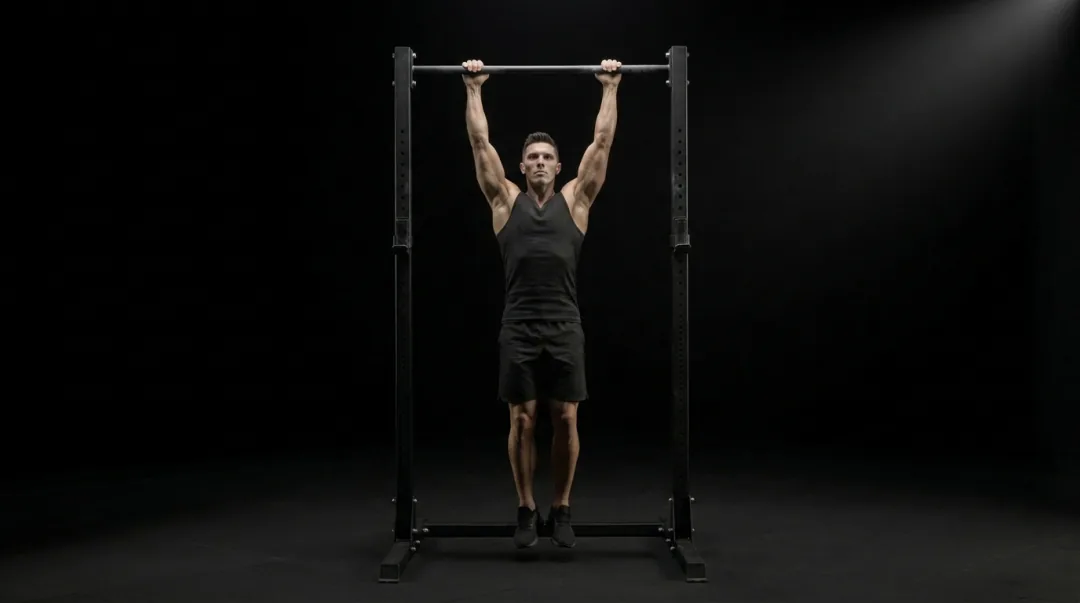
- Dead hang — Grip without the walk when space is gone.
- Dumbbell shrug — Direct upper traps if the carry is limited by grip first.
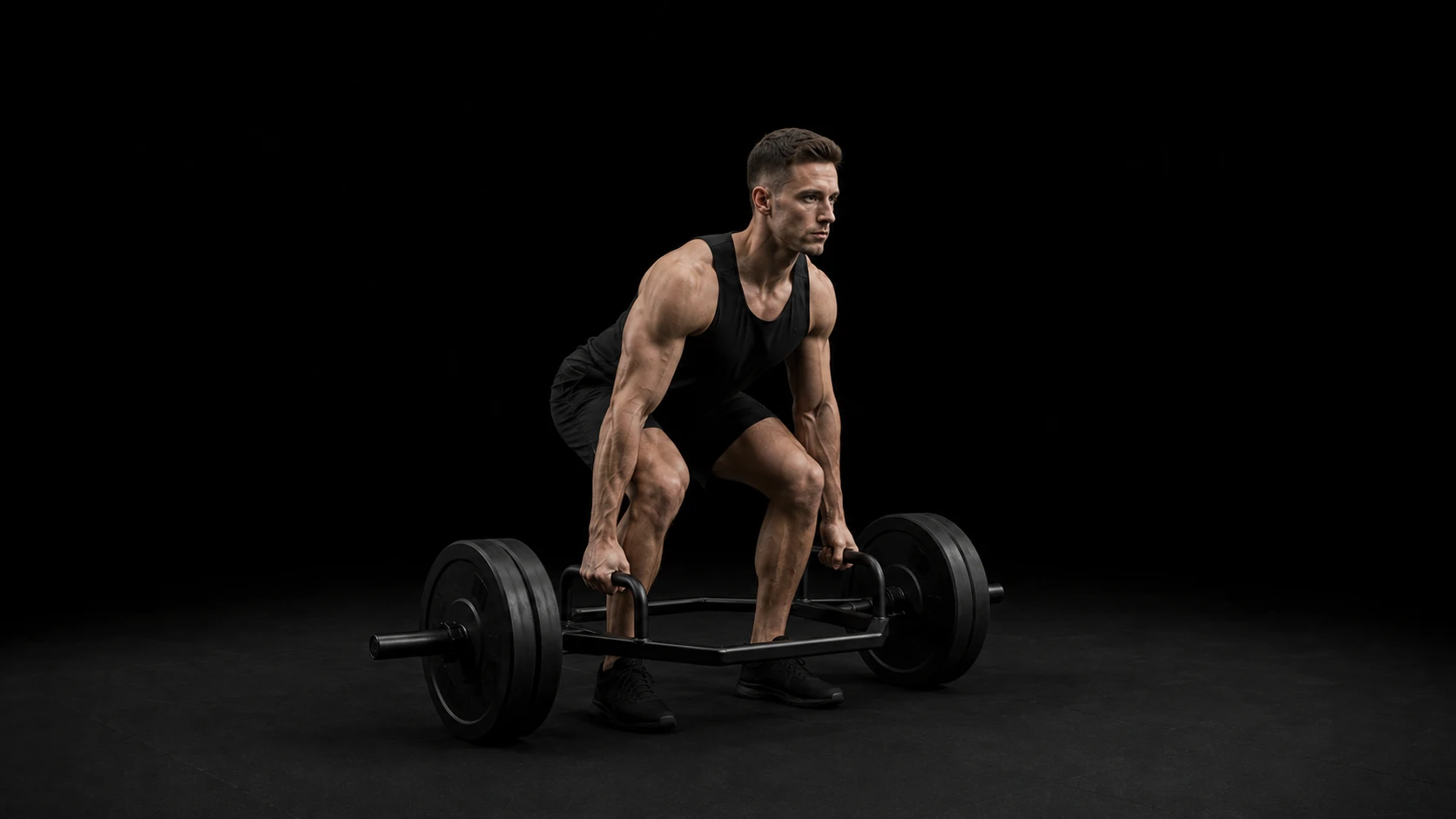
- Trap bar deadlift — The pick you already own, without the walk.
PROGRESSIONS
- Light bells, 20–30 m, posture you could hold in a photo.
- Add load or add distance — one variable per week.
- Longer trips or slower tempos once the shrug and the lean are gone.
- Trap-bar farmers when the dumbbells are no longer the limiter.
PROGRAMMING NOTES
Finisher or main grip work: 3–5 trips. Log the weight of one dumbbell, not the pair, and keep the path length honest. Put meters or seconds in the set note so a 10 m shuffle cannot masquerade as a 40 m grind. Rest enough that the next pick-up is still a hinge, not a round-back yank.
EQUIPMENT ALTERNATIVES
- Trap bar farmer's walk — Use when the gym has a hex bar and the dumbbells top out.
- Dead hang — No lane, no farmers. Grip still trains.
FREQUENTLY ASKED QUESTIONS
Either works if you stay consistent. Distance is cleaner when you have a marked lane; time is cleaner in a crowded gym. Do not switch units mid-block and call it a PR.