HOW TO DO STANDING DUMBBELL CALF RAISE
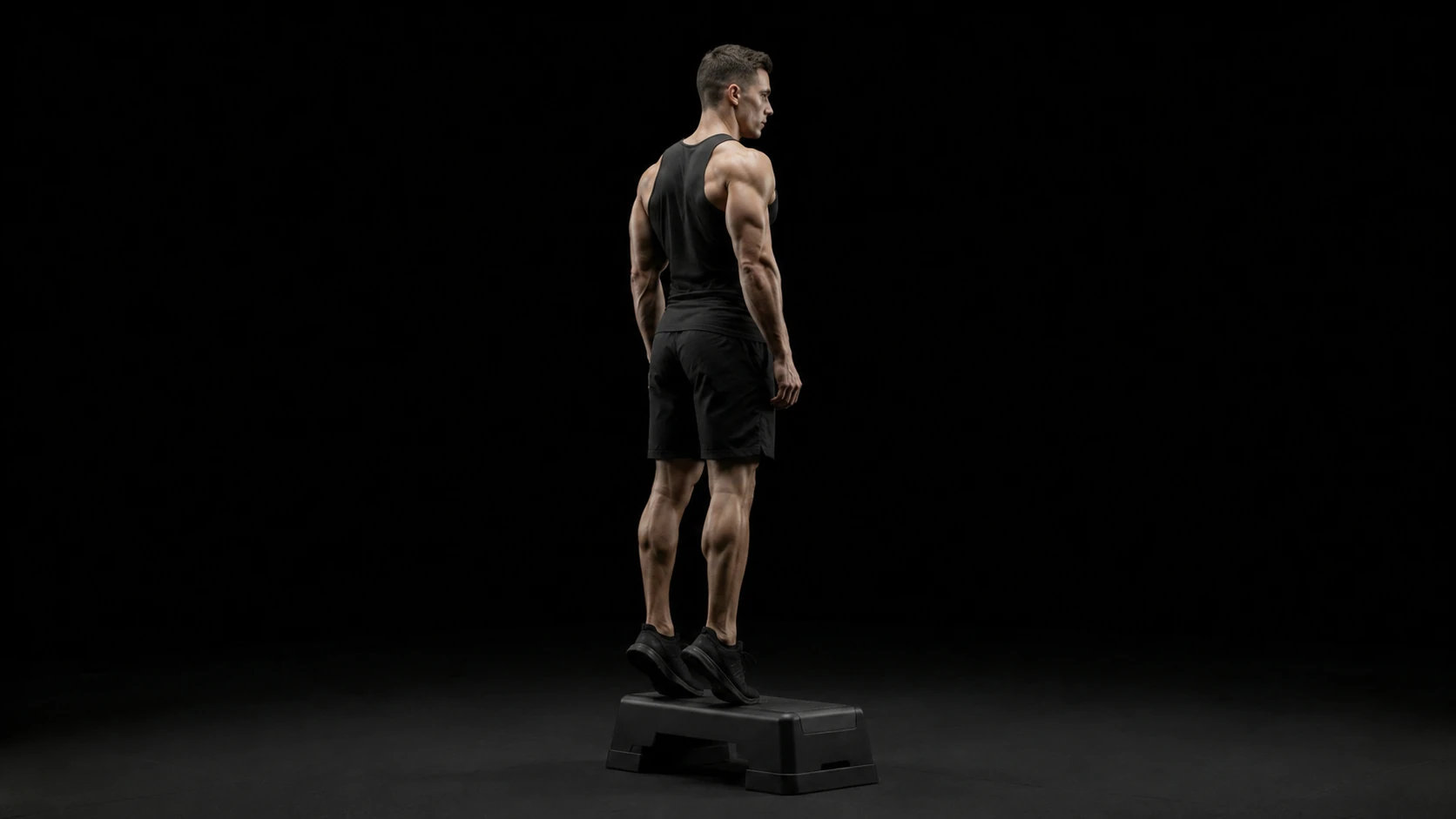
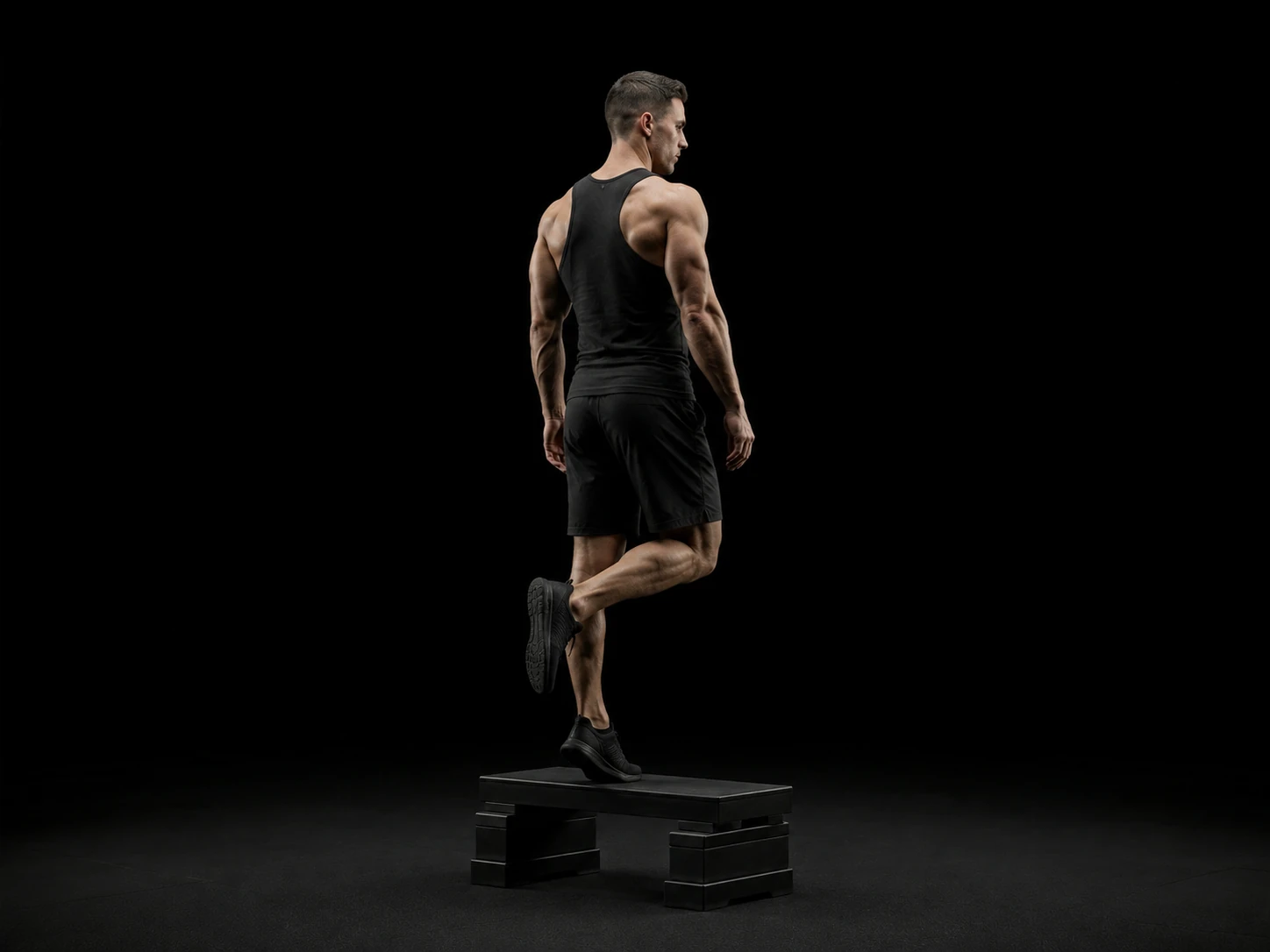
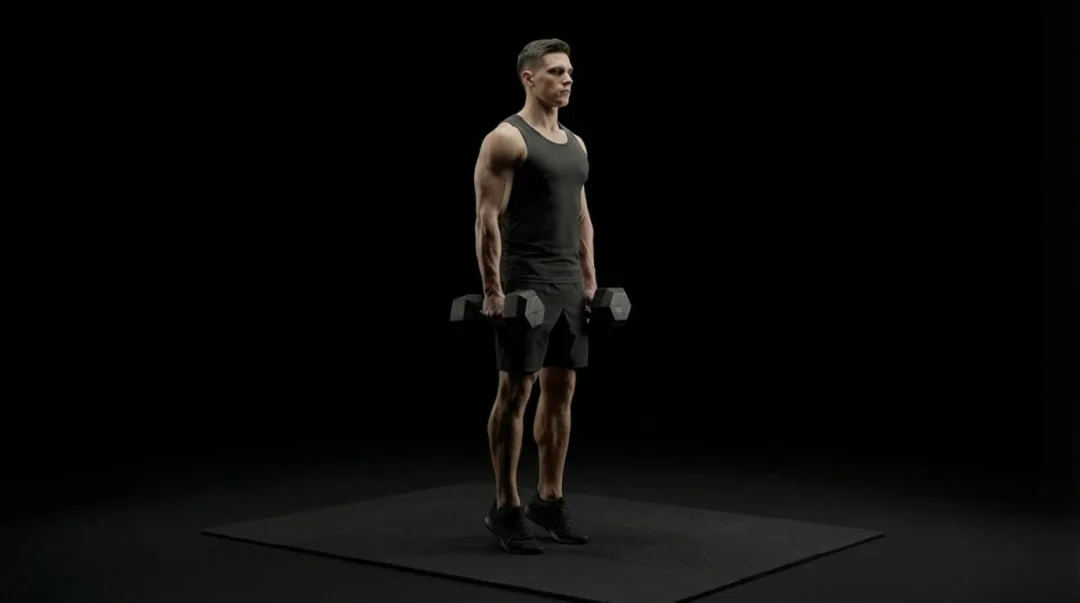
- Hold dumbbells at the sides. Balls of the feet on a step, heels hanging. Knees straight but not jammed into a hyperextension.
- Drop the heels into a stretch you can pause. If the step is too high to own, find a plate with an edge or a lower block.
- Press through the big-toe side of the foot to a hard lockout. Pause. Do not bounce the knees.
- Lower slowly. If the bells are swinging, the set is a hitch, not a calf raise.
- Single-leg with one dumbbell if the double-leg version is just a shuffle.
COMMON MISTAKES
- Bending the knees into a squat-calf hybrid. Once the knees flex, you stole the set from the gastrocnemius. Soften them a hair, then keep that angle.
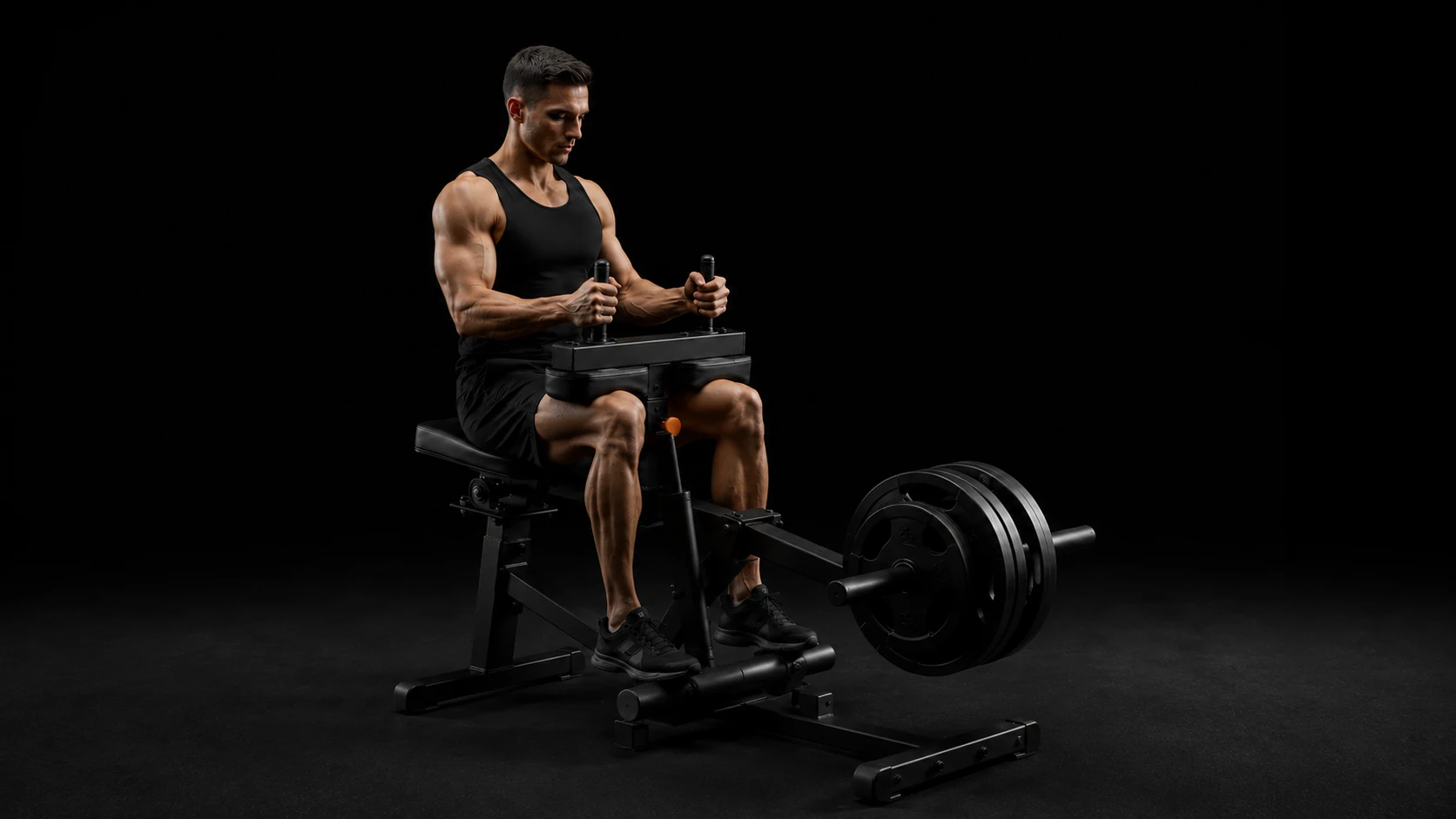
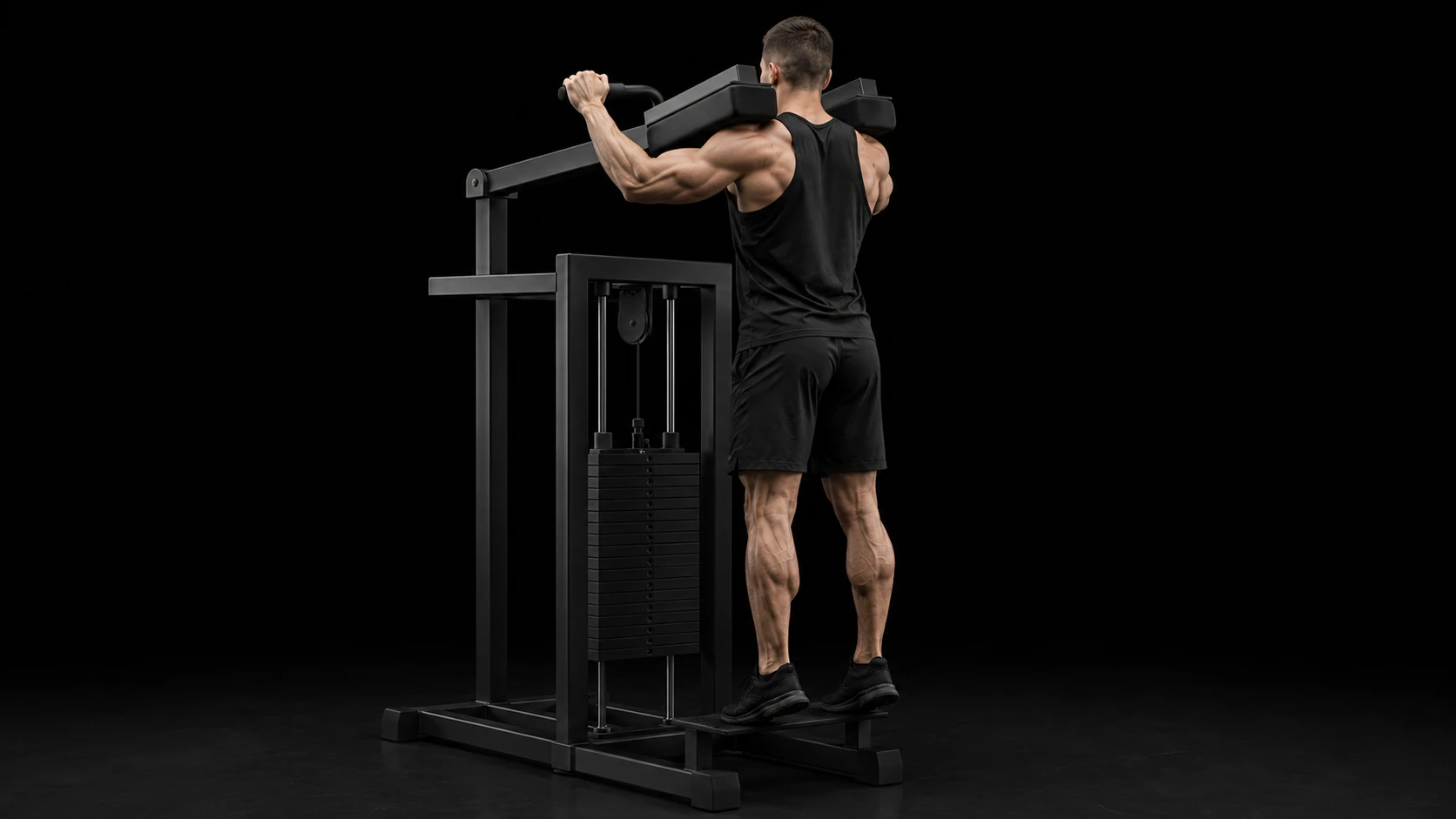
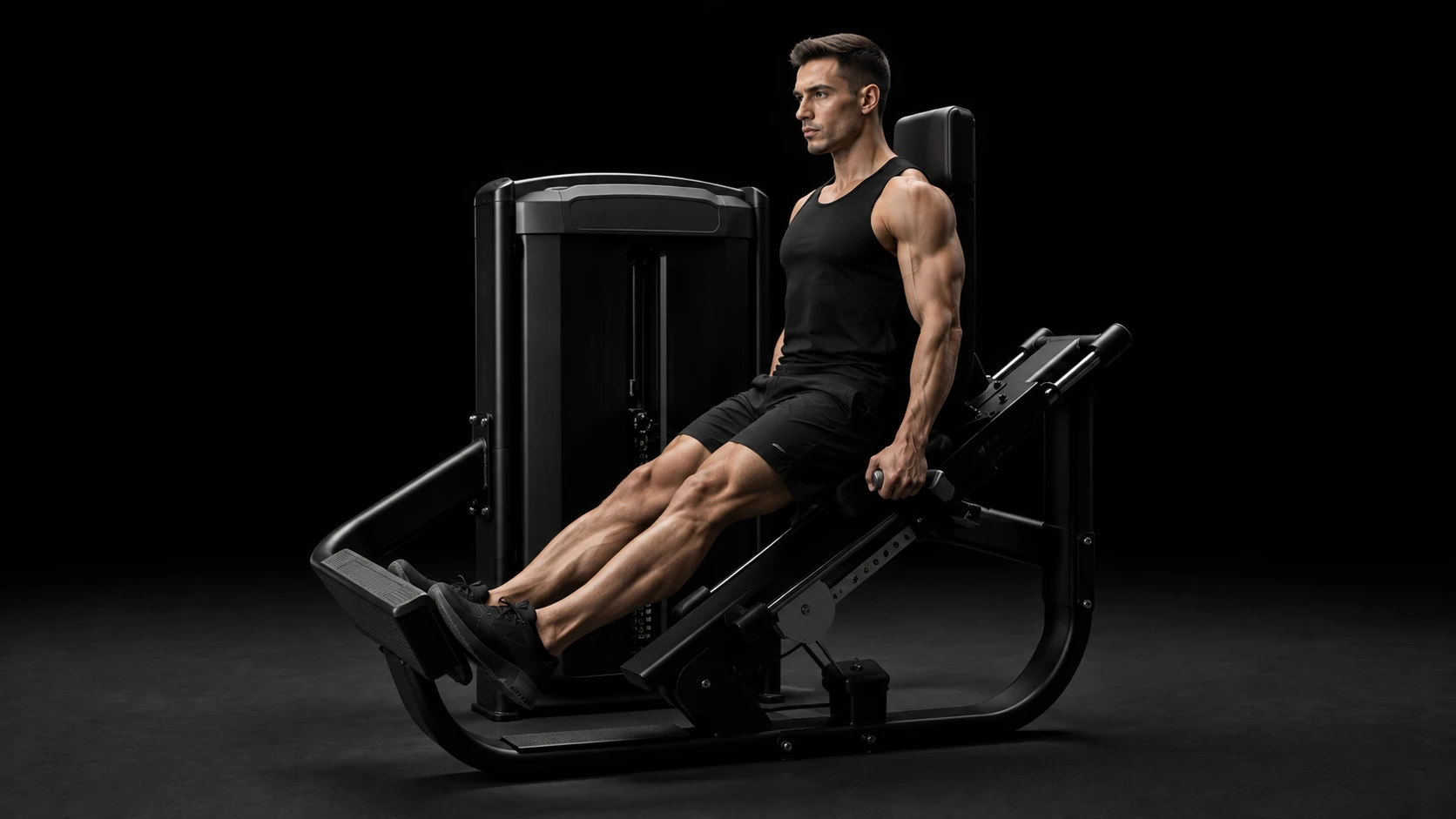
- Logging seated or machine standing here. Bent-knee soleus work is seated-calf-raise. A shoulder-pad machine is machine-standing-calf-raise. Dumbbells on a step stay on this slug.
- Partial pumps with no stretch. A two-inch tick on the floor is not a calf raise. Hang the heel, lock the ankle out, or you are logging noise.
- Rolling onto the outside of the foot. Drive the big-toe mound. A rolled ankle at lockout is a fake squeeze and a real sprain waiting.
VARIATIONS
- Machine standing calf raise — Same straight-knee bias, easier to load, different PR.
- Seated calf raise — Bent-knee soleus work. Pair it. Do not replace this and call it the same thing.
- Bodyweight calf raise — Unload it. Keep the stretch on a step.
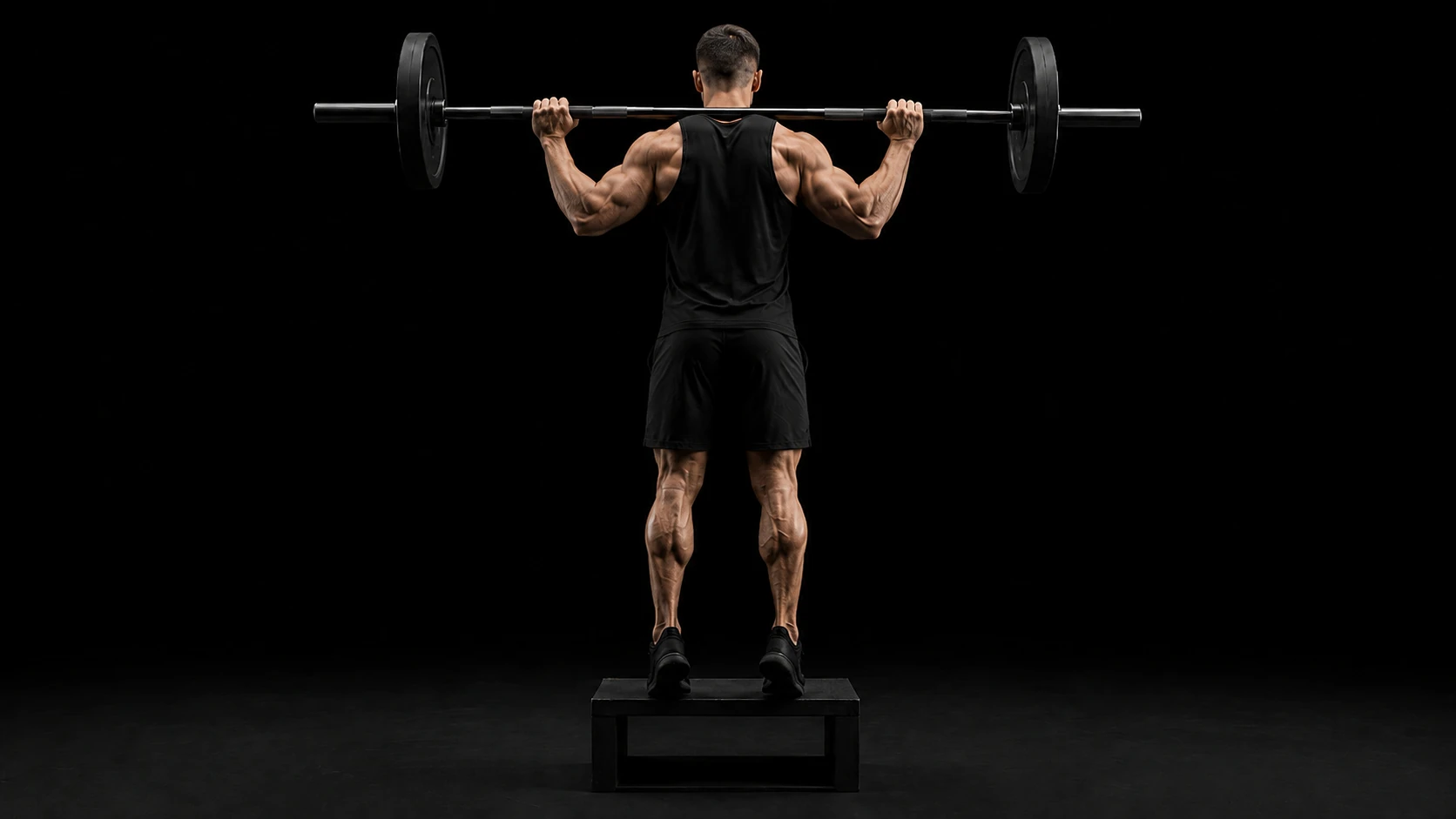
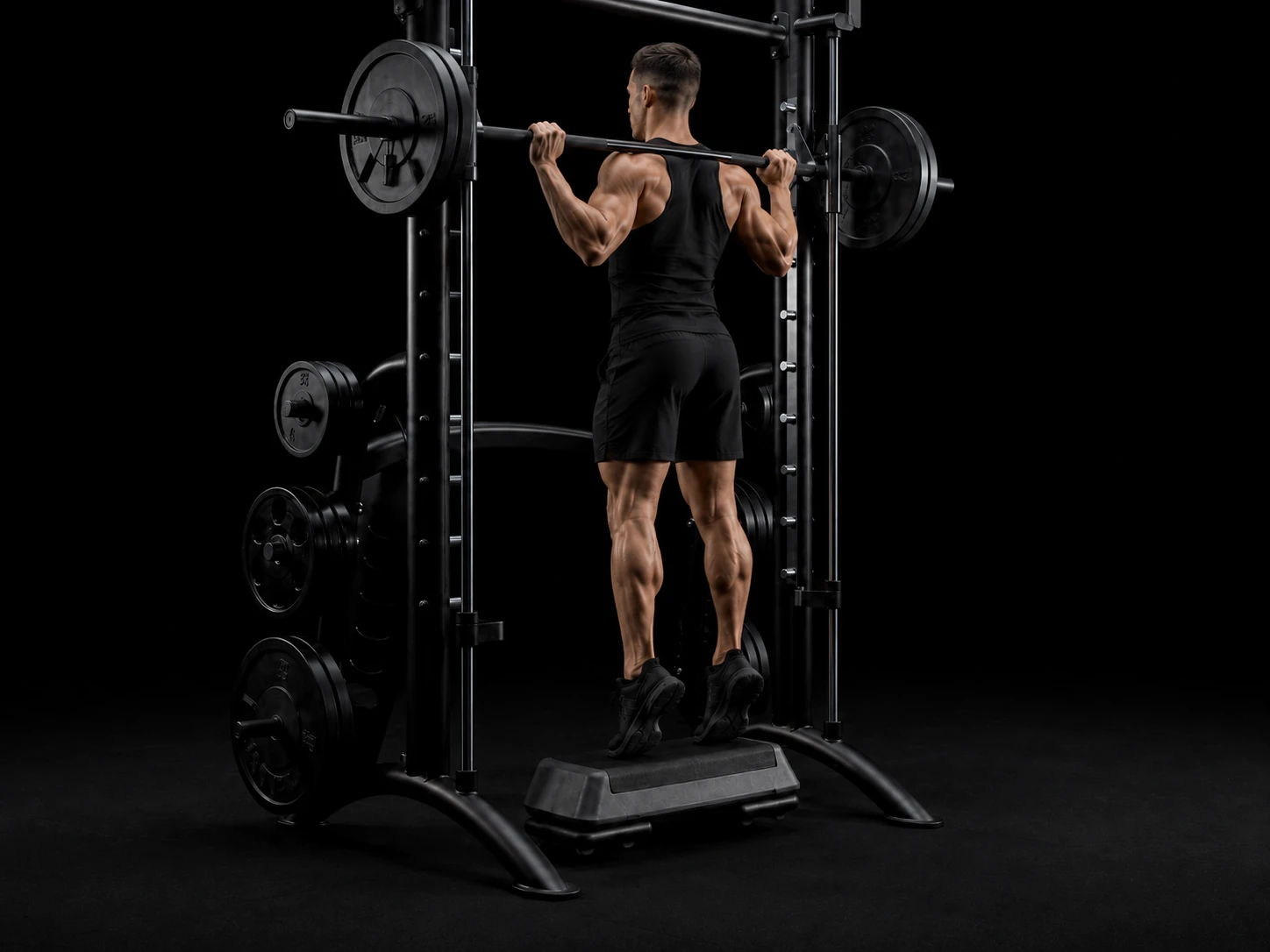
- Barbell calf raise — Bar on the back when the dumbbells are not the limiter.
PROGRESSIONS
- Bodyweight on a step with a pause at both ends.
- Light dumbbells, double-leg, full stretch every rep.
- Add load when the stretch never shortens across the set.
- Single-leg standing if one side always cheats the lockout. Log that side.
PROGRAMMING NOTES
3–4 sets of 8–15 after the squat or hinge. Straight-knee work hits more gastrocnemius than the seated raise. Log the pair of dumbbells, not “calves.” If you jump on the standing machine next week, that is a second lift. Do not let a dumbbell PR leak onto the seated or machine chart.
EQUIPMENT ALTERNATIVES
- Machine standing calf raise — When you want a pad instead of bells and a step.
- Seated calf raise — Keep calf volume when you need bent knees.
- Bodyweight calf raise — Travel. Same stretch, no load.
FREQUENTLY ASKED QUESTIONS
A step is the lift. From the floor you have almost no stretch, which is most of the point. If you only have a gym floor, log fewer honest reps on a plate edge rather than a huge stack of bounced floor ticks. Note “floor” if you must, and do not compare it to a step week.