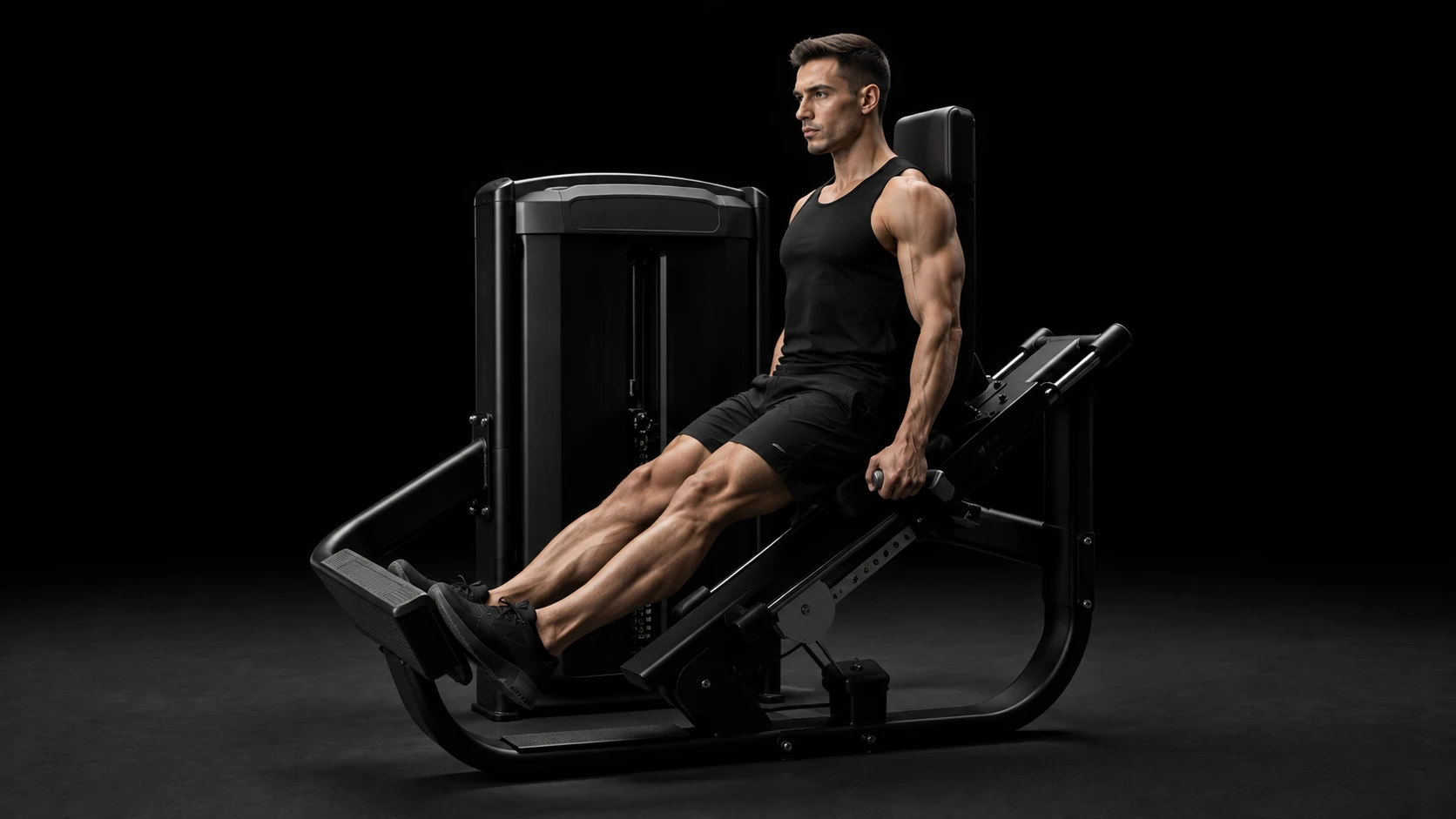
HOW TO DO SEATED CALF RAISE
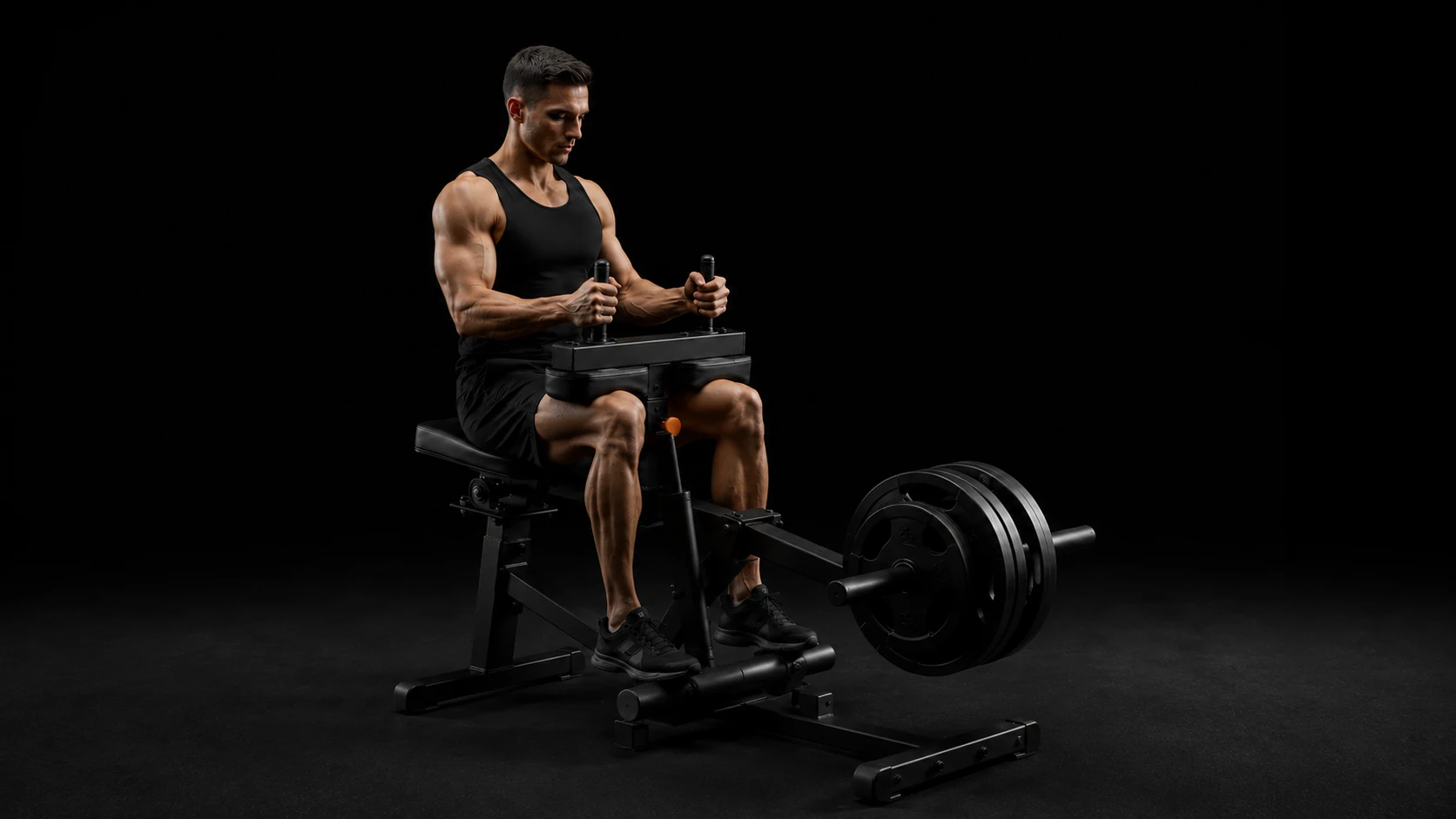
- Pad on the lower quads, just above the knee — not on the kneecap. Balls of the feet on the platform, heels free.
- Unrack and drop the heels into a stretch you can hold. Knees stay bent.
- Press through the big-toe side of the foot to a hard lockout. Pause.
- Lower slowly. If the stack is bouncing, the load is theater.
COMMON MISTAKES
- Pad on the kneecap. That is a joint, not a loading point. Slide the pad onto the lower quads so the force goes through muscle.
- Bouncing out of the stretch. The seated raise is slow on purpose. Pause in the hole or drop the pin.
- Partial pumps with a huge stack. A two-inch tick is not a calf raise. Stretch and lockout, or you are logging noise.
- Logging it as a standing calf raise. Bent knees bias the soleus. Straight-knee work is a different slug. Keep them split in LIFTAG.
VARIATIONS
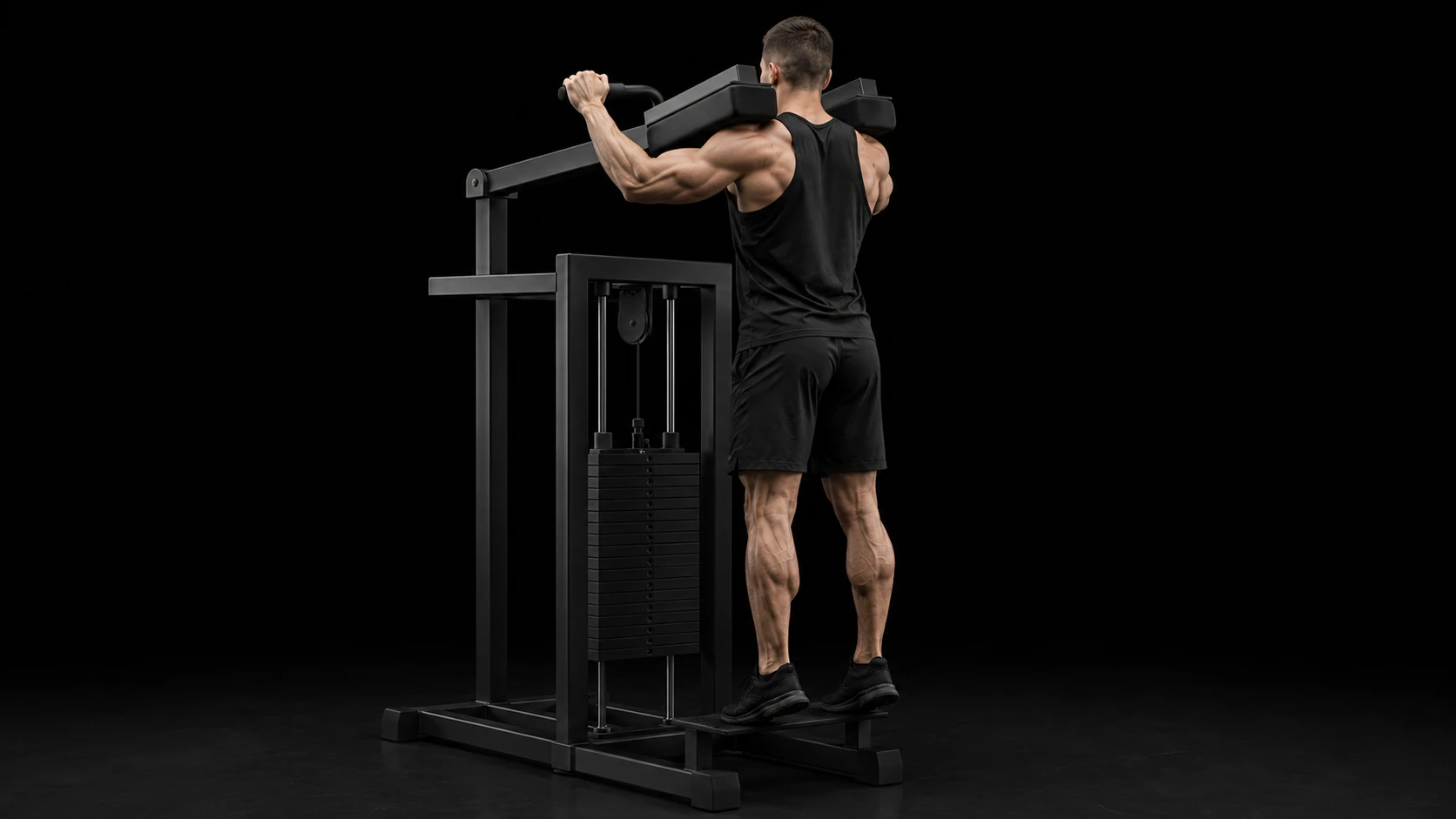
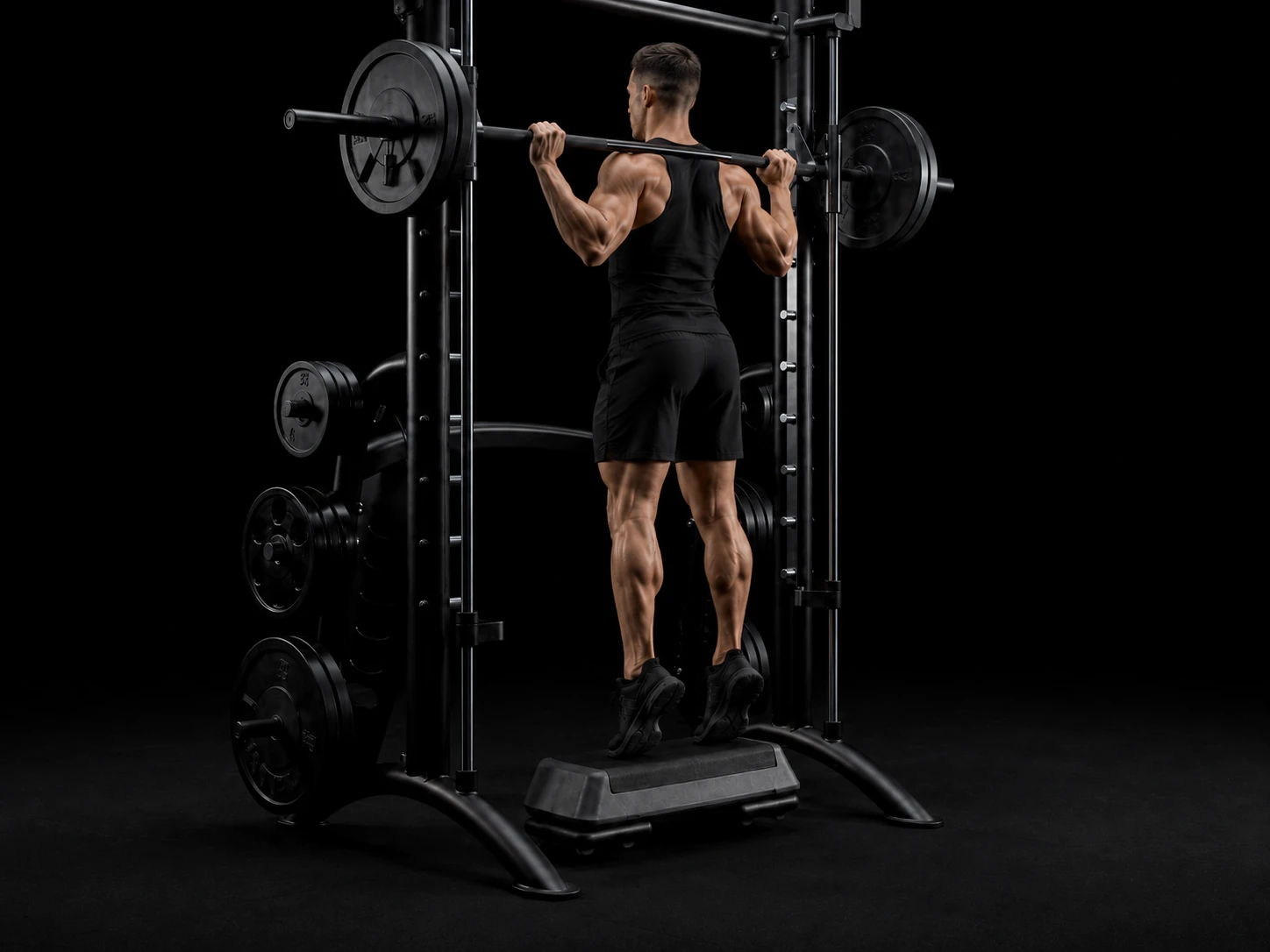
- Machine standing calf raise — Straight-knee, more gastrocnemius, the other half of calf day.
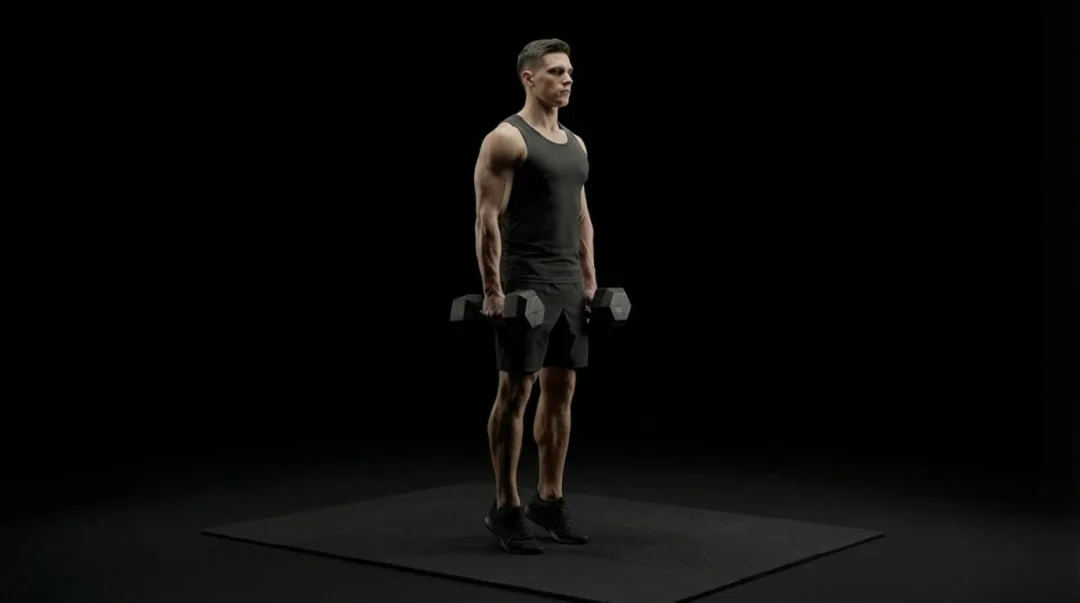
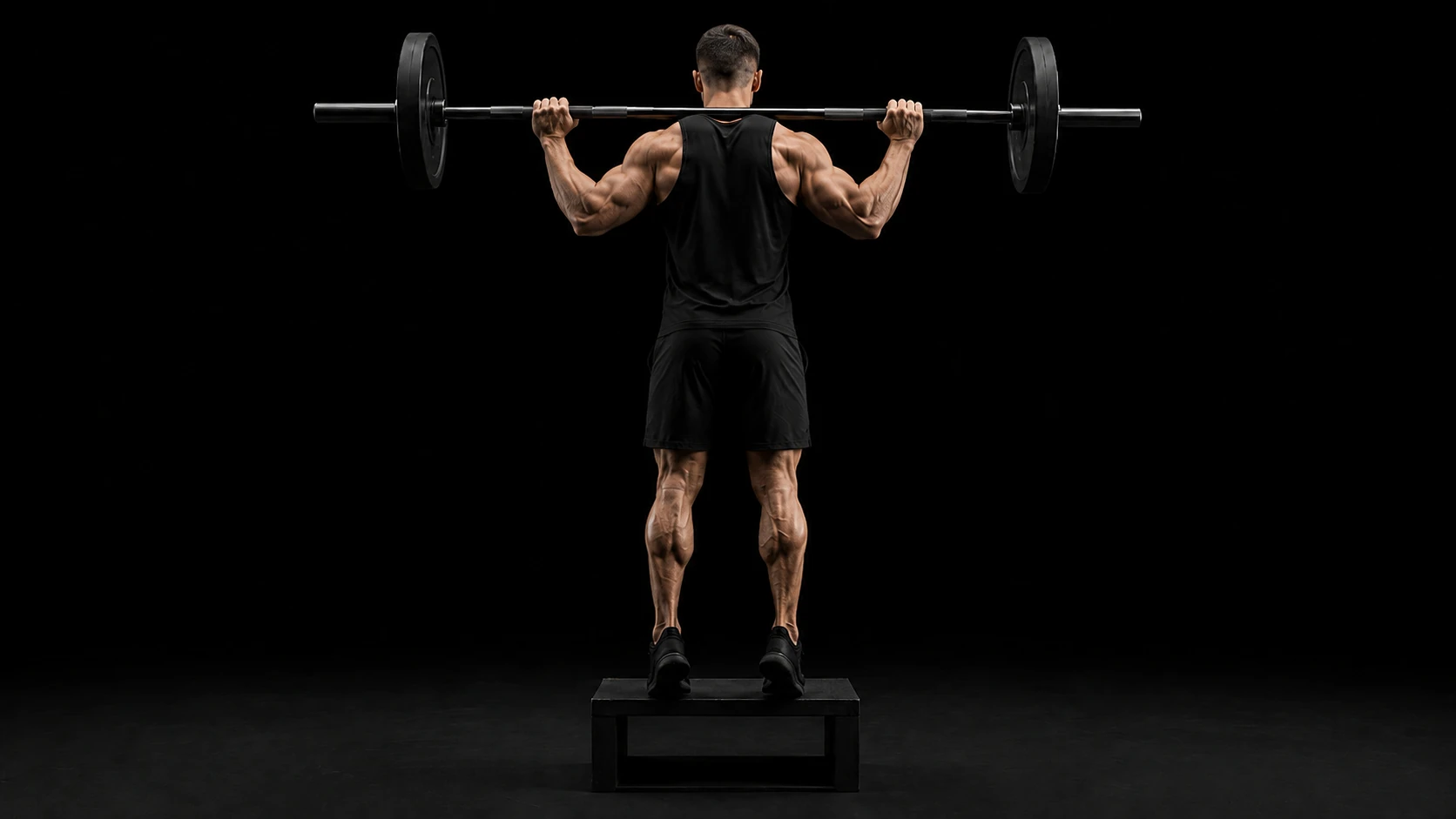
- Standing dumbbell calf raise — No seated machine. Still a calf raise — log it on its own slug.
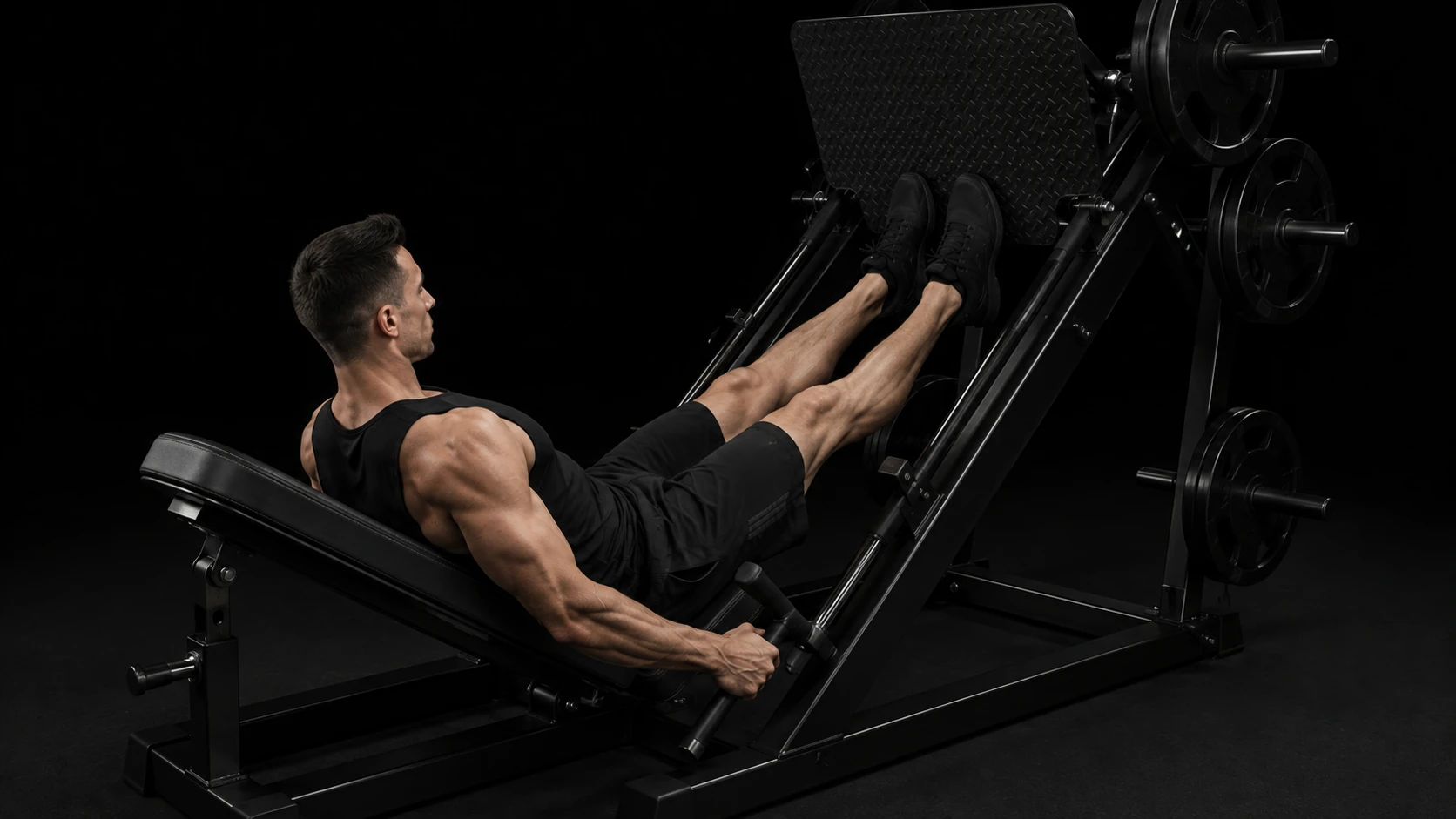
- Leg press calf raises — Same ankle action on a sled when the seated unit is taken.
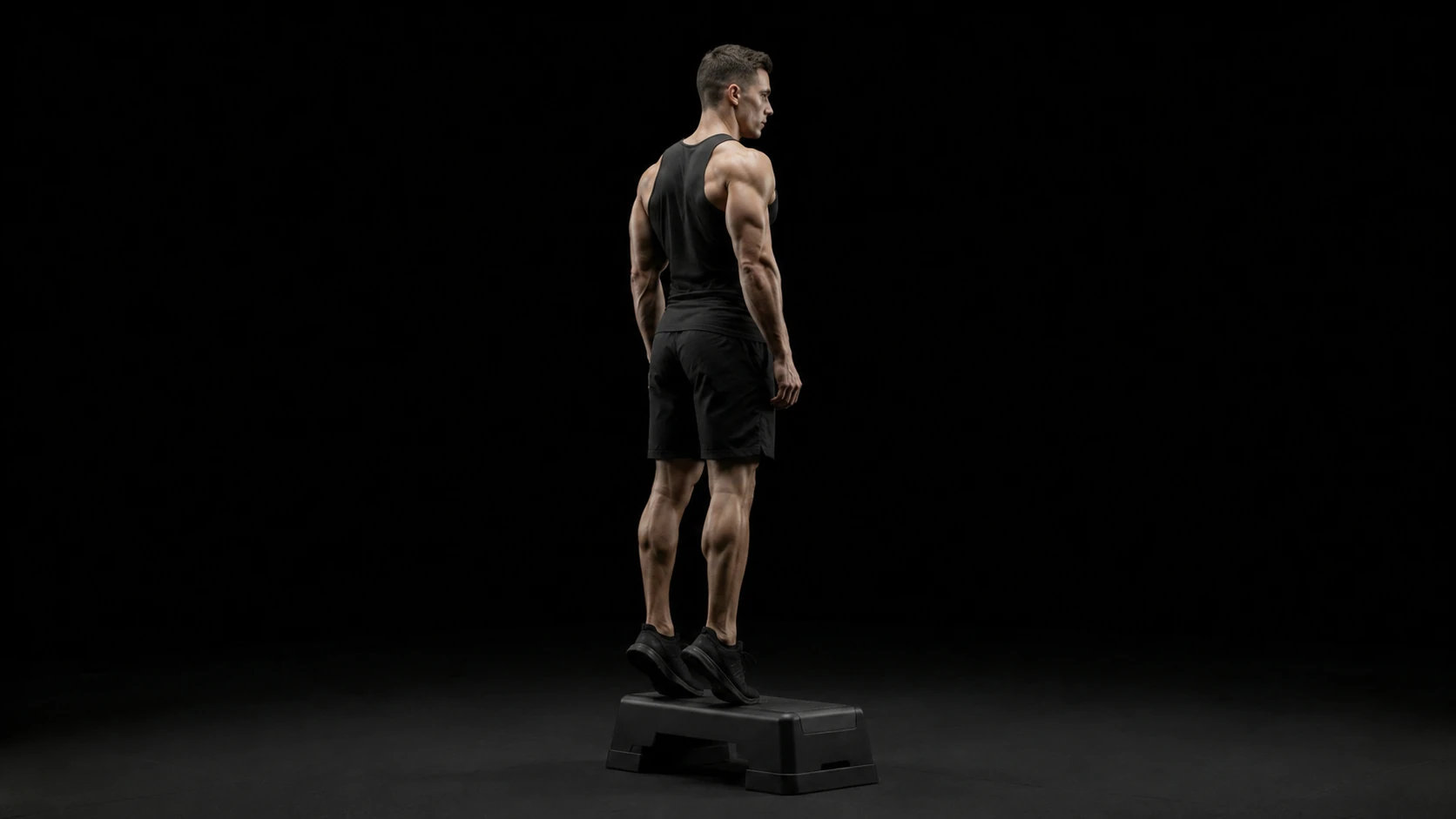
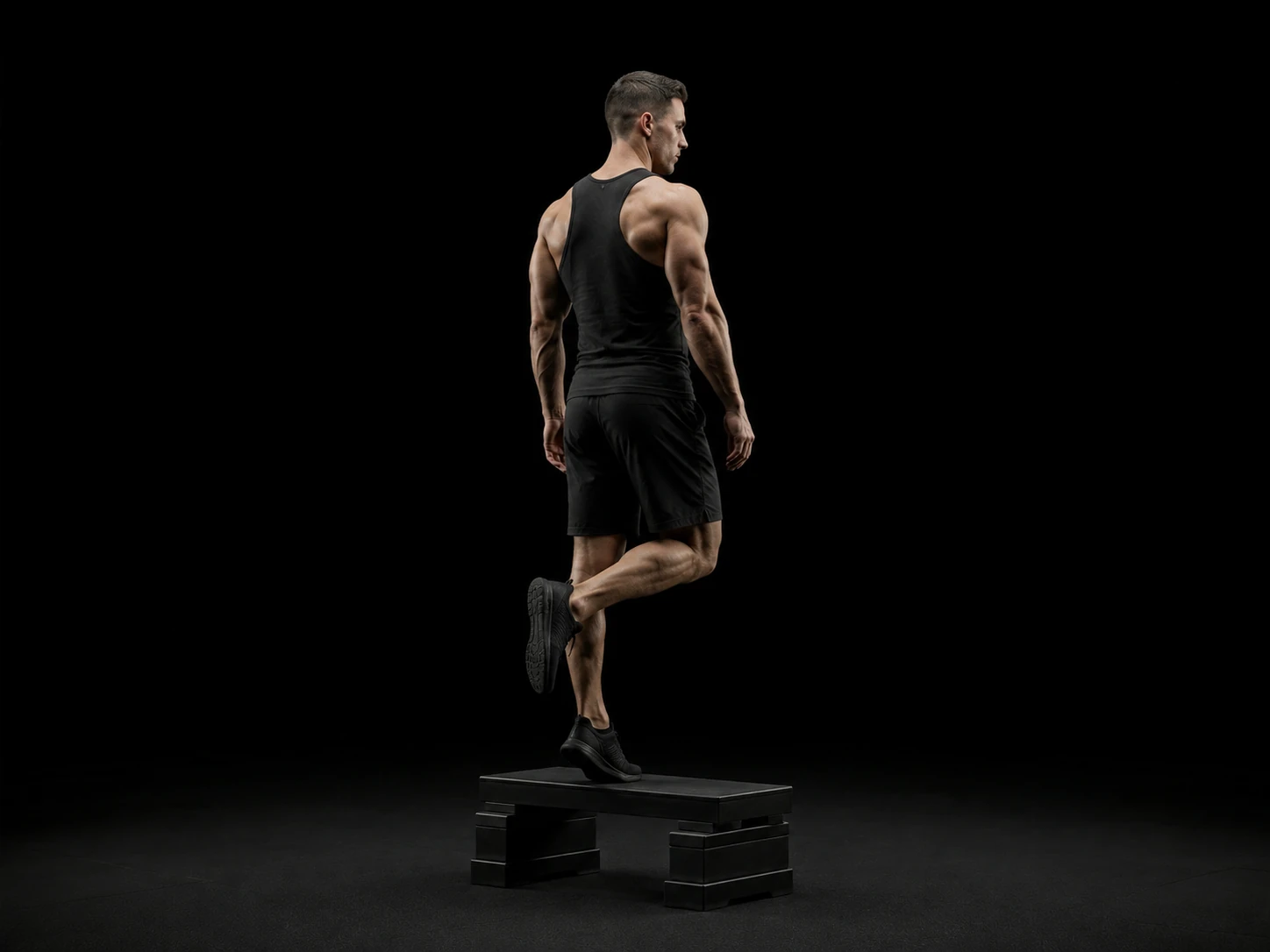
- Bodyweight calf raise — Travel and high-rep work with a full stretch on a step.
PROGRESSIONS
- Full-range light seated raises with a pause at the bottom.
- Pause at the top without rolling onto the outside of the foot.
- Single-leg seated when one side always cheats the stretch.
- Add load only when every work rep still has a stretch and a lockout.
PROGRAMMING NOTES
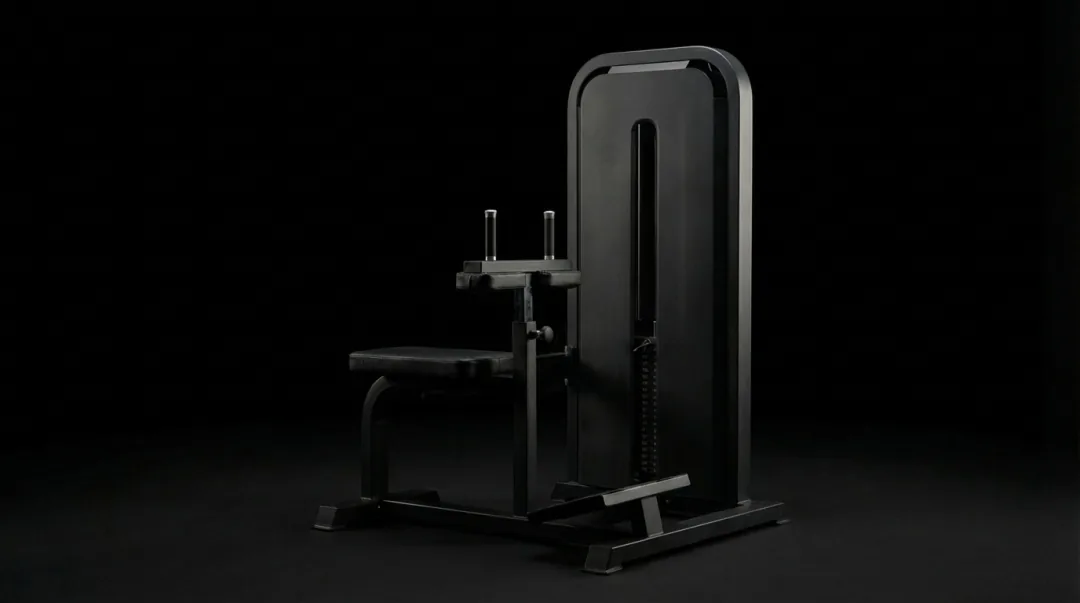
3–4 sets of 8–15 after the squat or hinge. Calves recover faster than your ego thinks, but bounced half-reps still do not count. If you also do standing raises, that is a second lift — not a note on this one.
FREQUENTLY ASKED QUESTIONS
Open Seated Calf Raise in LIFTAG, or tap the NFC tag / scan the QR code on the machine at a partner gym. Log each working set as weight × reps. The rest timer starts after you save the set, and PRs plus estimated 1RM update automatically.