HOW TO DO SINGLE-ARM DUMBBELL ROW
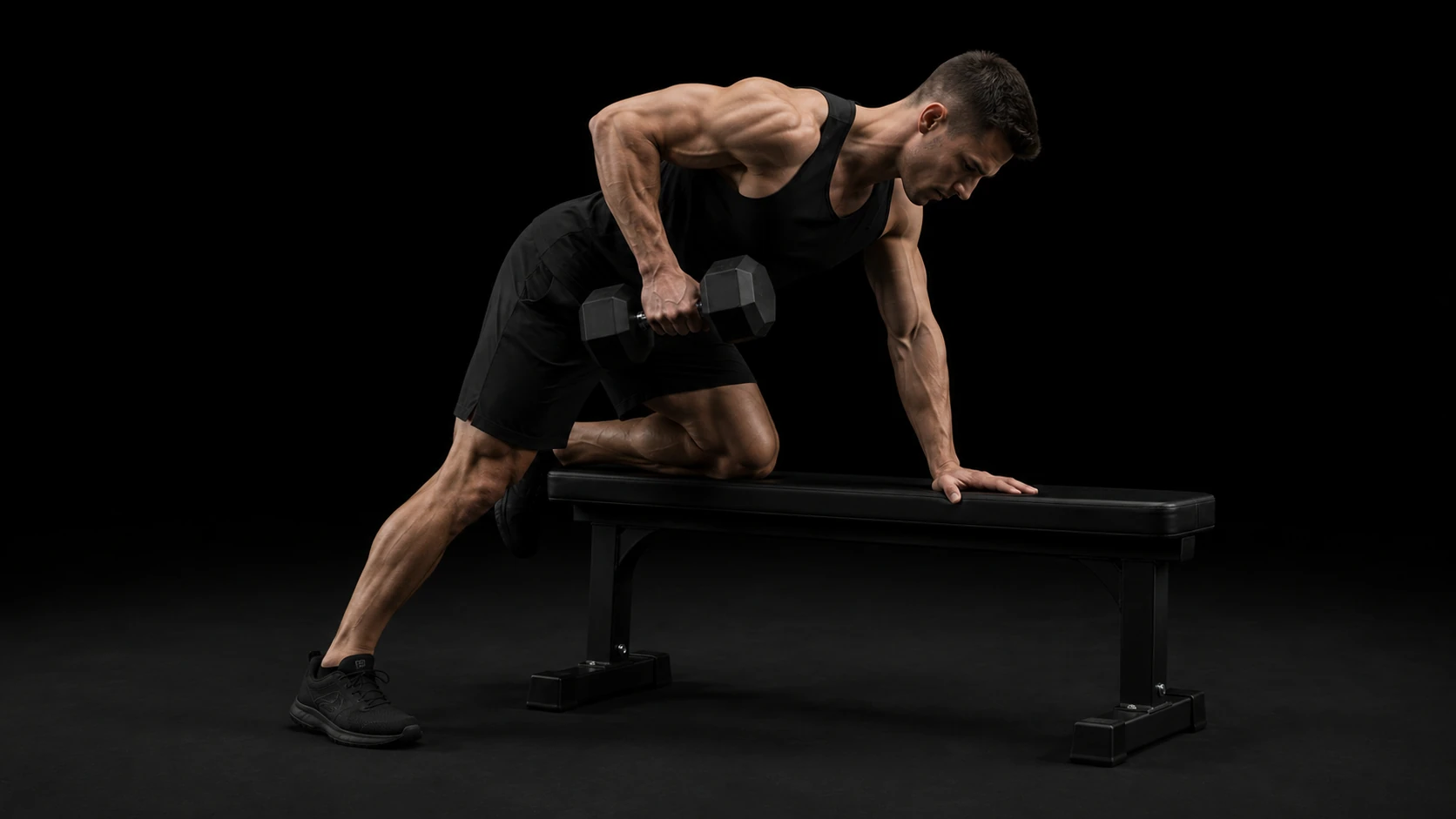
- One hand and the same-side knee on a bench, or a split stance with the free hand on a rack. Let the dumbbell hang under the working shoulder.
- Square the hips and ribs. Neck long. The support is there so you can row, not so you can corkscrew.
- Pull the elbow toward the hip or lower ribs. Stop when the upper arm is in line with the torso — extra height is usually a shrug.
- Lower slowly and let the shoulder blade reach forward. That stretch is the next rep’s start.
- Match reps both sides. If one side is two reps short, that side sets the load.
COMMON MISTAKES
- Twisting the torso open. A little rotation is a different variation. On this slug, keep the belt buckle facing the bench.
- Shrugging the dumbbell to the armpit. Elbow to hip, not ear. If the trap takes over, pause at the top with the shoulder down.
- Starting with the bell already at the ribs. If you skip the hang, you skipped the lat. Use a bench high enough that the bell can hang clear of the floor.
- Logging only the strong side. Both arms are the set. If you do 10 and 7, log 7 or log them as separate sets with a side note.
VARIATIONS
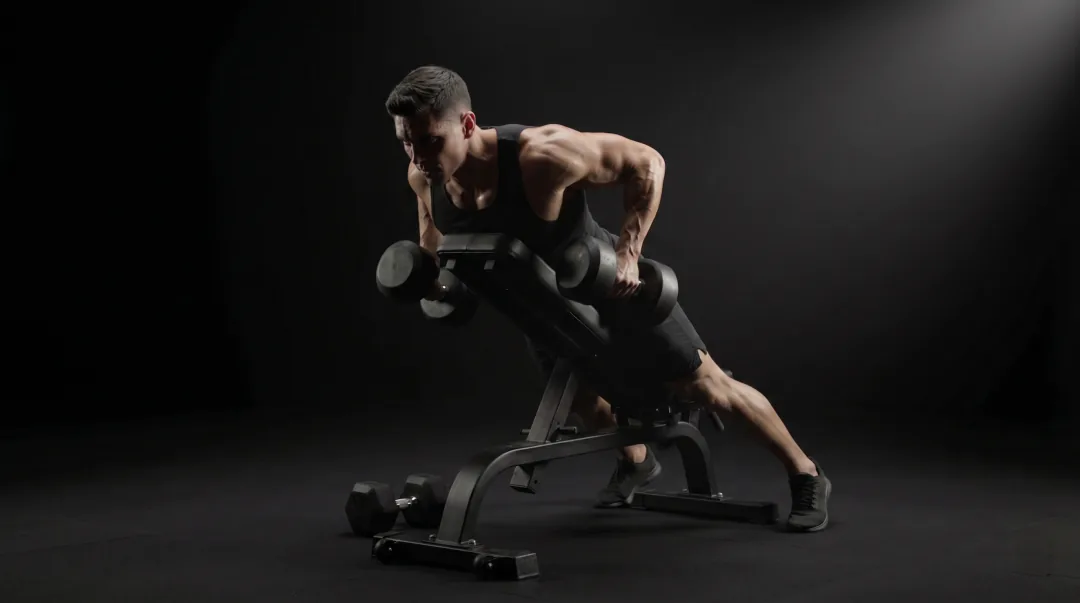
- Incline dumbbell row — Chest on an incline bench, both arms, no twist available.
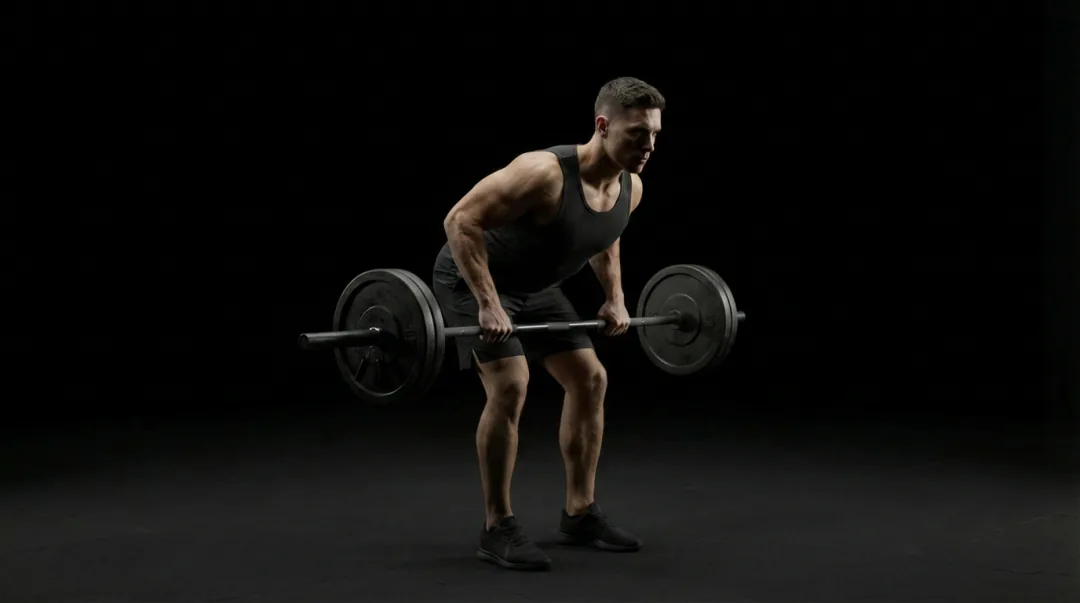
- Barbell bent-over row — Bilateral, more load, more low-back demand.
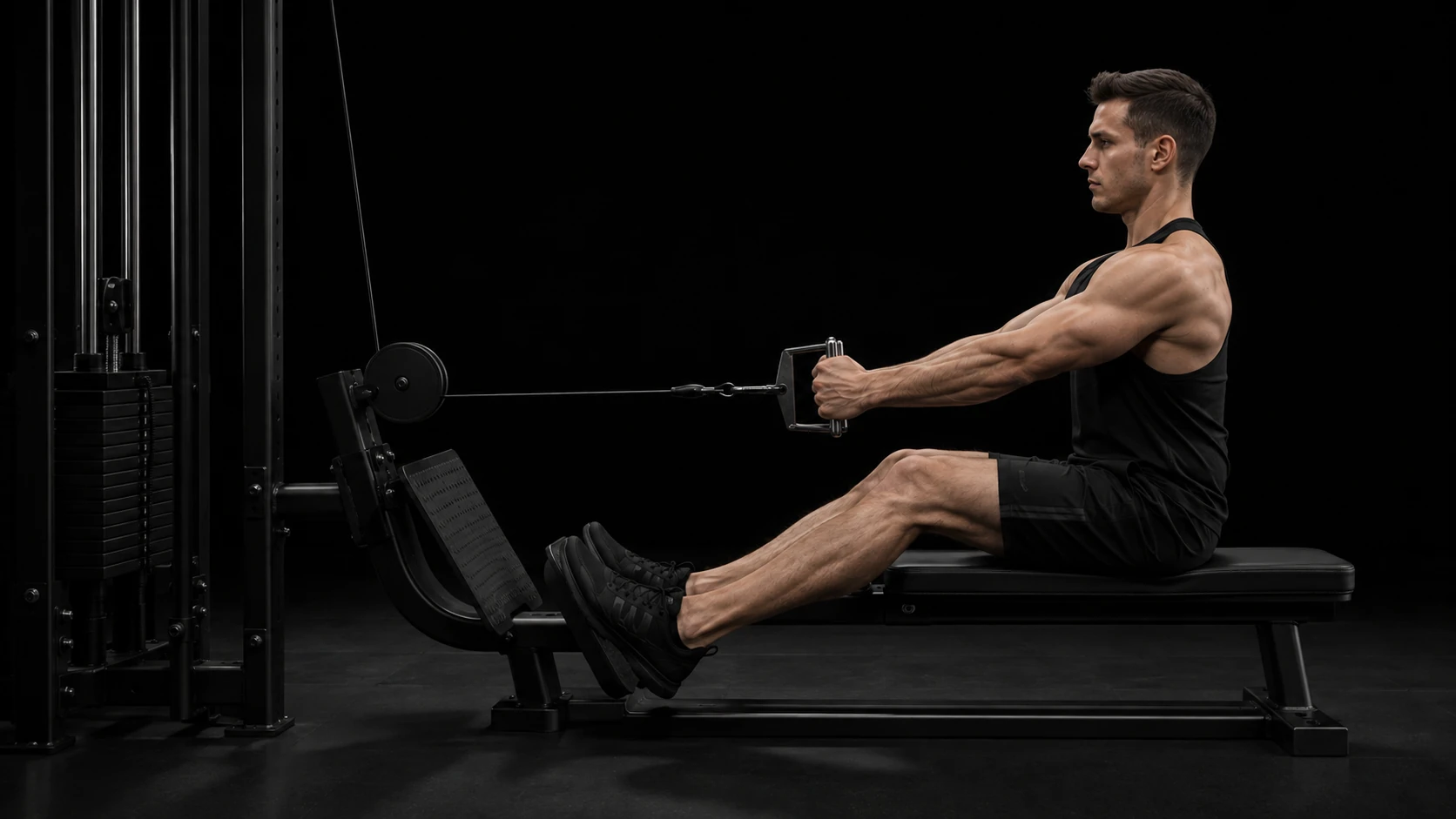
- Seated cable row — Machine tension when you want even sides without a bench.
- Renegade row — Plank version. Much less load, much more anti-rotation.
PROGRESSIONS
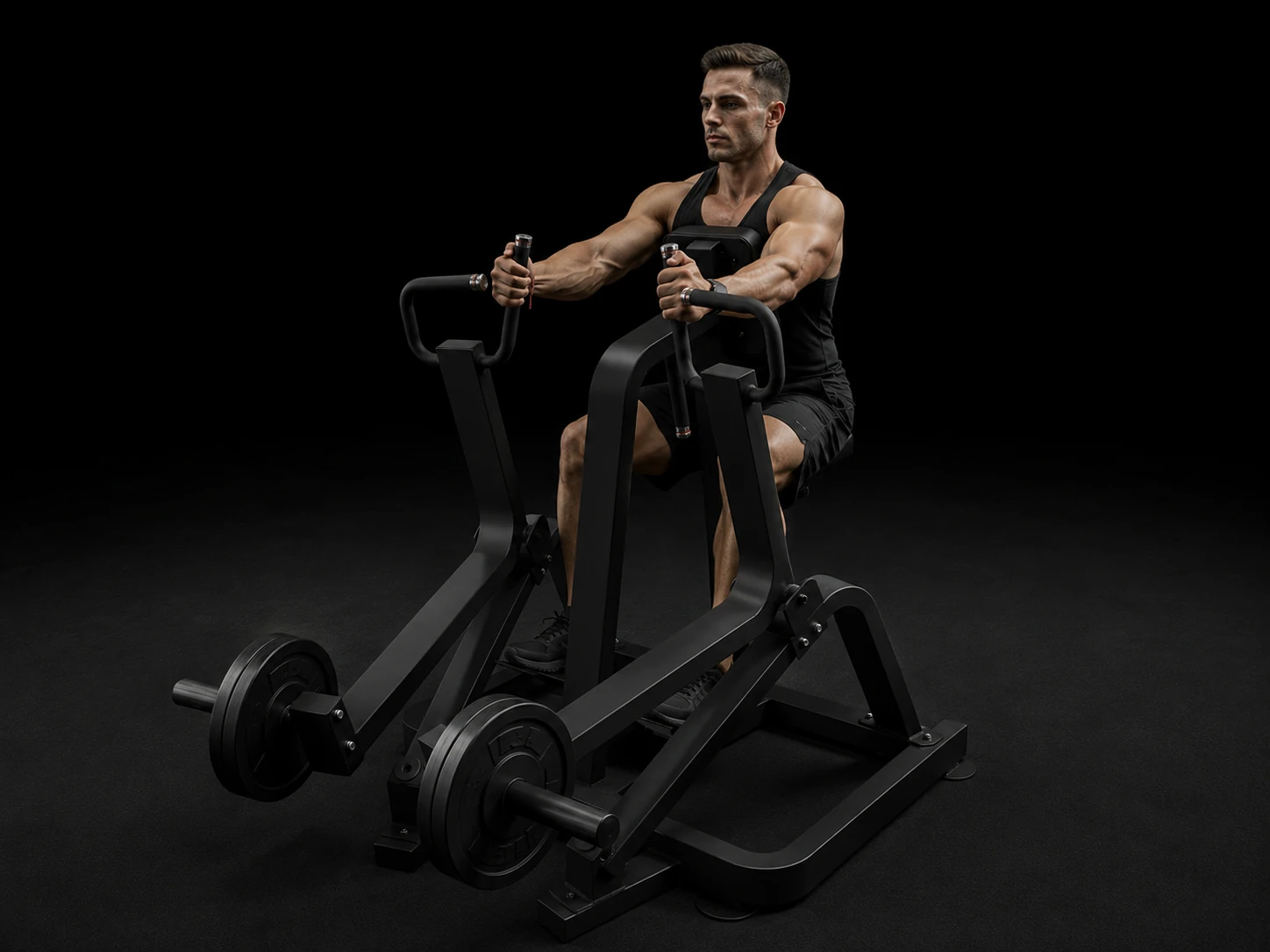
- Inverted row or machine row until a one-arm hinge feels obvious.
- Light dumbbell, full hang, no twist, three-second lower.
- Working sets of 8–12. The weaker side chooses the dumbbell.
- Chest-supported incline rows if the low back is the limiter, not the lat.
PROGRAMMING NOTES
Accessory row that still loads: 3–4 sets of 8–12 after a main pull. Do not pair it with a heavy barbell row and a heavy pulldown on the same day unless recovery is actually there. Log the dumbbell weight — “heavy DB” is not a progression.
FREQUENTLY ASKED QUESTIONS
Open Single-Arm Dumbbell Row in LIFTAG, or tap the NFC tag / scan the QR code on the machine at a partner gym. Log each working set as weight × reps. The rest timer starts after you save the set, and PRs plus estimated 1RM update automatically.