HOW TO DO BACK EXTENSION (HYPEREXTENSION)
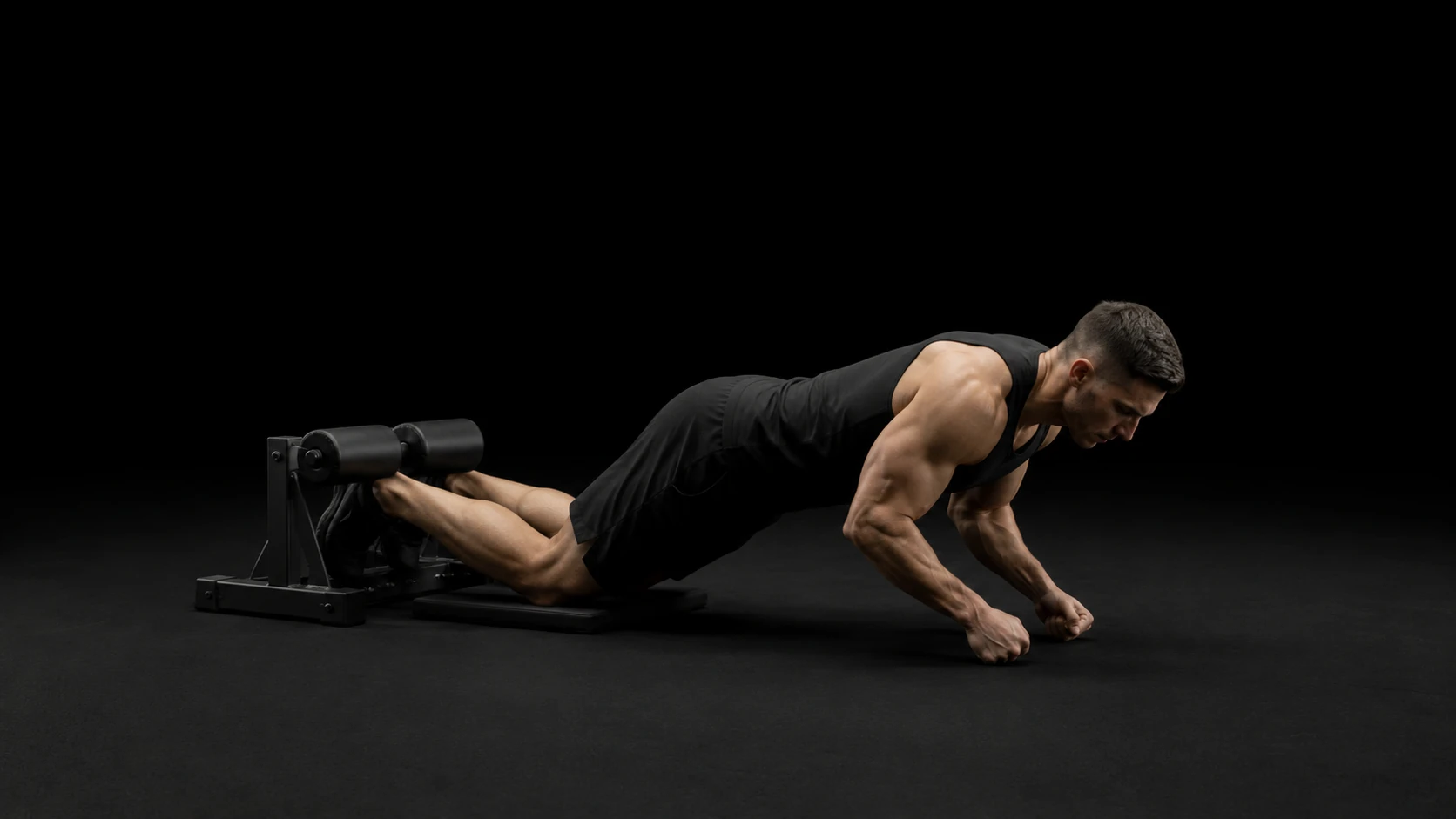
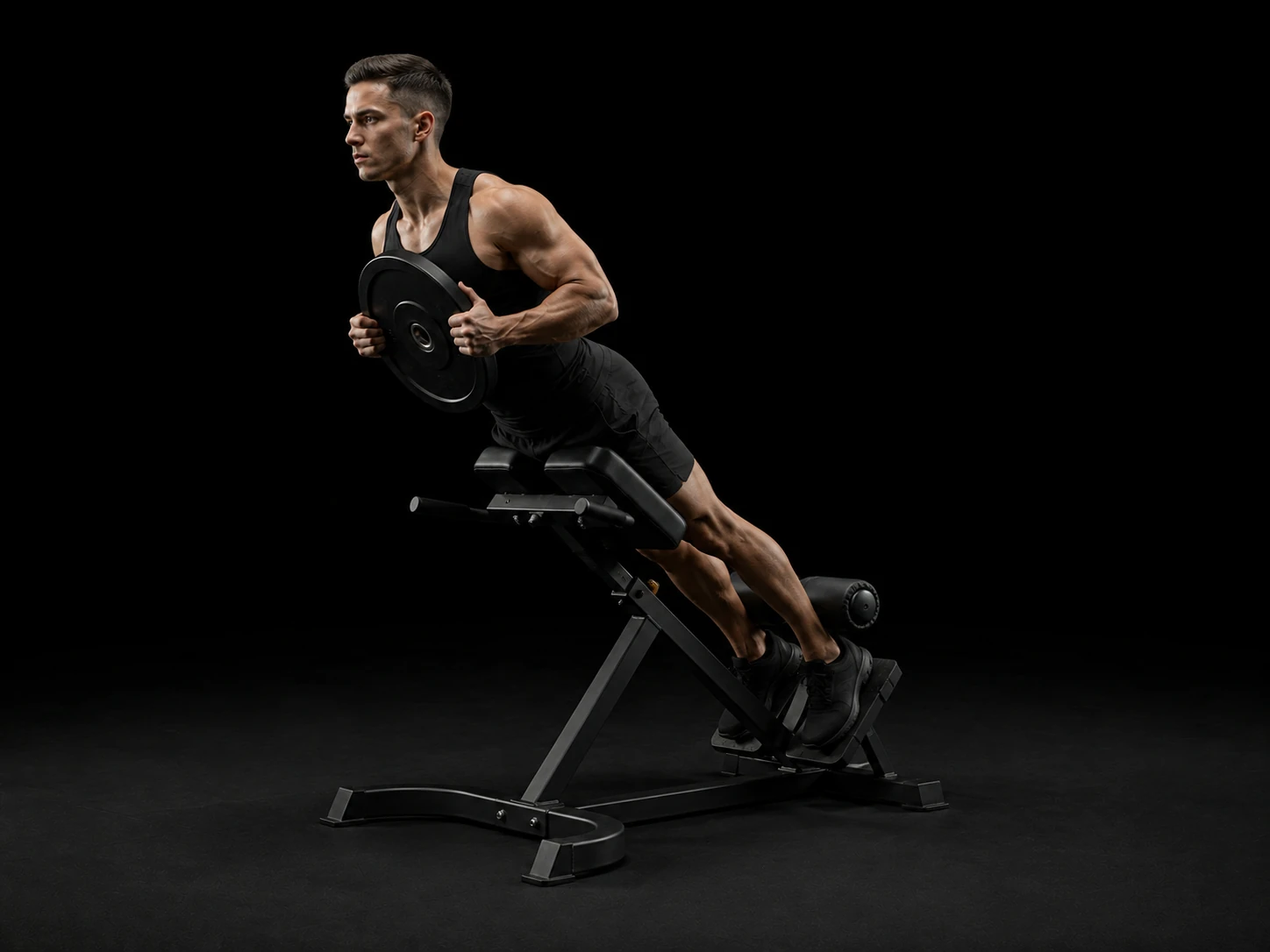
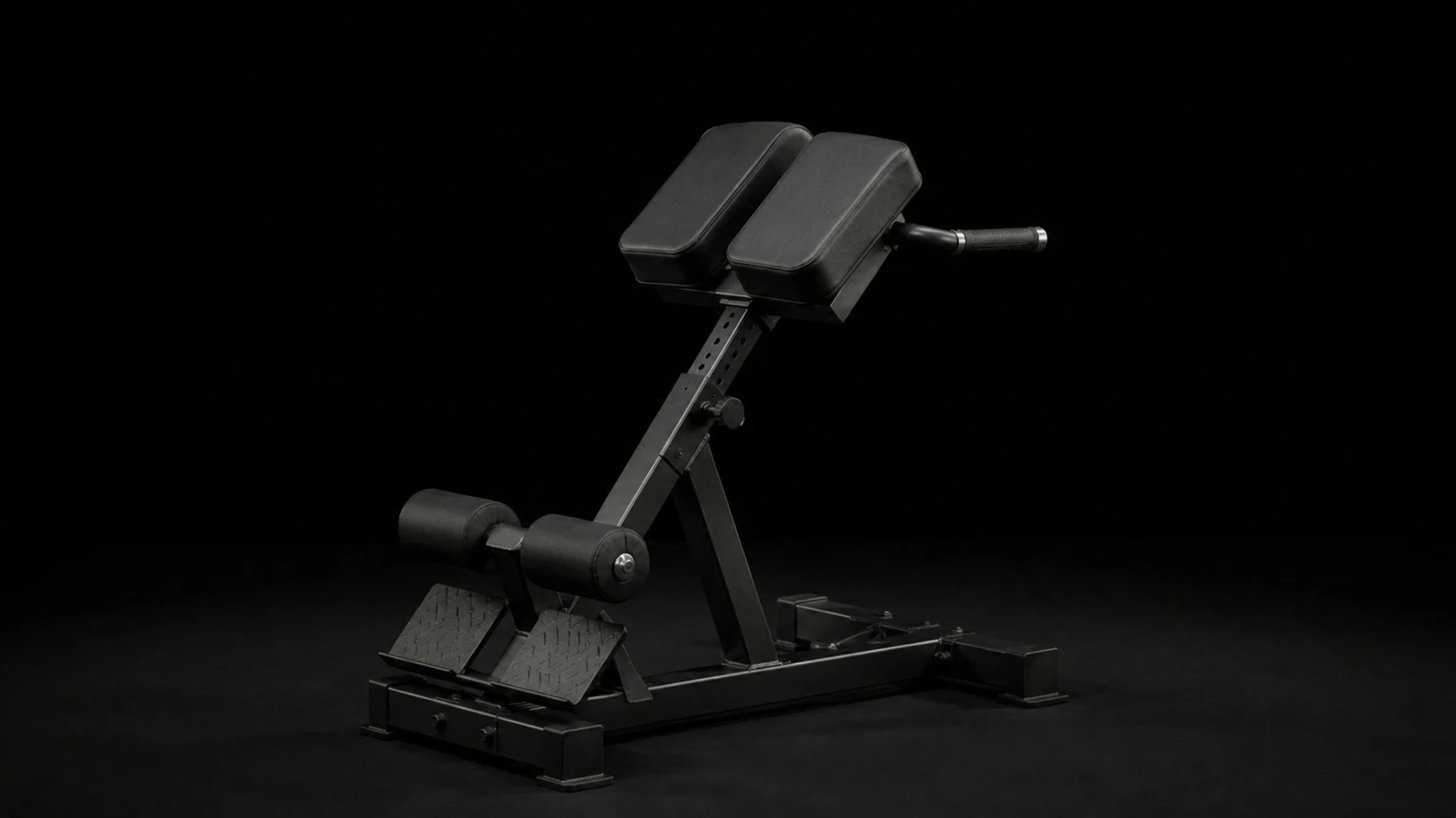
- Set the pad at the hip crease, not under the belly. Thighs supported, ankles hooked. You should be able to fold at the hips, not at the waist.
- Start long: glutes on, ribs down, neck in line. Hands across the chest. Behind the head only after the line is easy.
- Hinge until the hamstrings or the brace run out. A rag-doll hang is extra range you will pay for on the way up.
- Drive the hips into the pad and come up to a straight line. That is the finish. A cobra past neutral is lumbar compression, not extra glute.
- If you load it, hug a plate to the chest. Log the plate. Behind-the-head load comes later, if at all.
COMMON MISTAKES
- Coming up past a straight line. The name says hyperextension. The lift does not. Stop at a long body. If you want more work, slow the lower or add a plate, do not backbend.
- Pad too high, turning it into a sit-up. If the pad is on the stomach, you are flexing the spine against a block. Drop the pad to the hips and hinge.
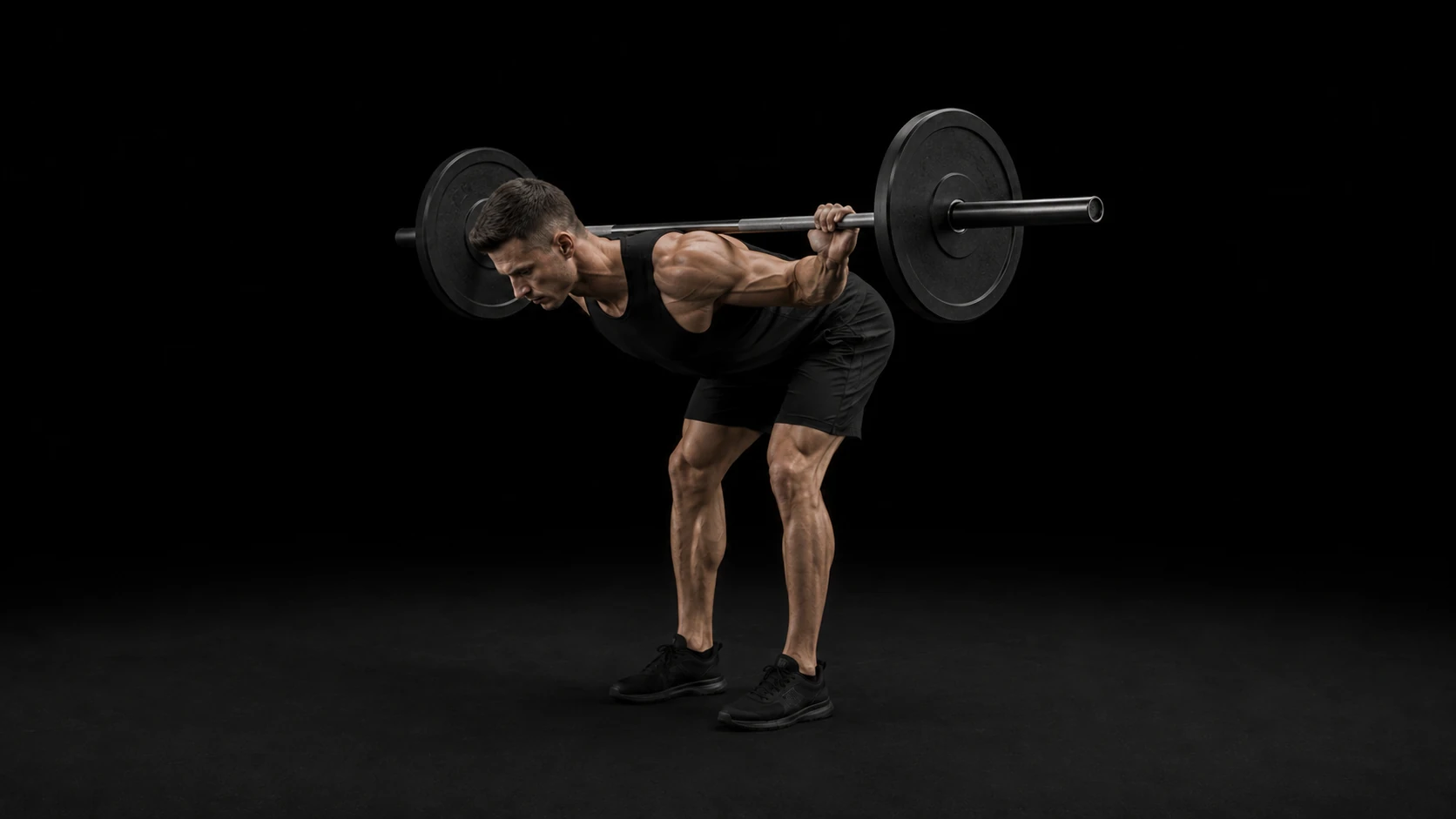
- Logging these as good mornings or RDLs. Bar on the back or bar in the hands is a different lever. Keep this slug even if the hinge looks similar on film.
- Yanking up with a rounded back. Then it is a loaded stretch you jerked out of. Set the brace at the bottom, then stand. Cut the range if you cannot.
VARIATIONS
- Barbell good morning — Same hinge, bar on the back, more axial load. Different slug.
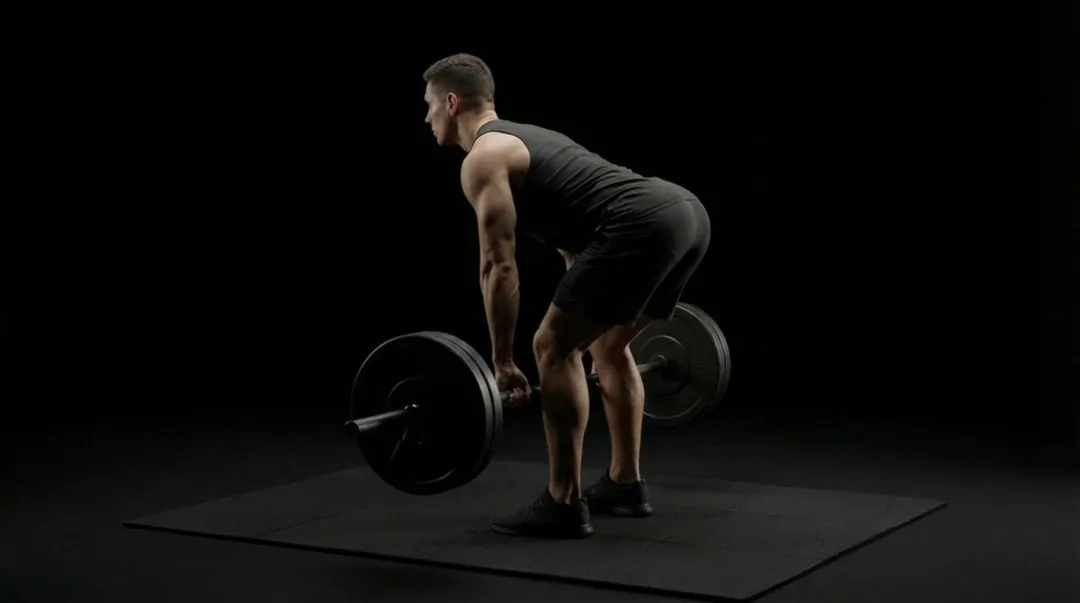
- Barbell Romanian deadlift — Hands on the bar. The default hinge for most lifters.
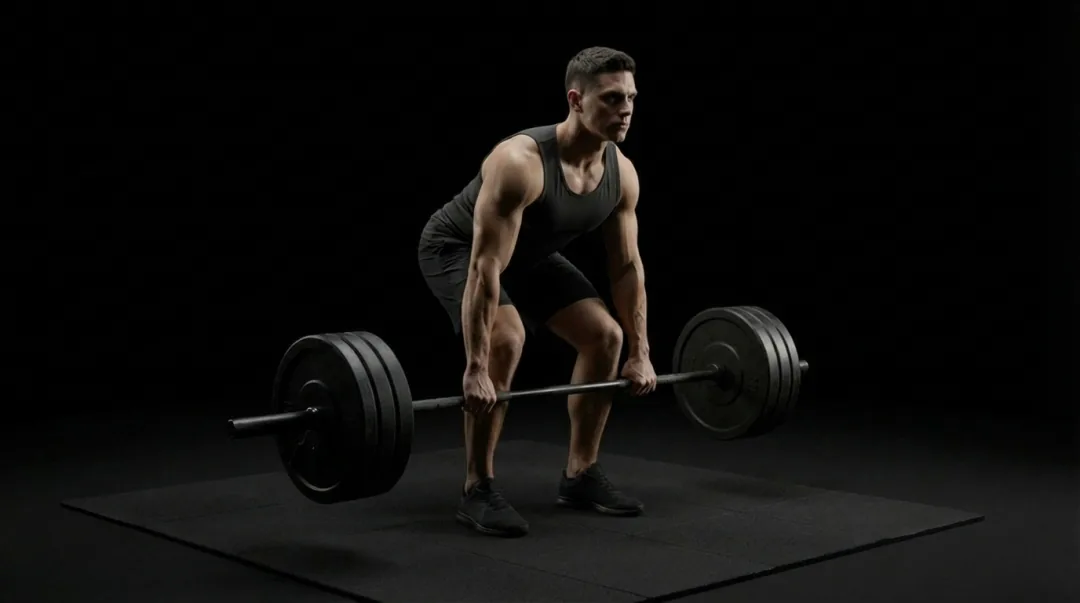
- Conventional deadlift — Floor pull. The hyper is accessory, not a deadlift substitute in the log.
- Glute bridge — Hip extension on the floor when there is no hyper bench.
PROGRESSIONS
- Bodyweight, hands on the chest, stop at a long line.
- Hands behind the head once the finish stays neutral.
- Plate at the chest. Log the plate, not a guess.
- Slow lowers if you run out of honest range before you run out of load.
PROGRAMMING NOTES
Accessory hinge: 3–4 sets of 8–15 after a pull or on a second posterior day. Bodyweight can log as reps with no load. A plate belongs in the weight field. Do not feed these numbers into an RDL or good-morning estimated 1RM. If last week’s note says you backbent at the top, that is the cue for this week, not a reason to add 5 kg.
EQUIPMENT ALTERNATIVES
- Barbell RDL — Default hinge when the gym has no 45° bench and no GHD.
- Barbell good morning — Keep the hinge with a bar on the back if you want more axial load.
- Glute bridge — Floor hip extension when the hyper is taken or you are training at home.
FREQUENTLY ASKED QUESTIONS
No. Neutral is the finish. A cobra at the top loads the lumbar, not extra glute. If you want harder work, pause at the top, slow the eccentric, or hug a plate. Log that plate so the chart matches the set you actually did.