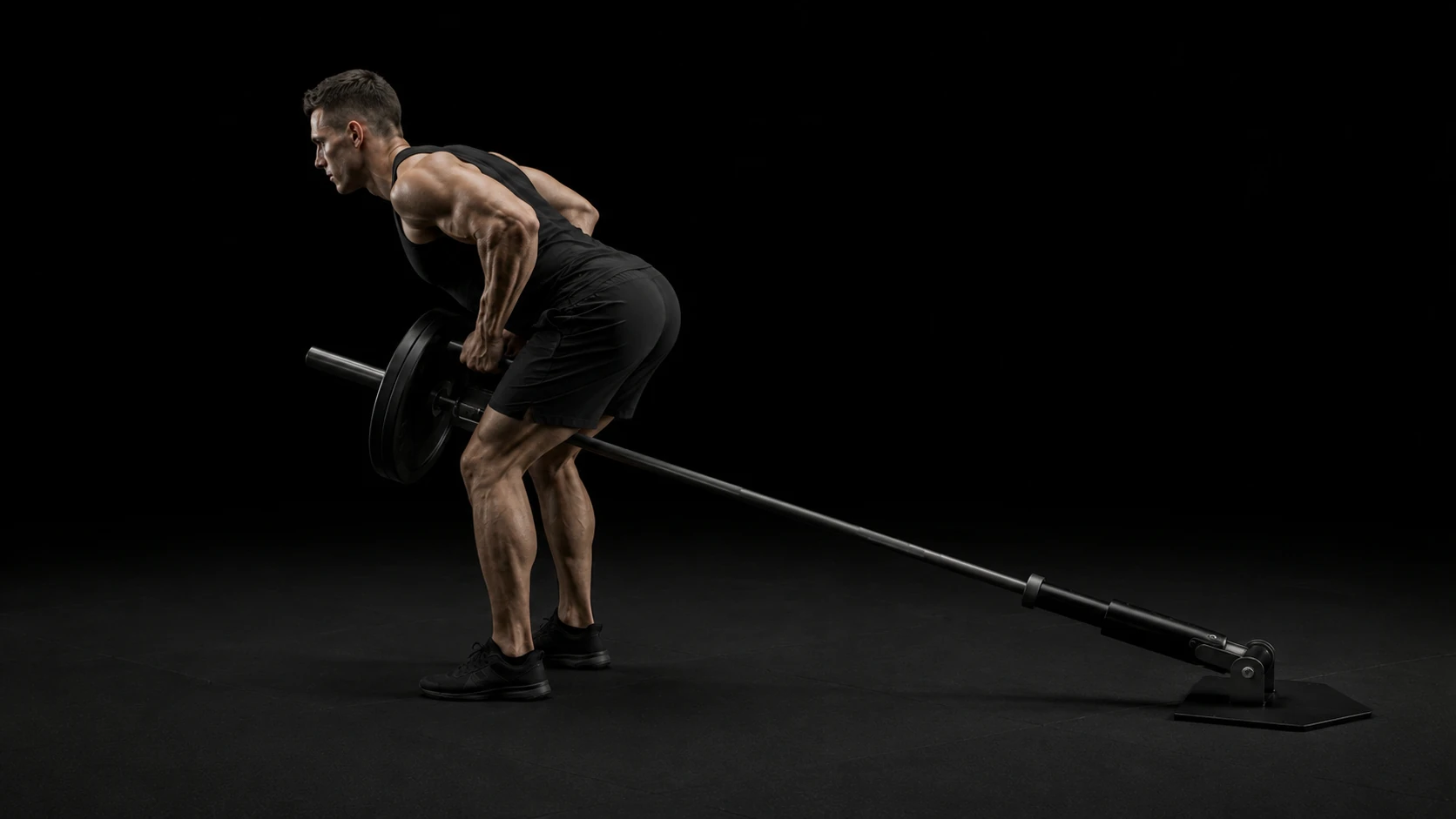
HOW TO DO T-BAR ROW
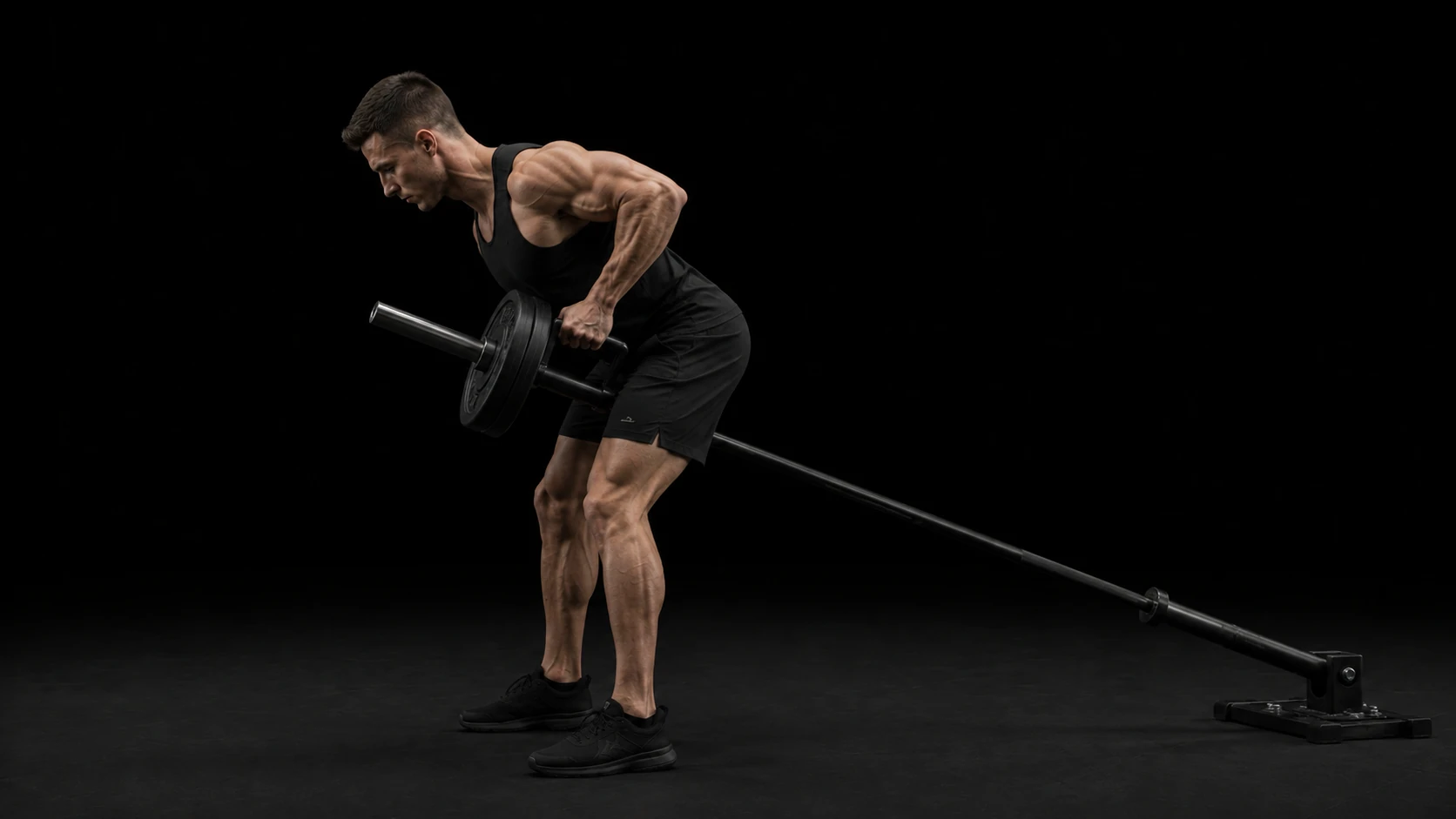
- Anchor one end of the bar in a landmine or a stable corner. Load the free end. Straddle it and attach a close-row handle around the sleeve.
- Hinge with a braced trunk until the arms are long. The plates should clear your chest at the top — small plates or a raised stance if 20 kg bumpers block the path.
- Pull the handle to the lower chest or upper abdomen. Elbows follow the handle; the torso angle does not change.
- Lower until the arms are long. Do not dump the plates into the floor and bounce the next rep.
COMMON MISTAKES
- Standing up as the load climbs. Same cheat as a barbell row. If the hinge rises, drop a plate.
- A sliding corner instead of a landmine. If the anchor walks, the bar path walks. Use a sleeve or a true landmine.
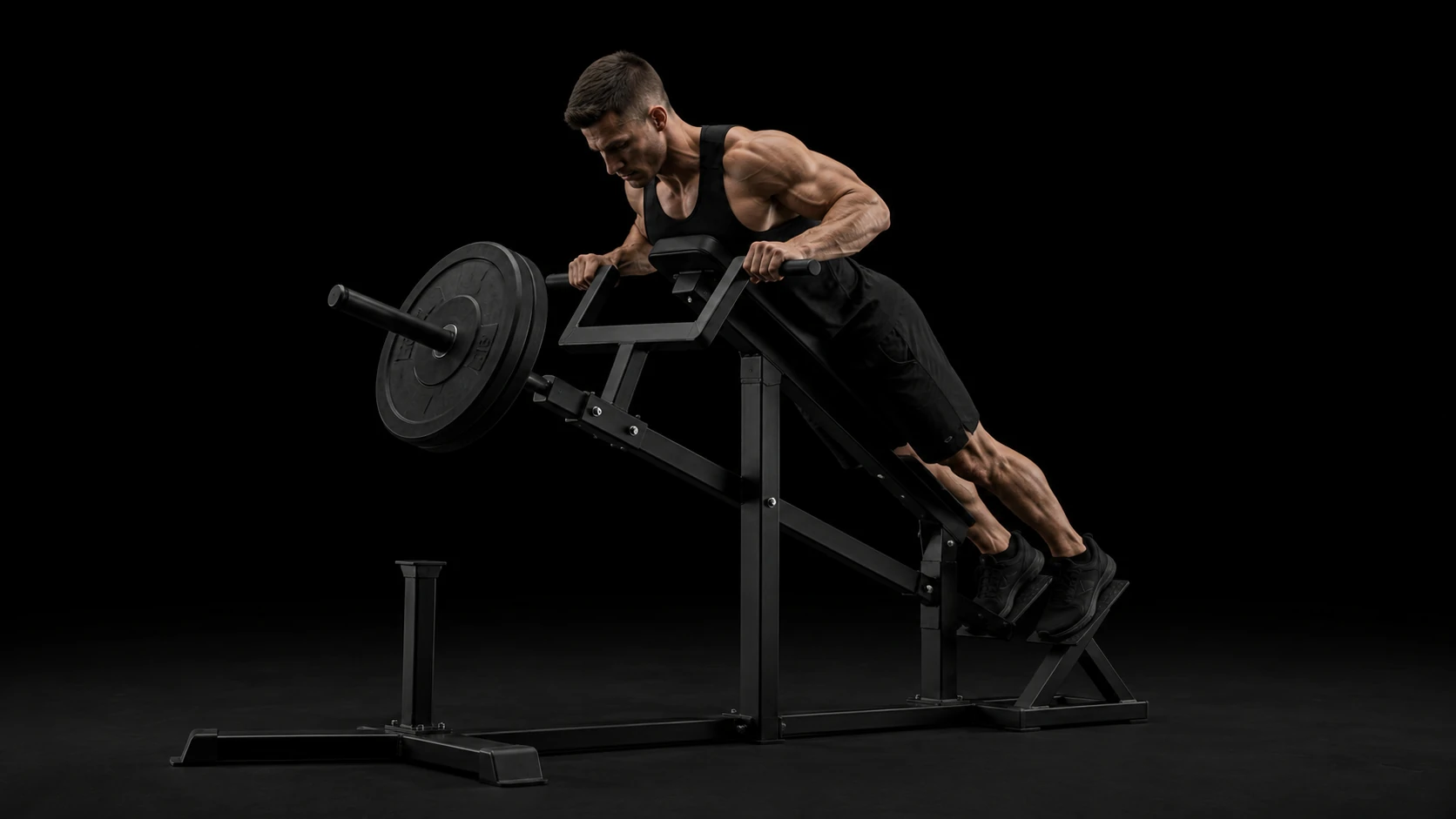
- Logging chest-supported T-bar here. Pad support is a different lift and a different PR. Chest-supported T-bar row has its own slug.
- Oversized plates killing the range. The bar travels in an arc. If 20s hit your chest early, use 10s or stand on blocks so the elbows can finish.
VARIATIONS
- Chest-supported T-bar row — Same station family, pad takes the hinge.
- Landmine row — Same bar, often a different handle and a slightly more upright option.
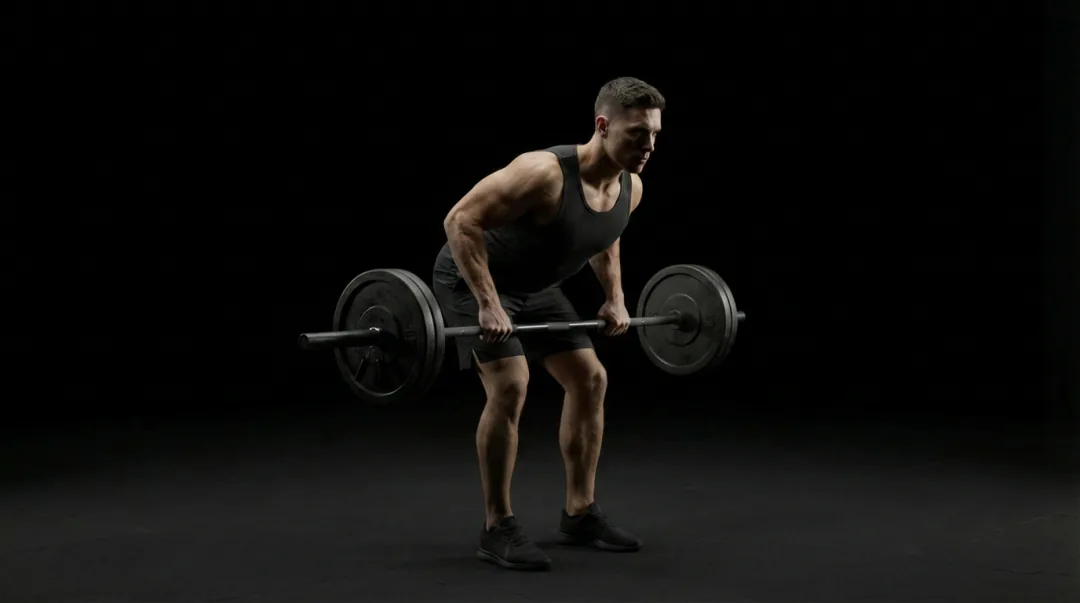
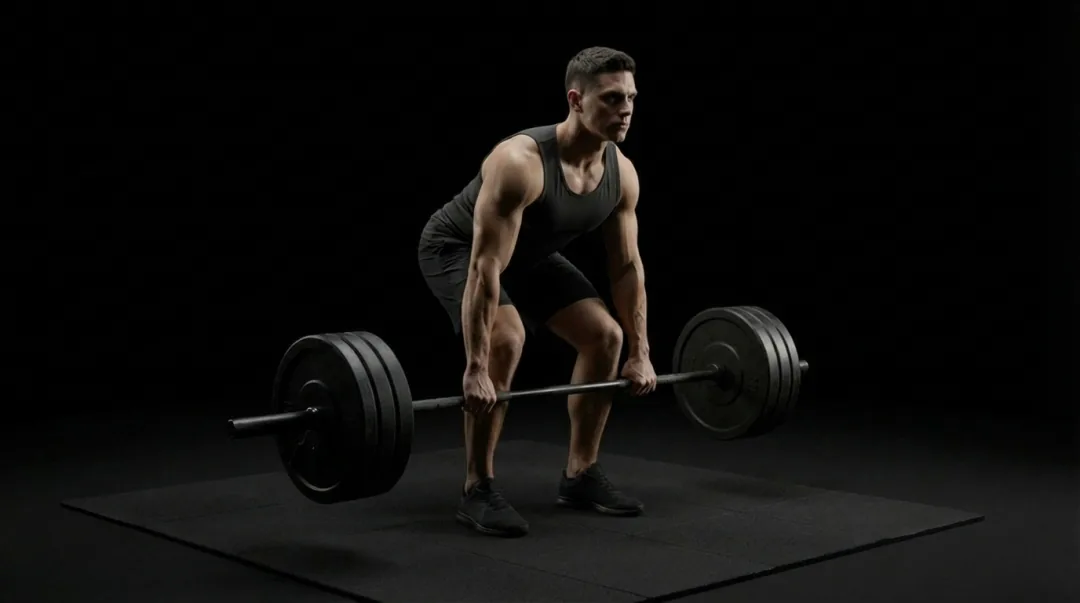
- Barbell bent-over row — Straight bar, more freedom, more low-back tax.
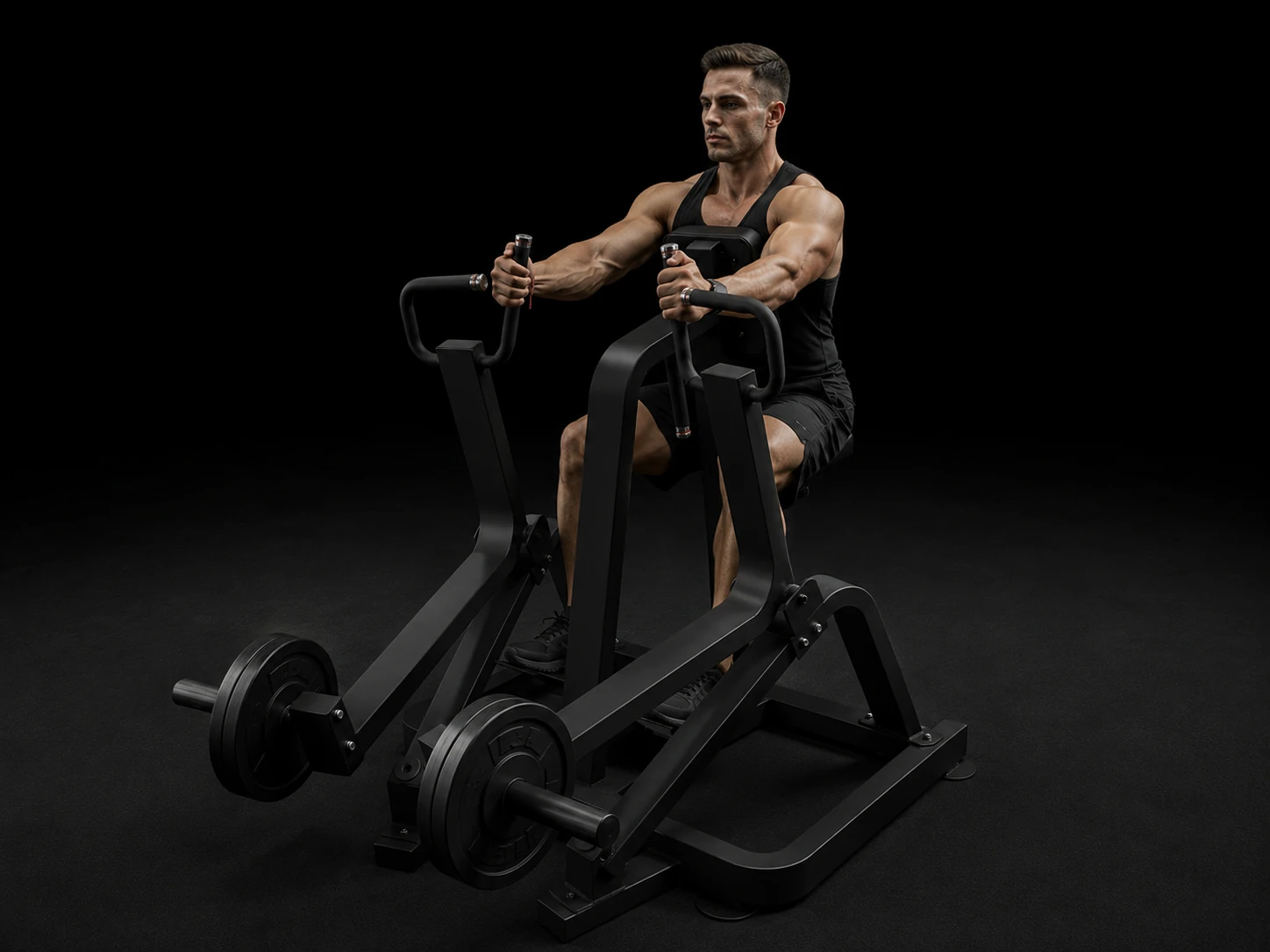
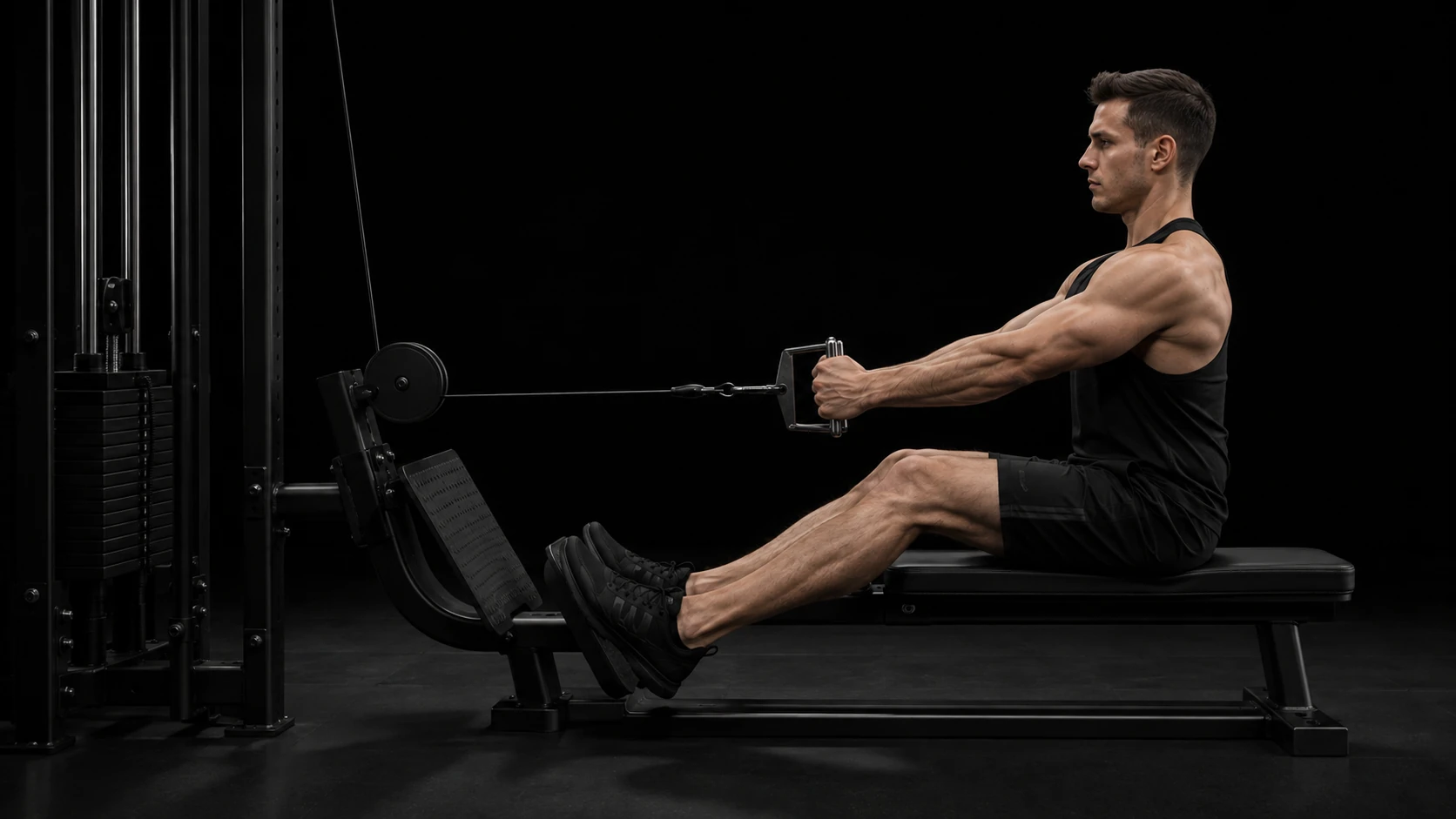
- Machine seated row — When you want the pull without holding a hinge.
PROGRESSIONS
- Chest-supported T-bar or machine row until the elbow path is automatic.
- Light T-bar with small plates and a still hinge.
- Working sets of 6–10. Add a plate when the last rep still touches the same spot.
- Neutral vs wide handles as a variation, not a new max — note the handle.
PROGRAMMING NOTES
A meat-and-potatoes back builder: 3–4 sets of 6–12. It loads heavier than a dumbbell row for most lifters. Log the plate load, not “plus the bar,” the same way every week so the chart is comparable.
FREQUENTLY ASKED QUESTIONS
Open T-Bar Row in LIFTAG, or tap the NFC tag / scan the QR code on the machine at a partner gym. Log each working set as weight × reps. The rest timer starts after you save the set, and PRs plus estimated 1RM update automatically.