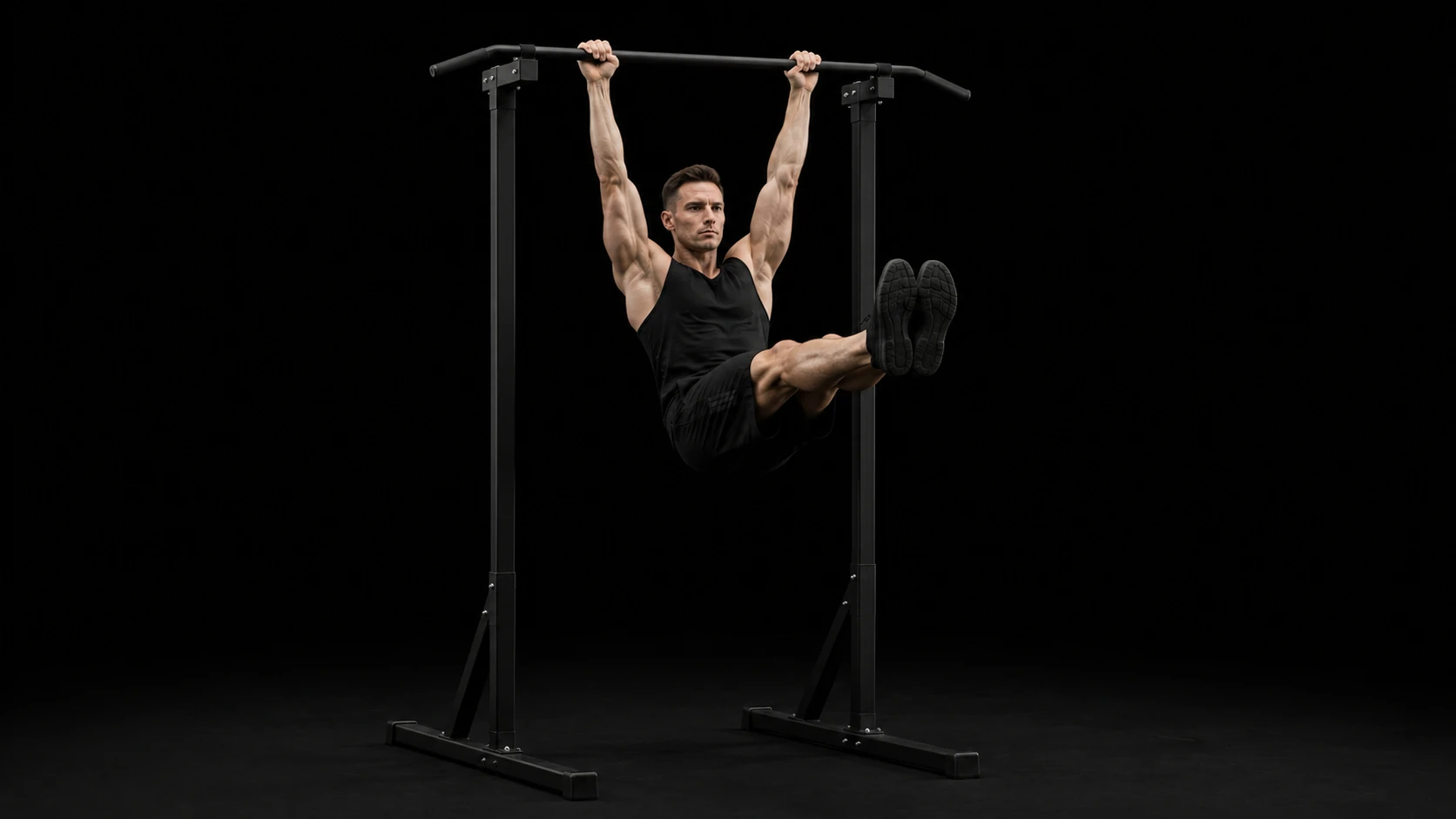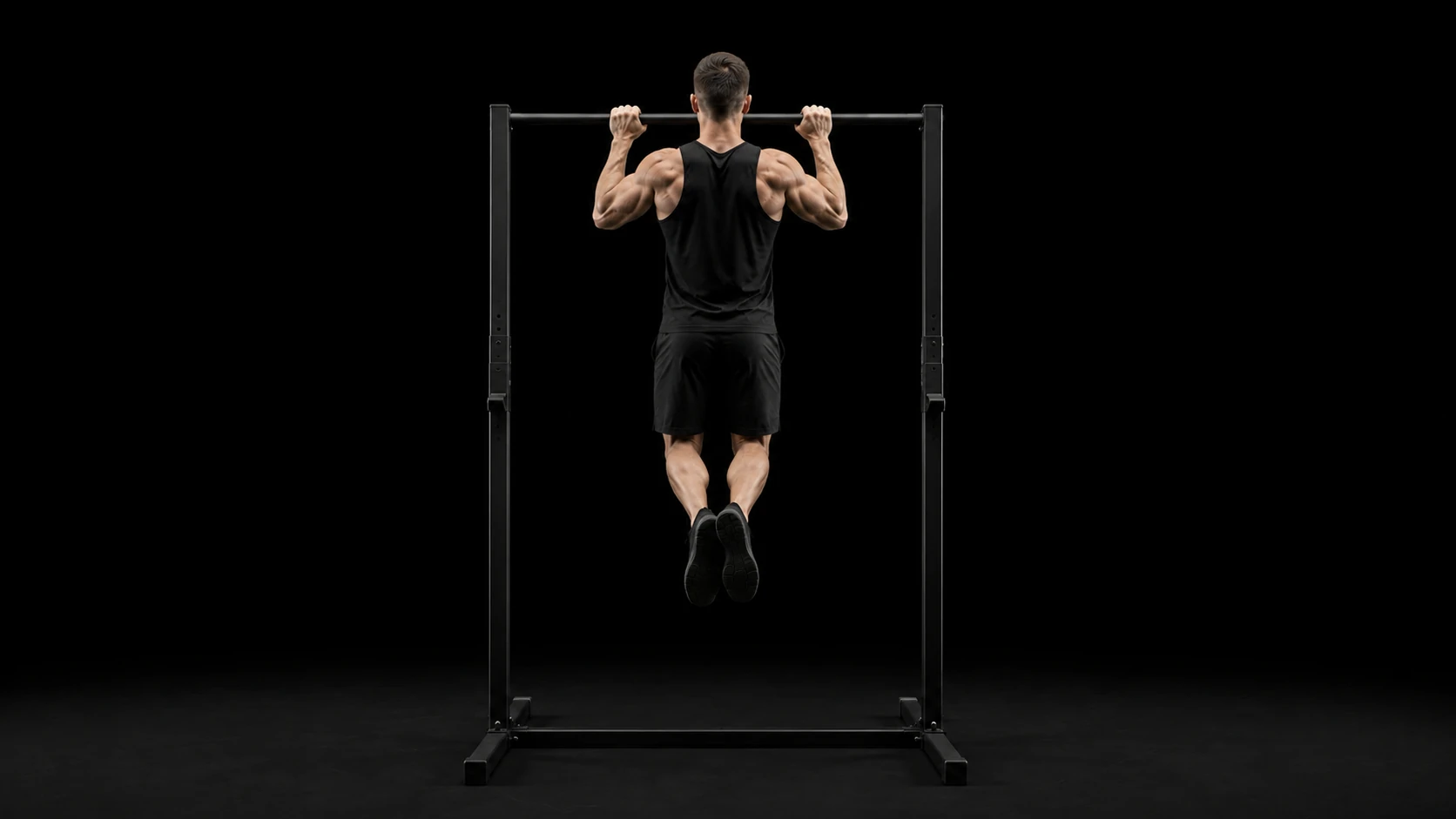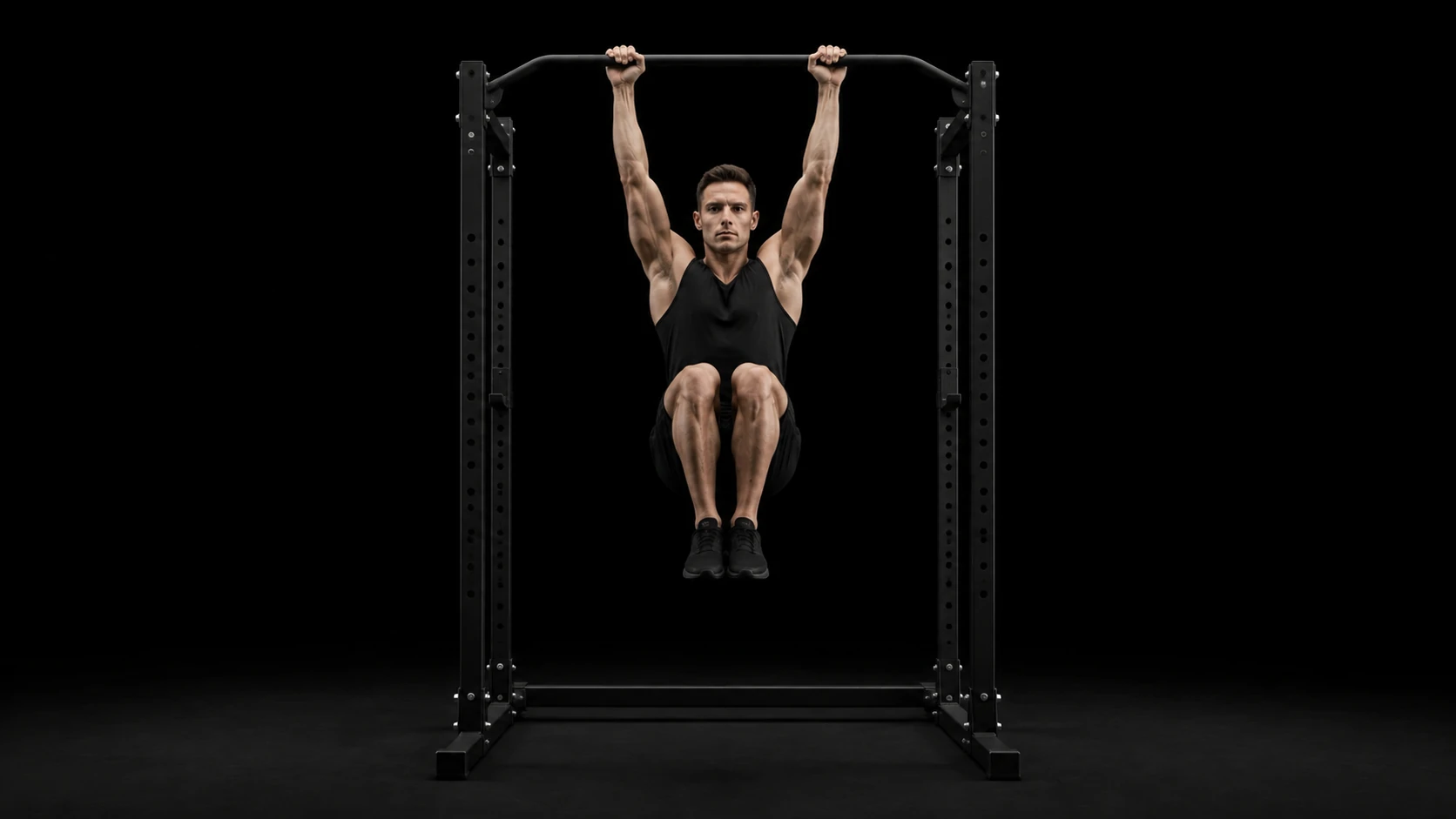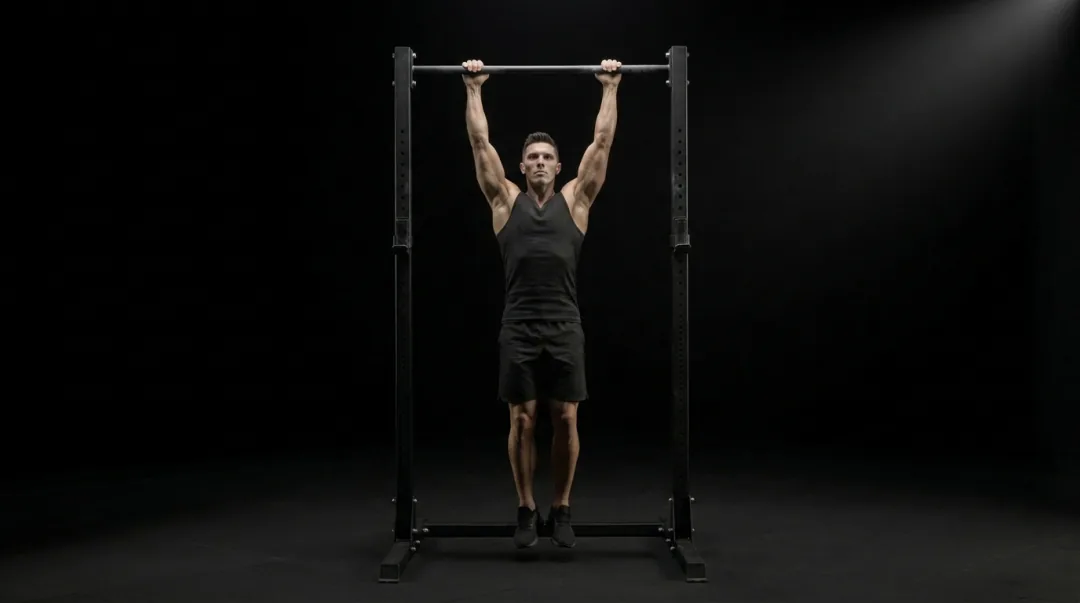
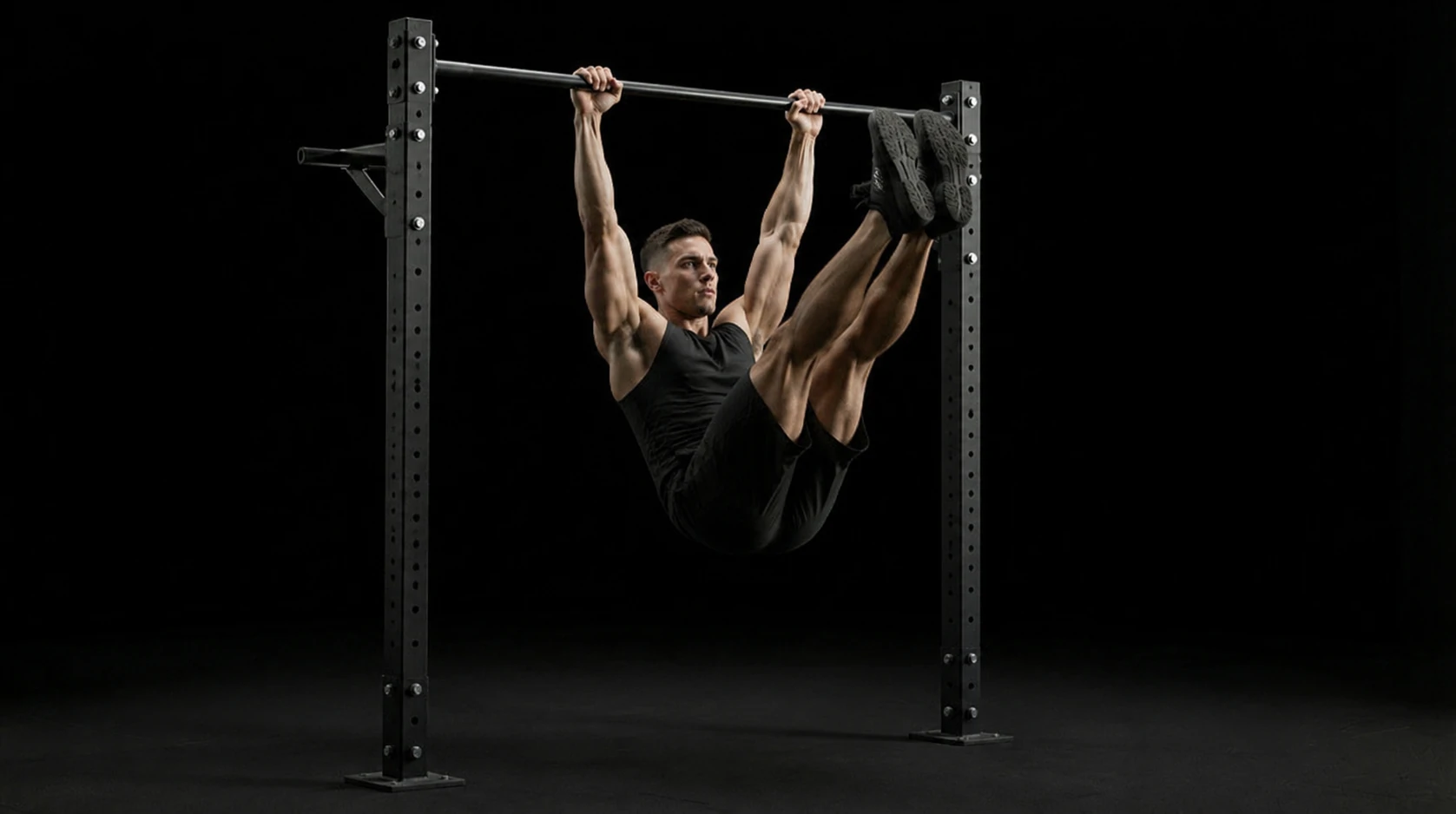
HOW TO DO TOES-TO-BAR
- Hang from a bar, overhand, a bit wider than a pull-up. Shoulders packed. A dead-hang shrug is not an active start.
- Strict: hollow, then raise the toes to the bar by curling the pelvis and closing the hips. The toes tap the bar. A kick toward the sky that misses is not a rep.
- Kipping: the beat is hollow to arch, then the toes tap. Still a tap on the bar, not air in front of it. If the program is strict, do not kip and stay on this slug silently.
- Lower without handing the set to a pendulum you cannot stop. The next rep starts from a position you chose.
- If you cannot reach the bar, you are not on this lift yet. Log hanging-leg-raise or hanging-knee-raise until the range exists.
COMMON MISTAKES
- Logging these as hanging-leg-raise. Hanging-leg-raise is a still hang and a pelvic curl, usually not to the bar. Toes-to-bar is contact. Keep the slugs apart or the chart is a mix of two skills.
- Kipping on a strict log without a note. Kipping volume is not a strict PR. Stay on this slug if you kip, and write “kip” in the LIFTAG set note so a butterfly string cannot hide inside strict work.
- Counting near-misses. Toes on the bar. Shin to bar is a different standard some gyms use. Pick one, write it down, and stop counting the kick that stopped at eye height.
- Letting grip and swing become the whole set. If you cannot kill the swing, cut the set or drop to hanging-knee-raise. A wild unbroken string is conditioning, not a T2B PR, unless that is what you programmed.
VARIATIONS
- Hanging leg raise — Strict hang, long legs, no bar-touch requirement. The honest sibling, not a substitute log.
- Hanging knee raise — Bent knees. Use it until the straight-leg range exists.
- Pull-up — Same bar, different job. Do not log kipping T2B as pull-ups because you were on the bar.
- Dead hang — Grip and packed shoulders when the raise is not the limiter you are training.
PROGRESSIONS
- Hanging knee raises with a still hang and a pelvic curl.
- Hanging-leg-raise until thighs reach the torso without a swing.
- Strict toes-to-bar, actual contact, controlled lower.
- Kipping strings only if the session wants them. Note “kip”. Do not mix them into last week’s strict count.
PROGRAMMING NOTES
Strict T2B: 3–4 sets of 5–10, still hang between reps if you need it. Kipping work can live on this slug with a “kip” note and the rest you actually took. Do not dump either version onto hanging-leg-raise because both happen on a pull-up bar. If grip dies first, split the work with dead-hang or straps and say so in the log.
FREQUENTLY ASKED QUESTIONS
Both can live here. Strict is the default if you do not write anything. If you kip, stay on toes-to-bar and put “kip” in the set note. Hanging-leg-raise is the strict hang that does not require bar contact. Do not park kipping T2B there to make the raise chart look bigger.