HOW TO DO STANDING DUMBBELL BICEP CURL
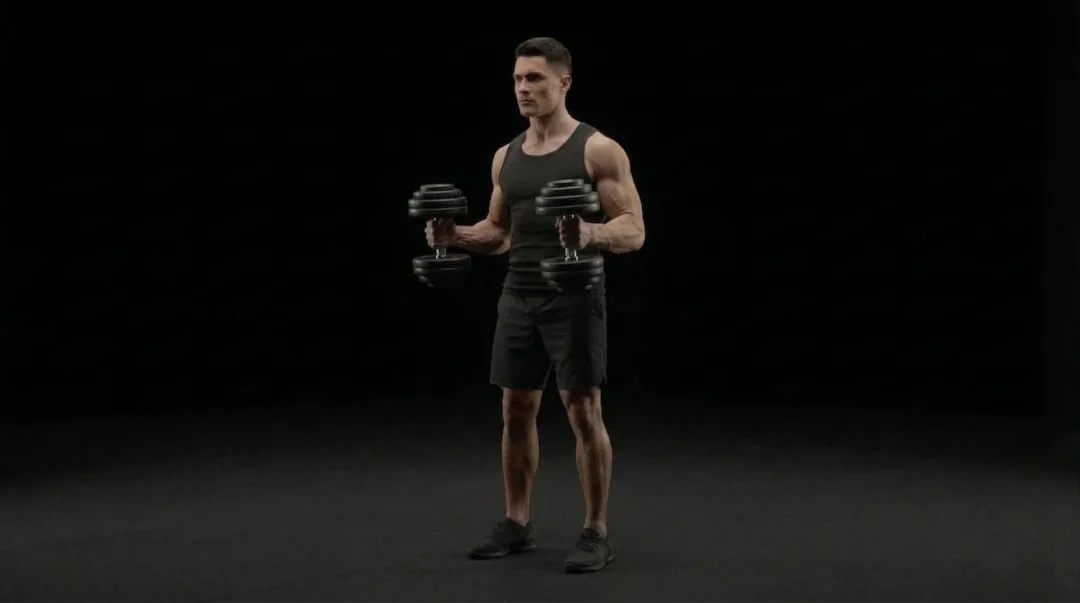
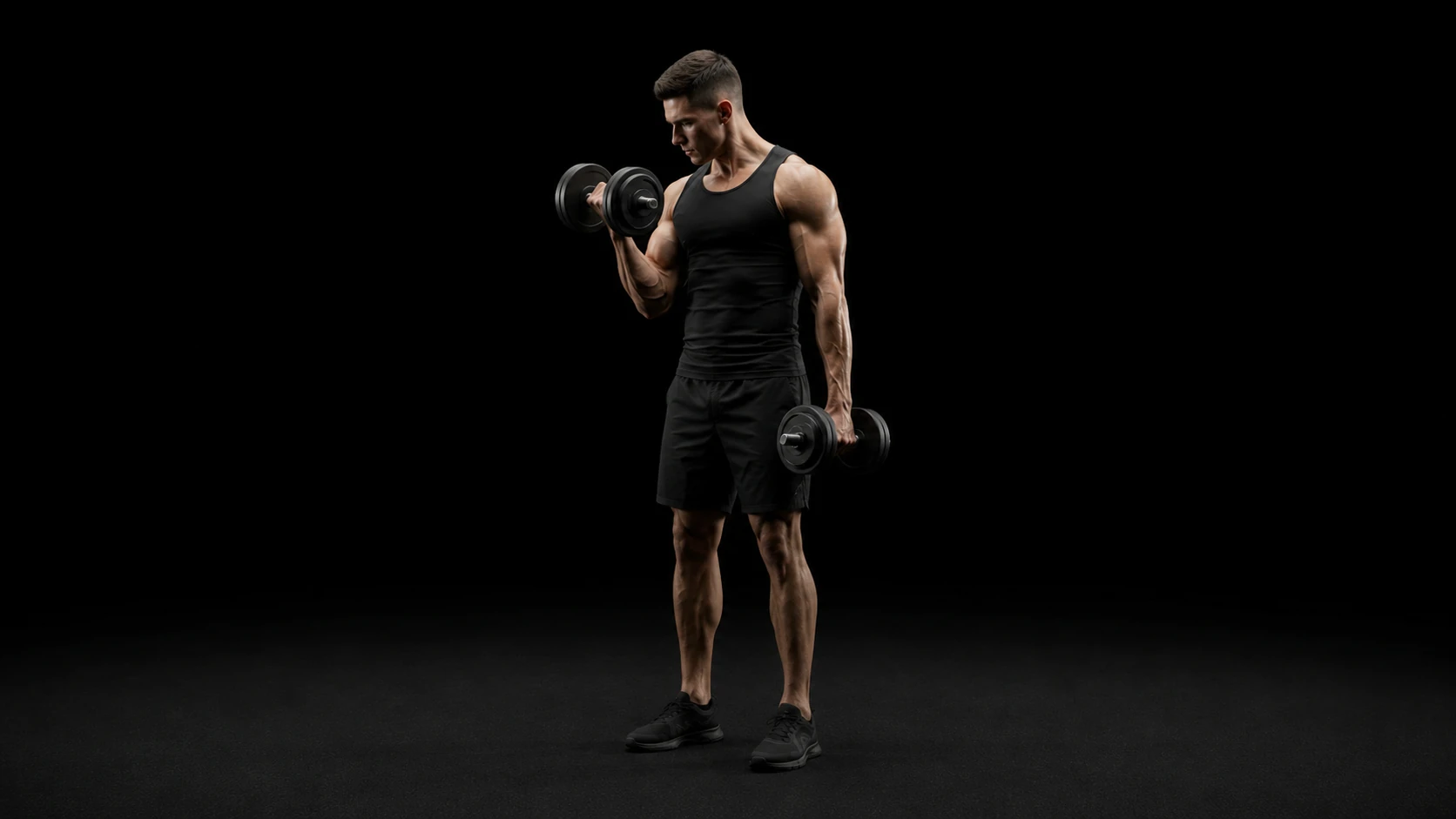
- Stand tall with a dumbbell in each hand, palms forward, arms long. Ribs down, glutes lightly on. The moment you sit, you booked a different slug.
- Pin the elbows next to the torso. They can travel a few centimeters; they cannot start a swing.
- Curl until the biceps fully shorten. Wrists stay stacked. The bells stay in line with the forearms, not rolled onto them.
- Lower to a full hang and pause a beat. Alternate or both at once is your call; pick one and keep it for the block.
COMMON MISTAKES
- Turning the last reps into a hip clean. A little body English on a true last rep is one thing. If the bells need a hike to leave the thighs, the load already won. Drop it.
- Logging hammers as standing dumbbell curls. Thumbs-up is hammer-curls. Palms-up is this slug. LIFTAG charts one grip. Mixing them makes a fake PR out of a different muscle.
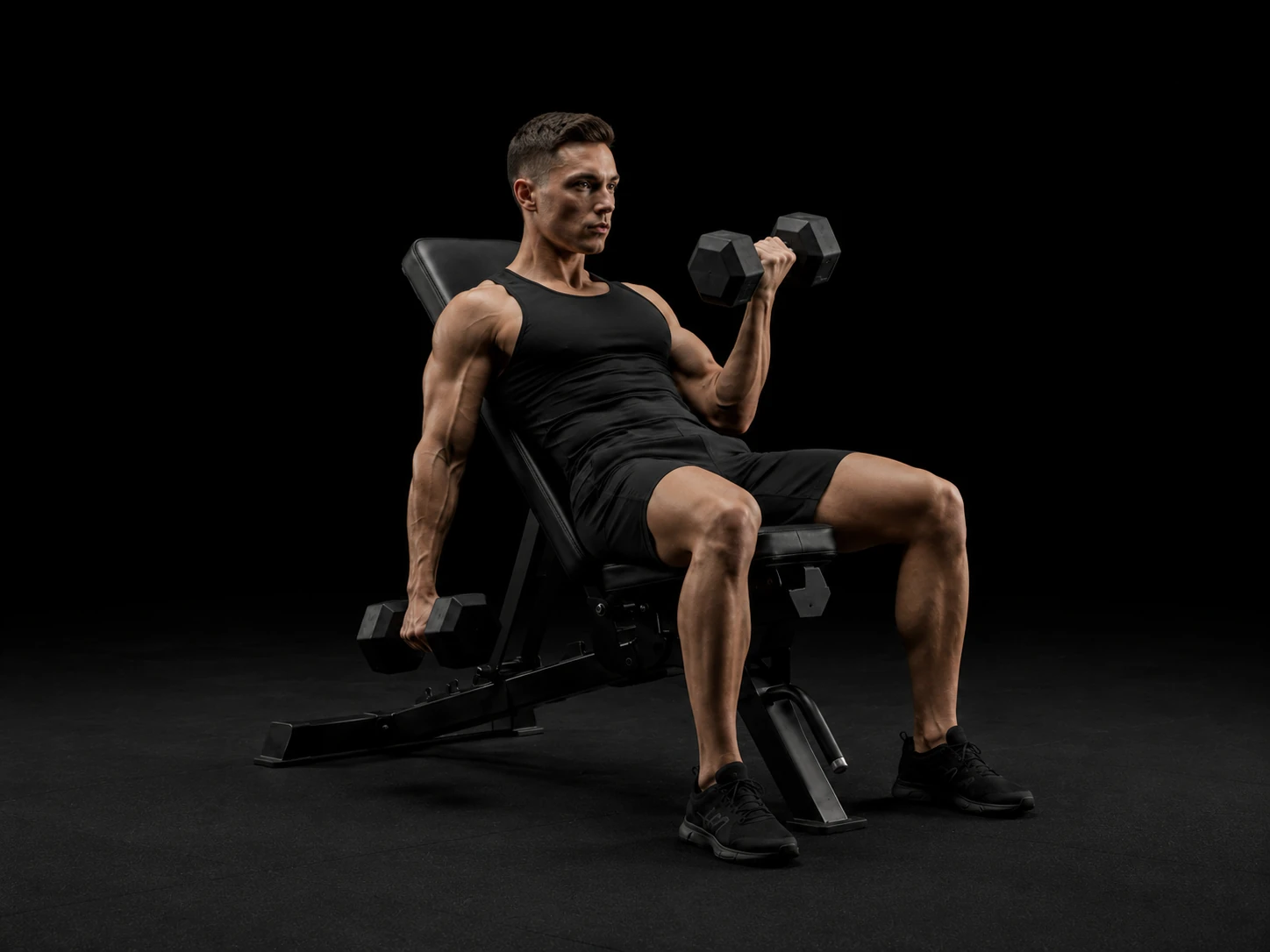
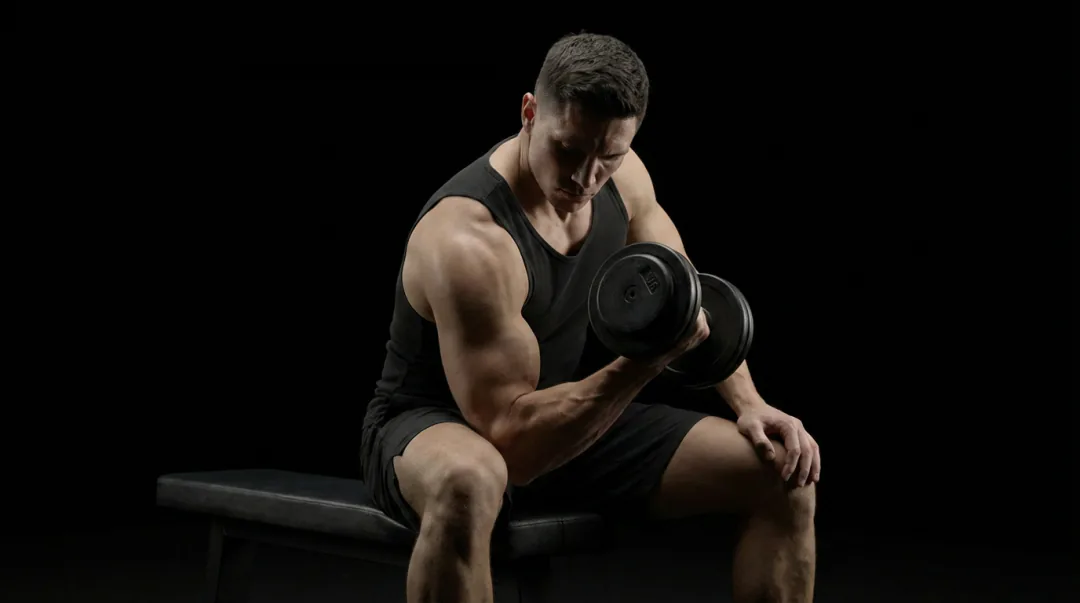
- Sitting down the second it gets hard. Then it is a seated curl with extra furniture. Stay on your feet or log seated-dumbbell-bicep-curl.
- Logging the pair as one number. One bell, not both added together. Double the load and the chart is fiction from week one.
VARIATIONS
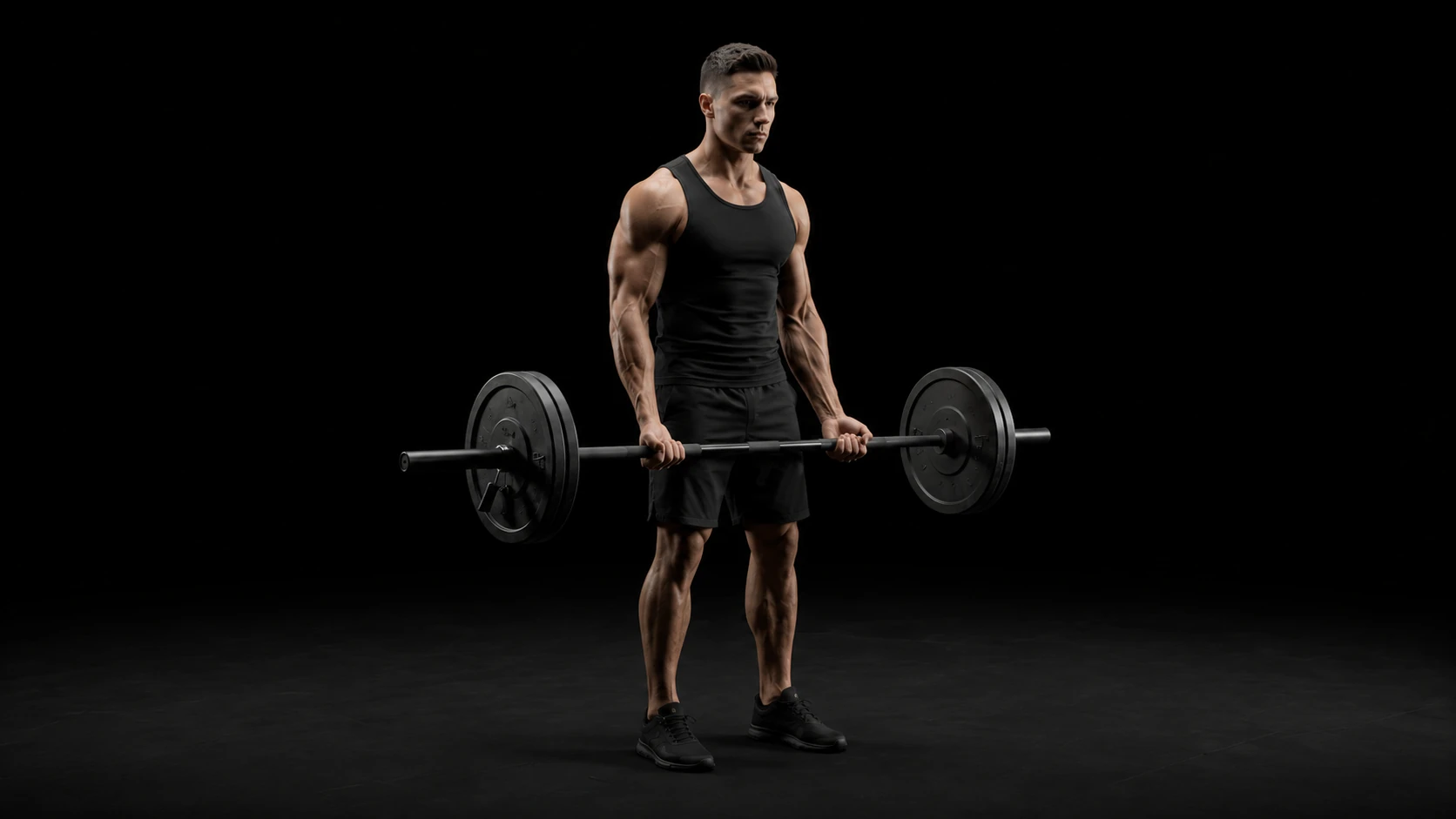
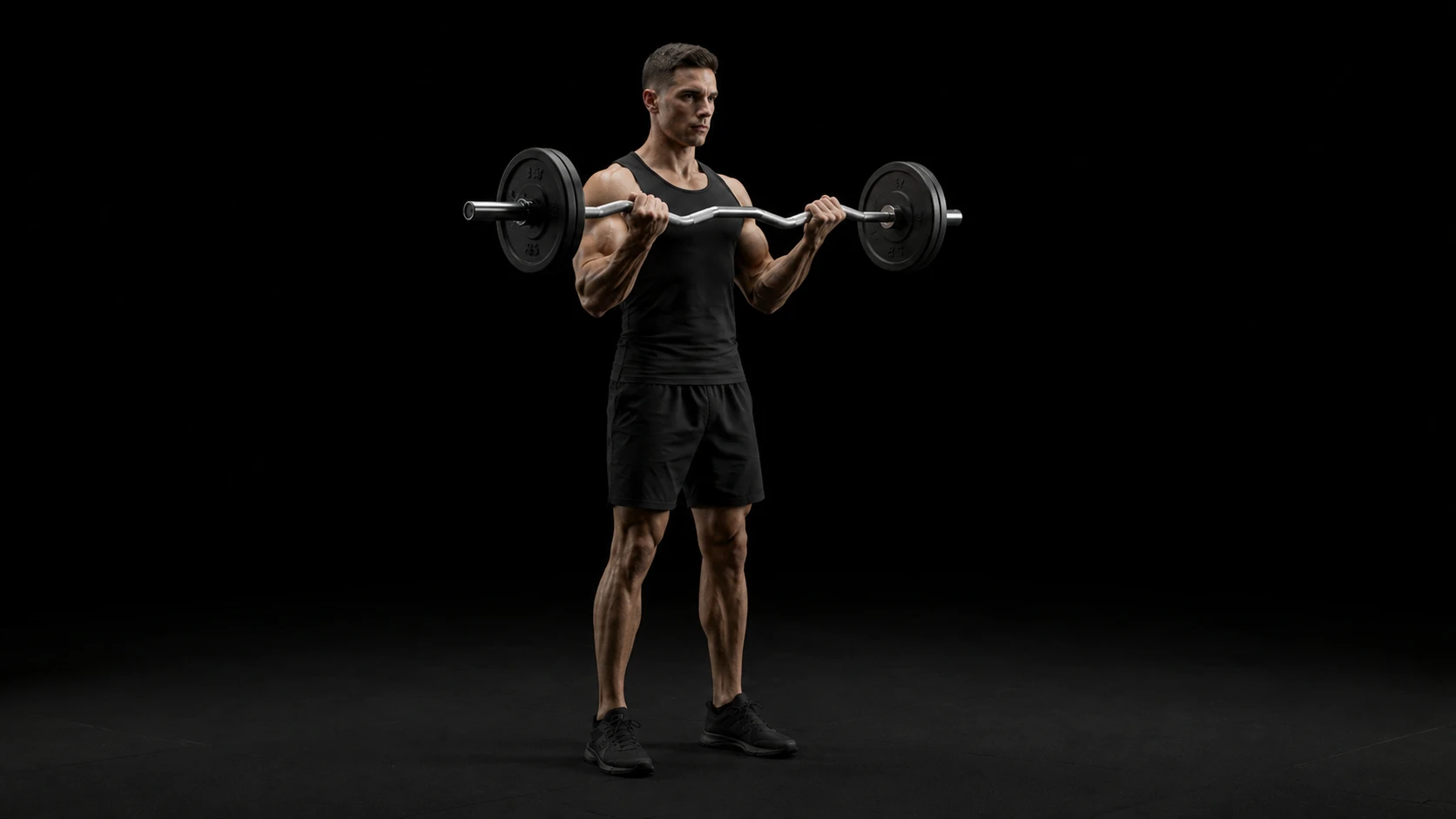
- Barbell curl — Bilateral, small jumps, same standing idea.
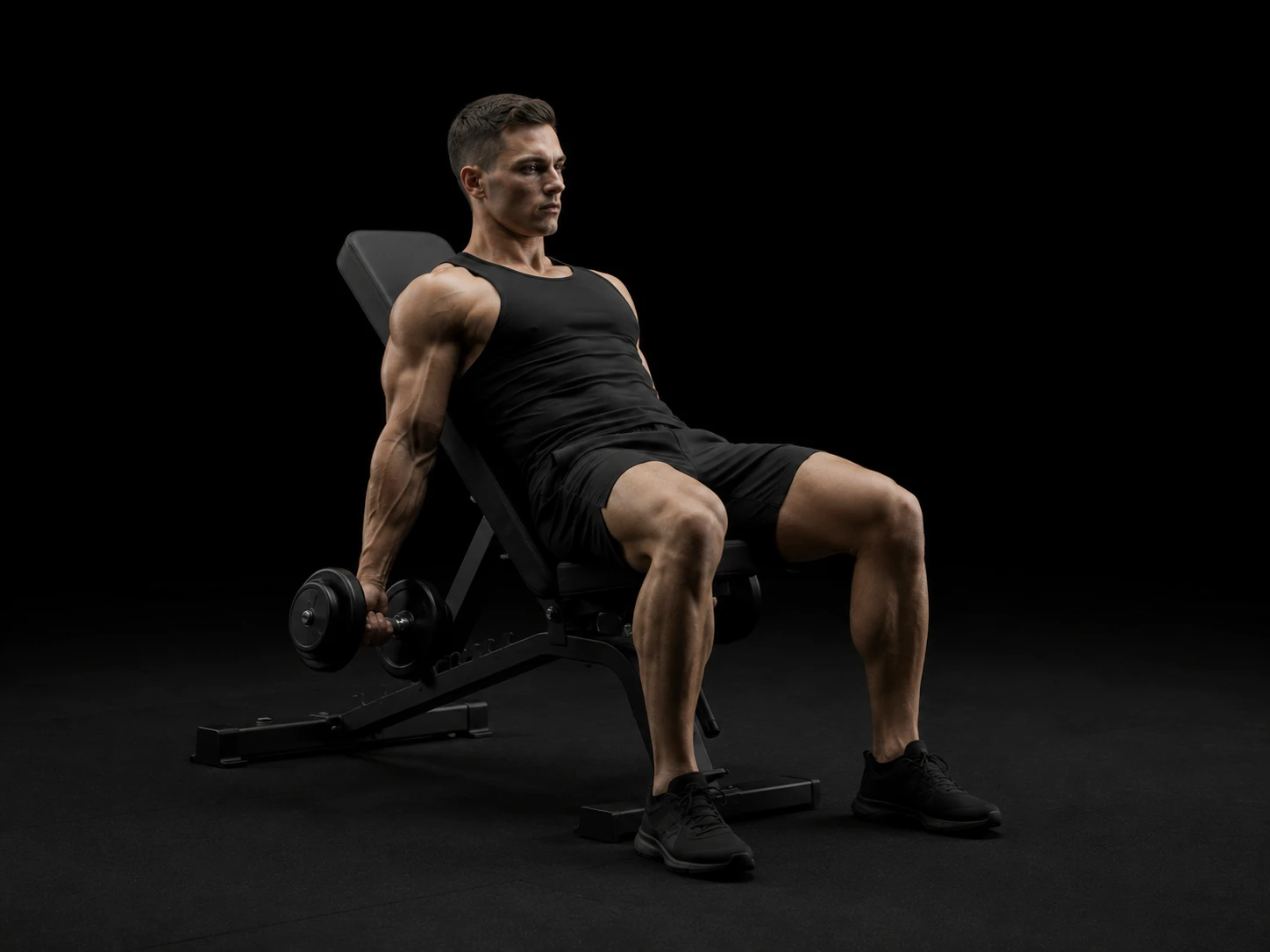
- Incline dumbbell curl — Lengthened biceps, back on a bench.
- Hammer curls — Neutral grip, more brachialis and forearm.
- Seated dumbbell bicep curl — Same bells, no standing cheat, less stretch.
PROGRESSIONS
- Light bells, full hang, torso that does not start the curl.
- Working sets of 8–12 with the same stance and the same alternate-or-both choice.
- Add a one-second pause at the bottom before you chase heavier bells.
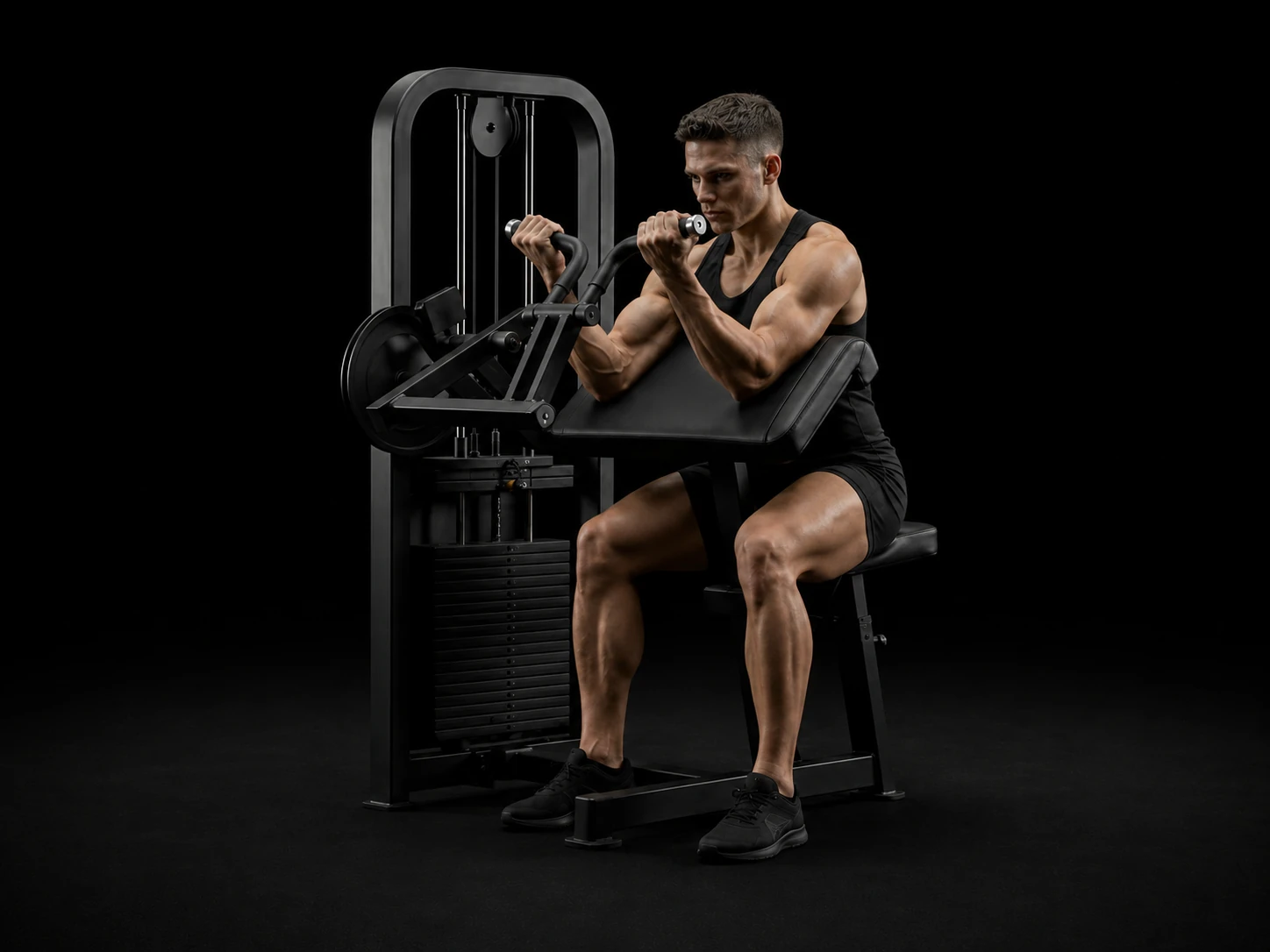
- Incline or preacher as a second pass, not as the same log.
PROGRAMMING NOTES
Main dumbbell biceps lift: 3–4 sets of 8–12. Log one bell, not the pair. Alternate and simultaneous both stay on this slug; write which one in the set note. Hammers, seated curls, and incline curls each have their own chart. If the rack has a tag, it should open standing-dumbbell-bicep-curl, not barbell-curl.
EQUIPMENT ALTERNATIVES
- Barbell curl — When you want one load and smaller jumps than the dumbbell tree.
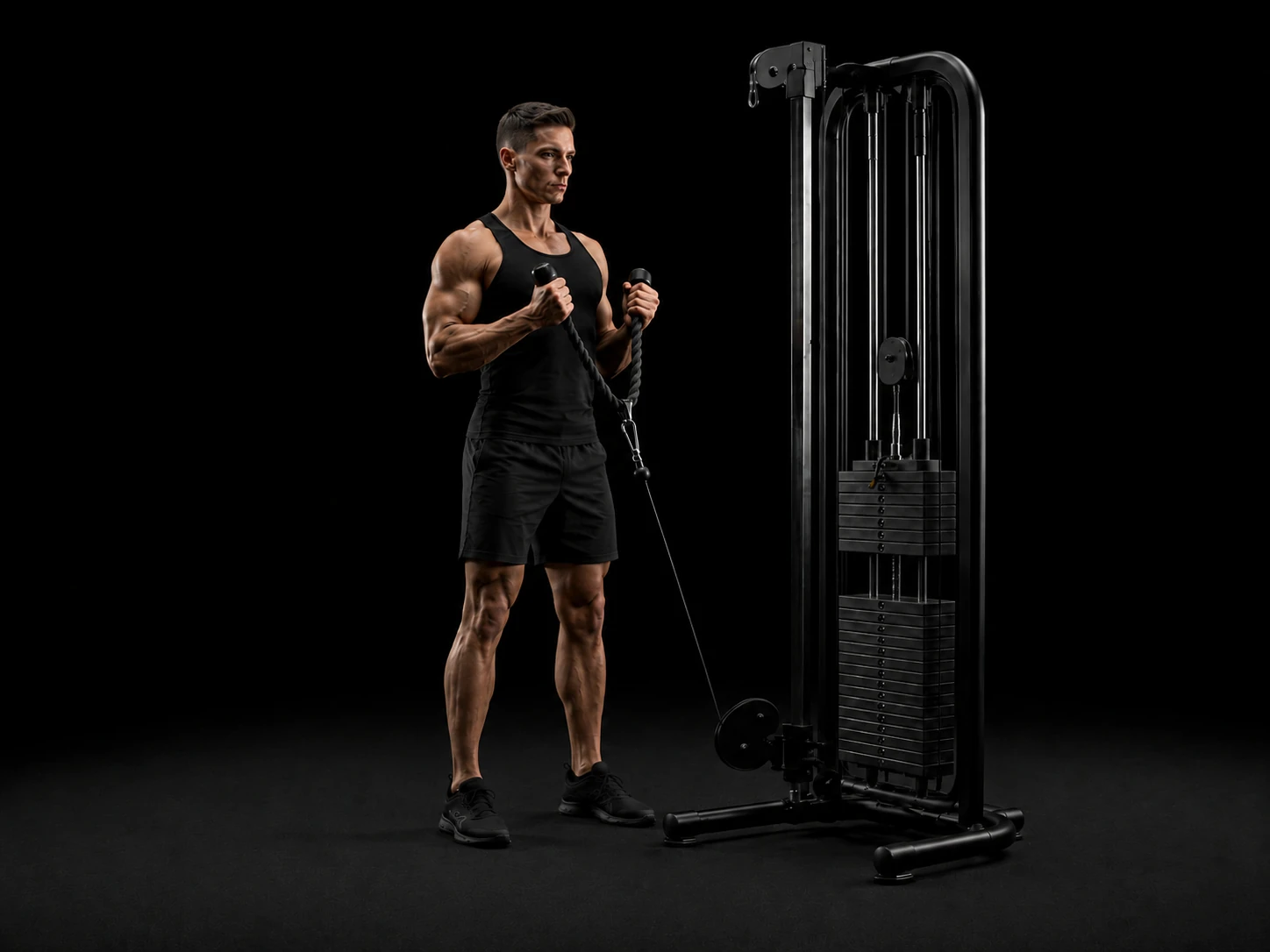
- Standing cable bicep curl — Constant tension if the bells feel empty at the bottom.
FREQUENTLY ASKED QUESTIONS
Both are this lift. Alternating lets you watch each arm; simultaneous is closer to a barbell curl. Pick one as the default for the block and note the other if you rotate. Do not treat a switch as a PR.