HOW TO DO BARBELL INCLINE BENCH PRESS
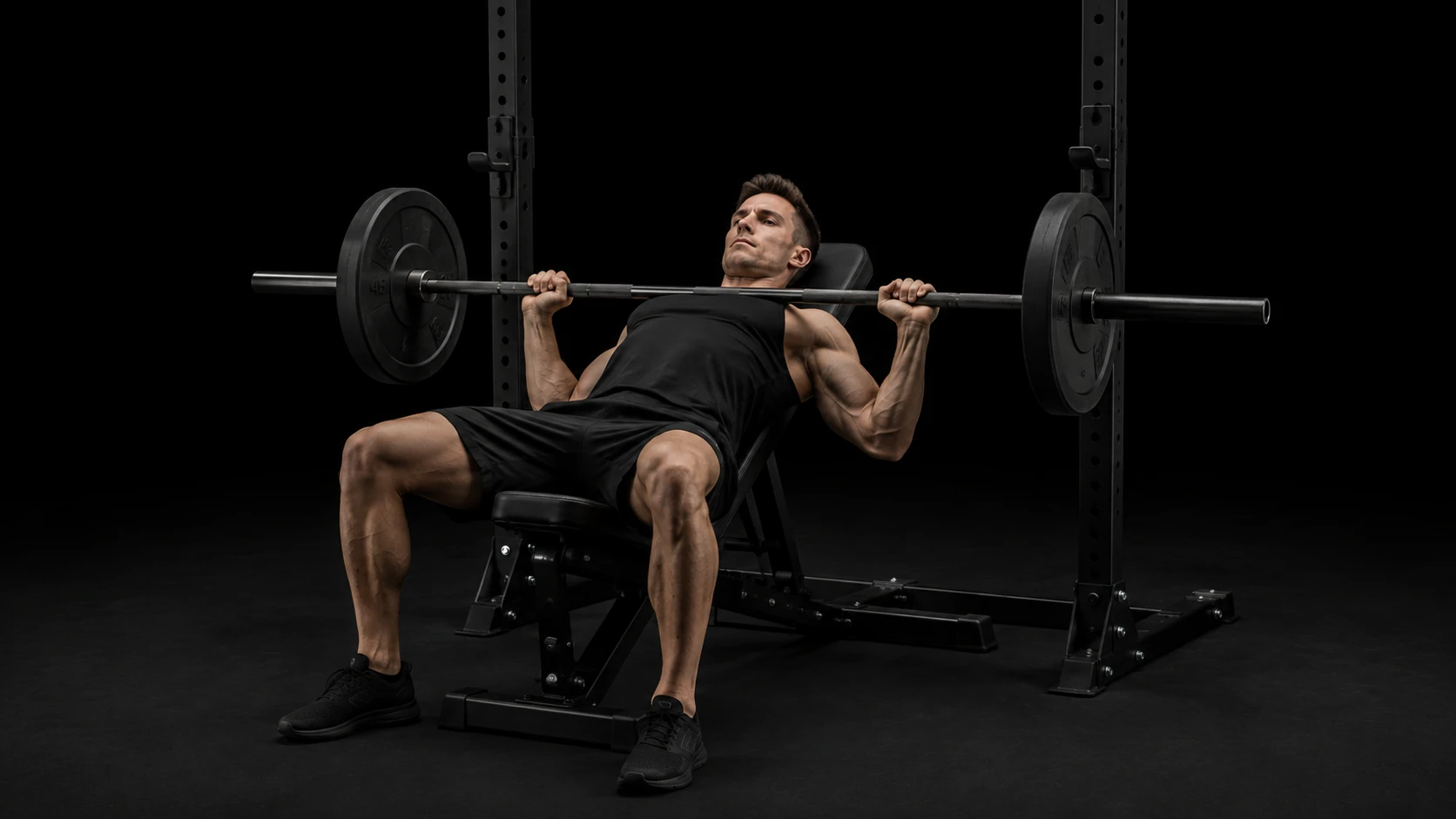
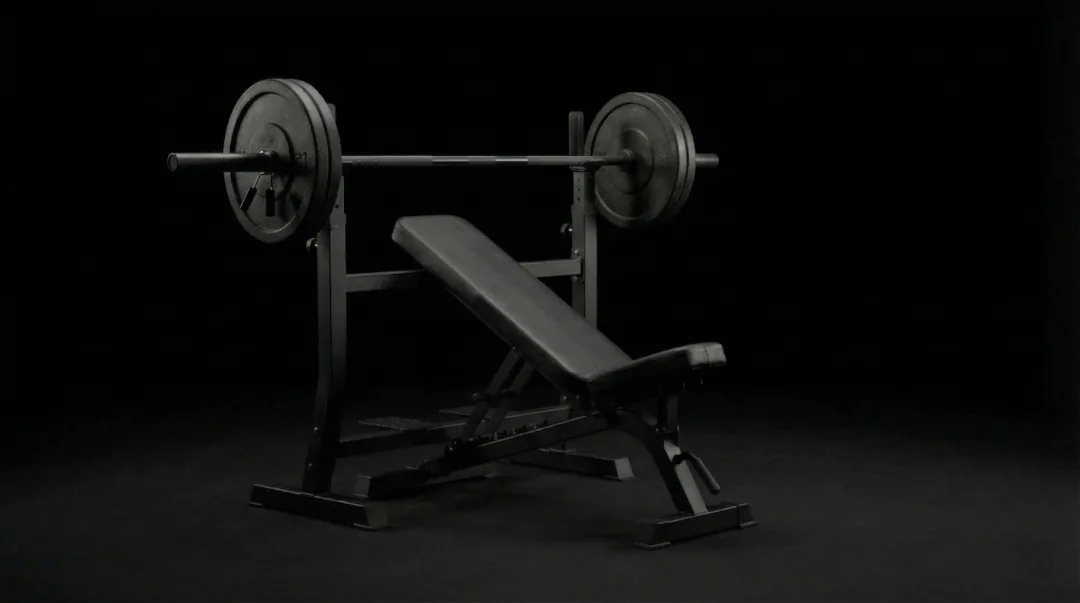
- Set the bench between 15° and 45°. Higher than that is mostly a front-delt press.
- Unrack with the same tucked, retracted setup as flat bench. Eyes stay under the bar.
- Lower to the upper chest / clavicle line, not the same touch point as flat bench.
- Press up and slightly back to lockout. Do not let the elbows dump behind the bench.
COMMON MISTAKES
- Using a 60° “incline”. That is an overhead press with a backrest. Drop the bench if the goal is chest.
- Logging incline PRs on the flat-bench lift. Keep this slug. Mixing angles wrecks both charts.
- Flaring so the bar lands on the neck. Touch the upper chest. If the bar is at your throat, the elbows are too high.
VARIATIONS
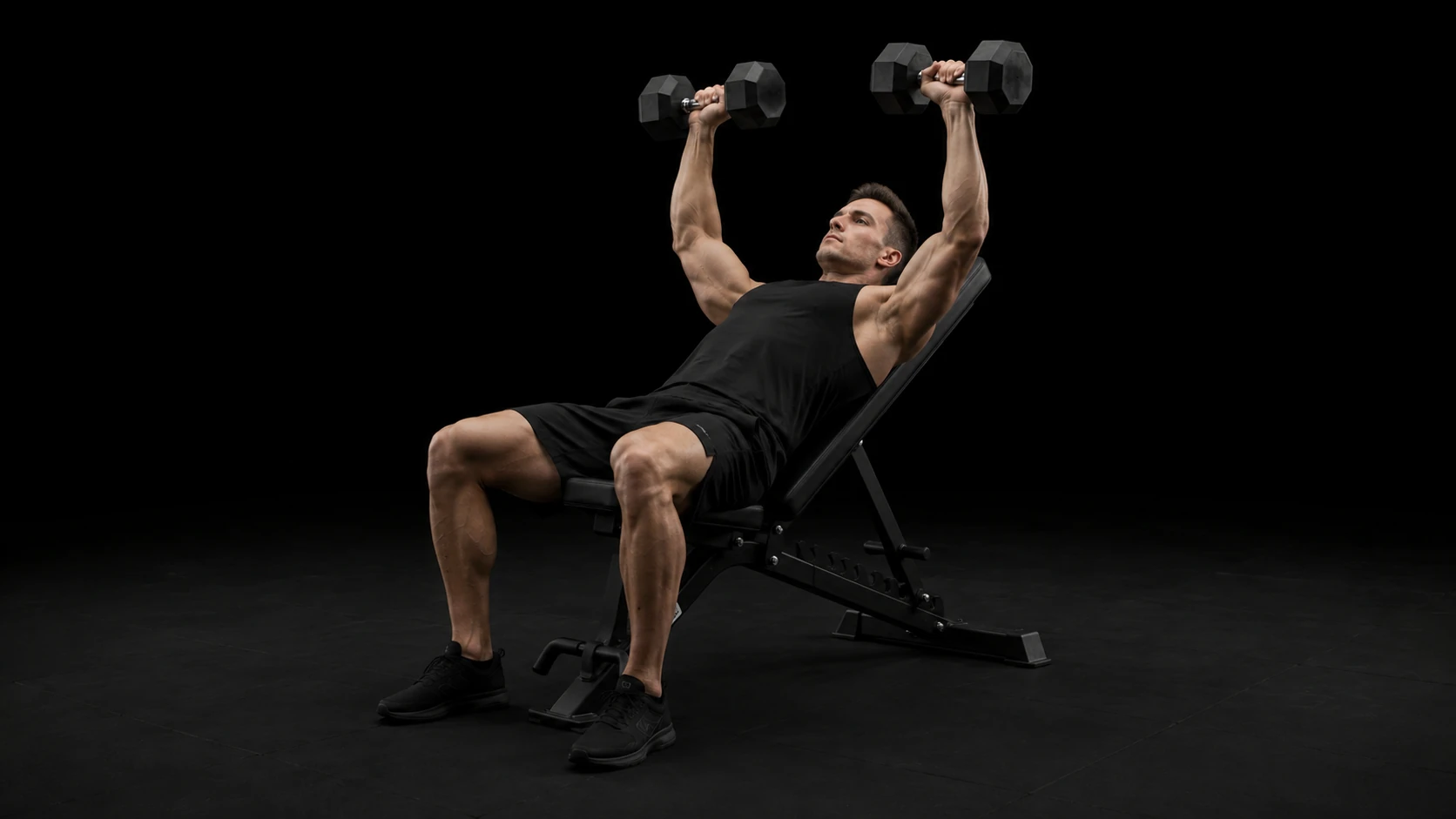
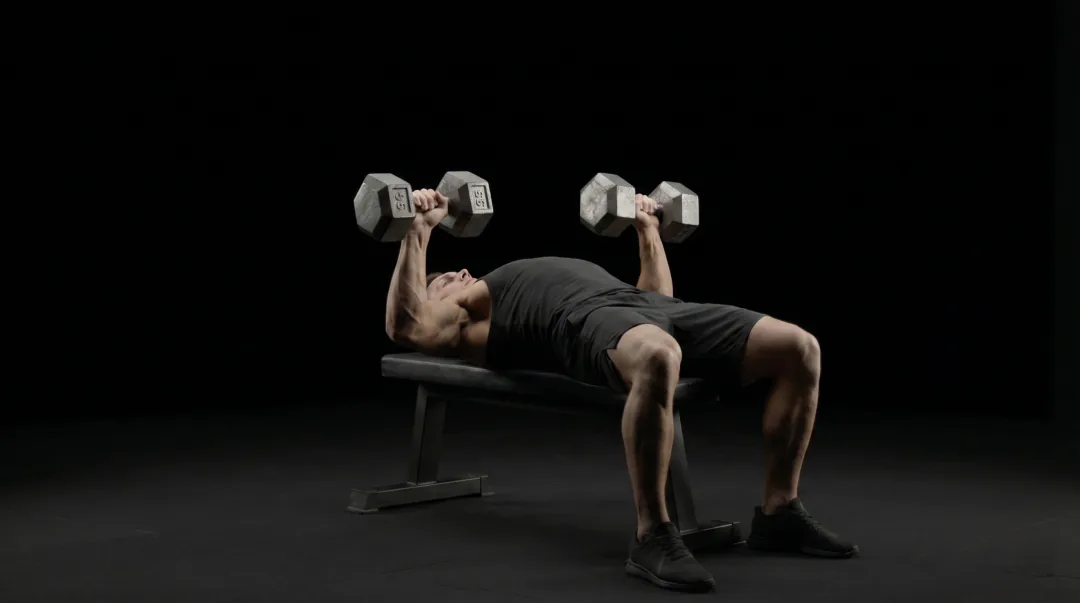
- Incline dumbbell press — More range, independent arms.
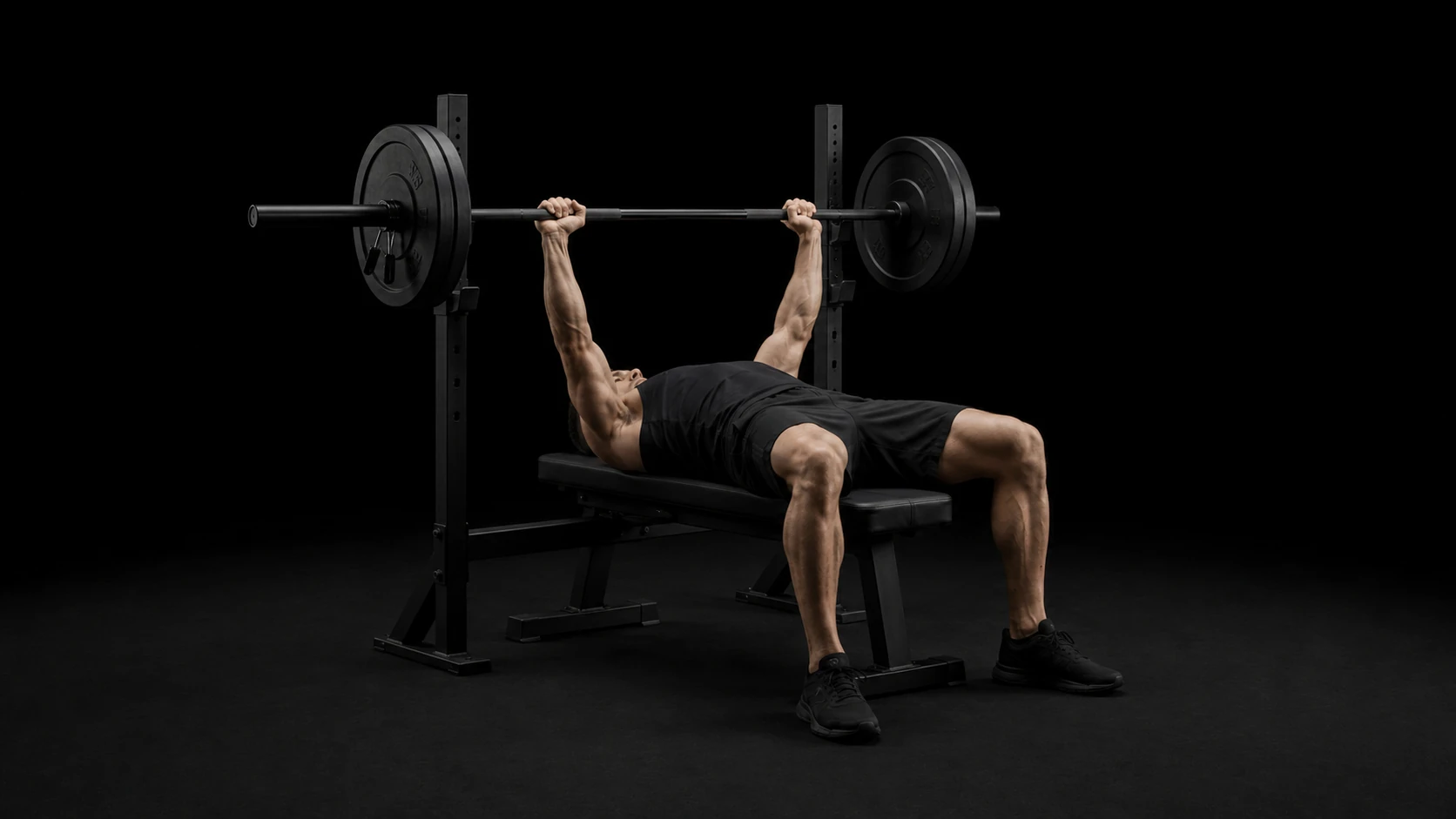
- Barbell bench press — The flat version of the same pattern.
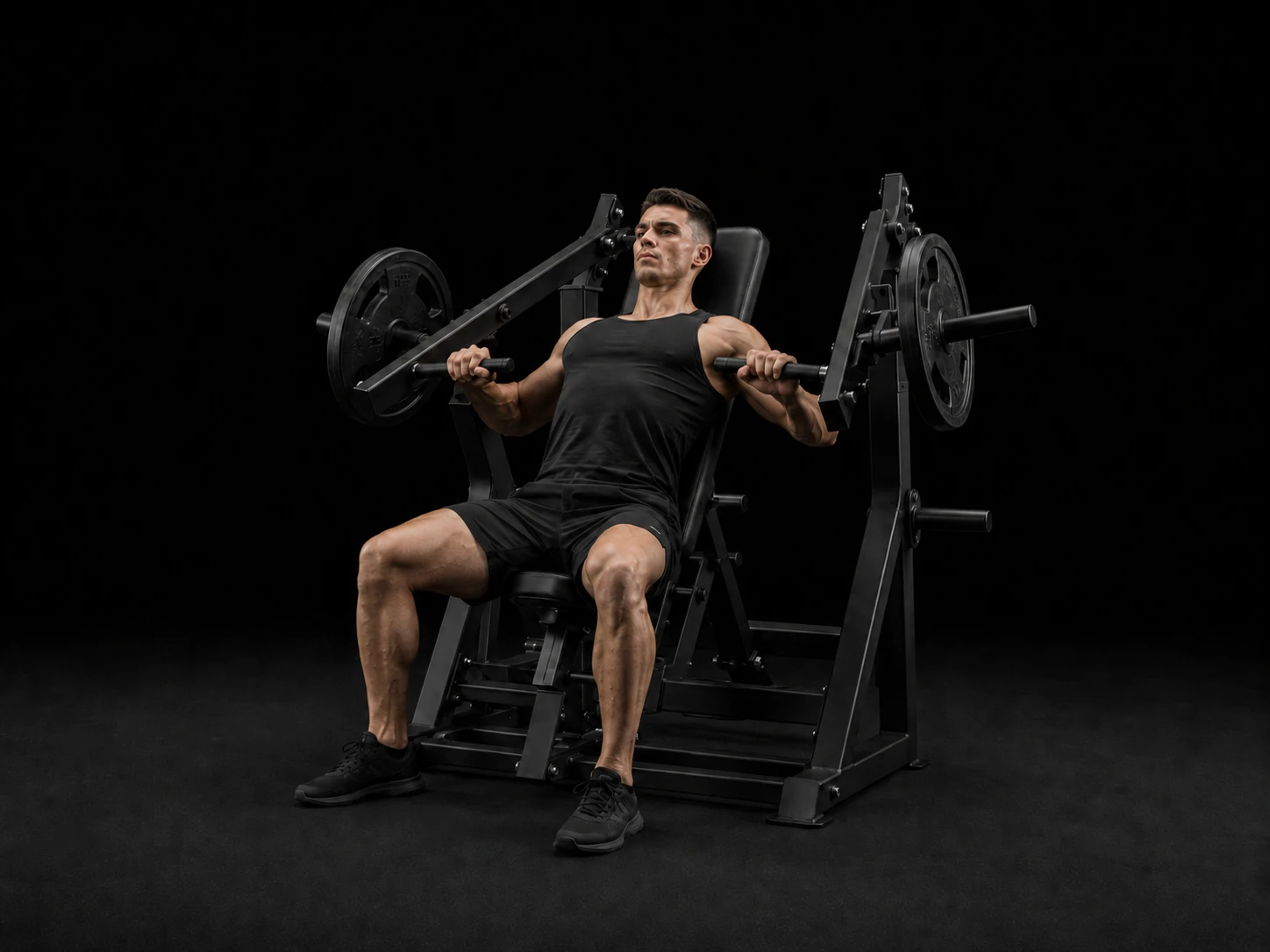
- Smith machine incline press — Fixed path when you are training alone.
PROGRESSIONS
- Incline dumbbell press until the angle feels natural.
- Empty-bar incline with a pause on the upper chest.
- Add load when all work sets stay at the same bench angle.
PROGRAMMING NOTES
Use incline as a primary press on a second chest day or as the first accessory after flat bench. 3–4 sets of 5–10. Log the bench angle in a note if your gym has more than one incline.
EQUIPMENT ALTERNATIVES
- Incline dumbbell press — Default swap when the barbell bothers the shoulders.
- Low-to-high cable fly — Isolation volume for the same line of pull.
FREQUENTLY ASKED QUESTIONS
Open Barbell Incline Bench Press in LIFTAG, or tap the NFC tag / scan the QR code on the machine at a partner gym. Log each working set as weight × reps. The rest timer starts after you save the set, and PRs plus estimated 1RM update automatically.