HOW TO DO STRAIGHT-ARM PULLDOWN
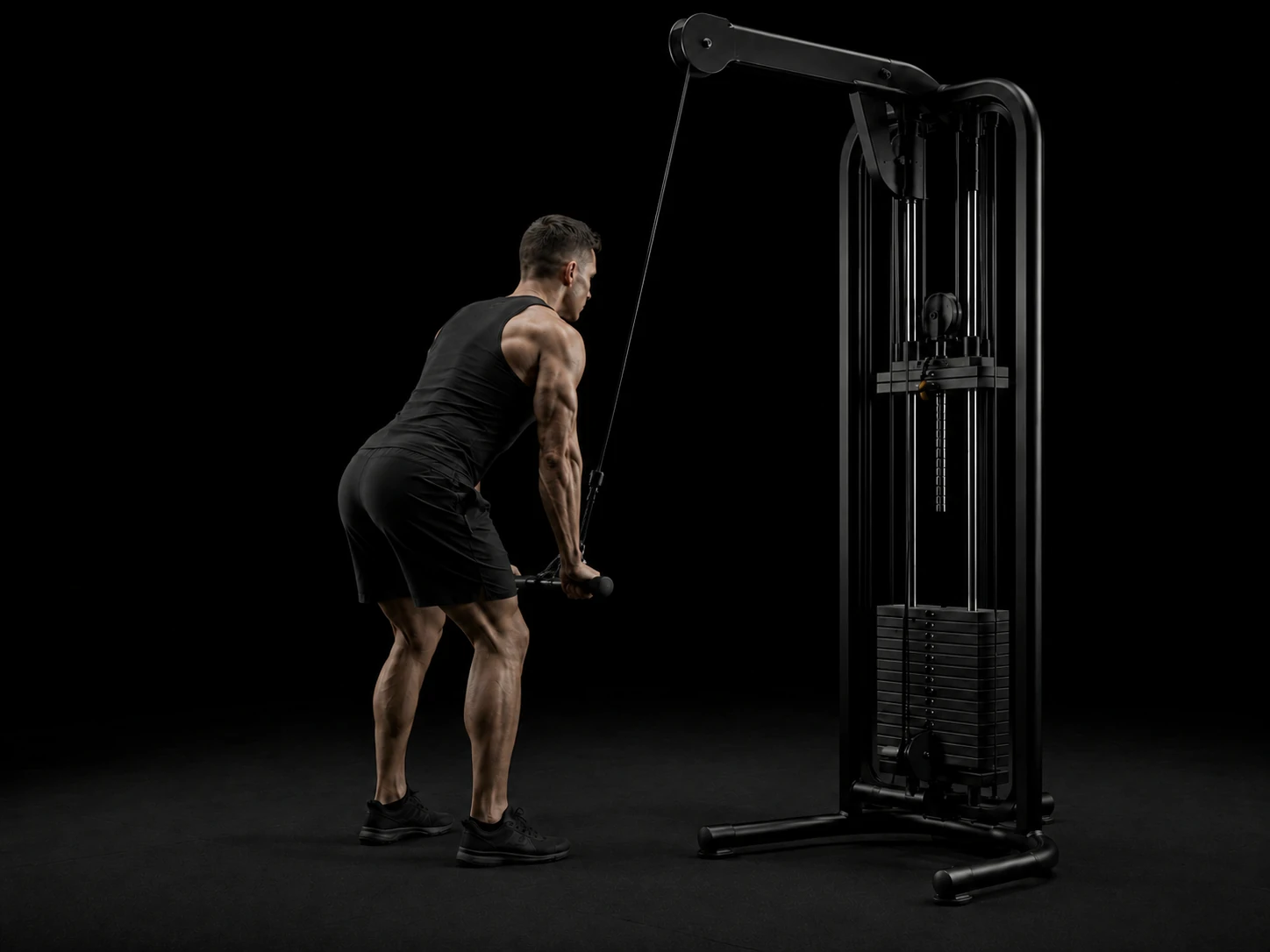
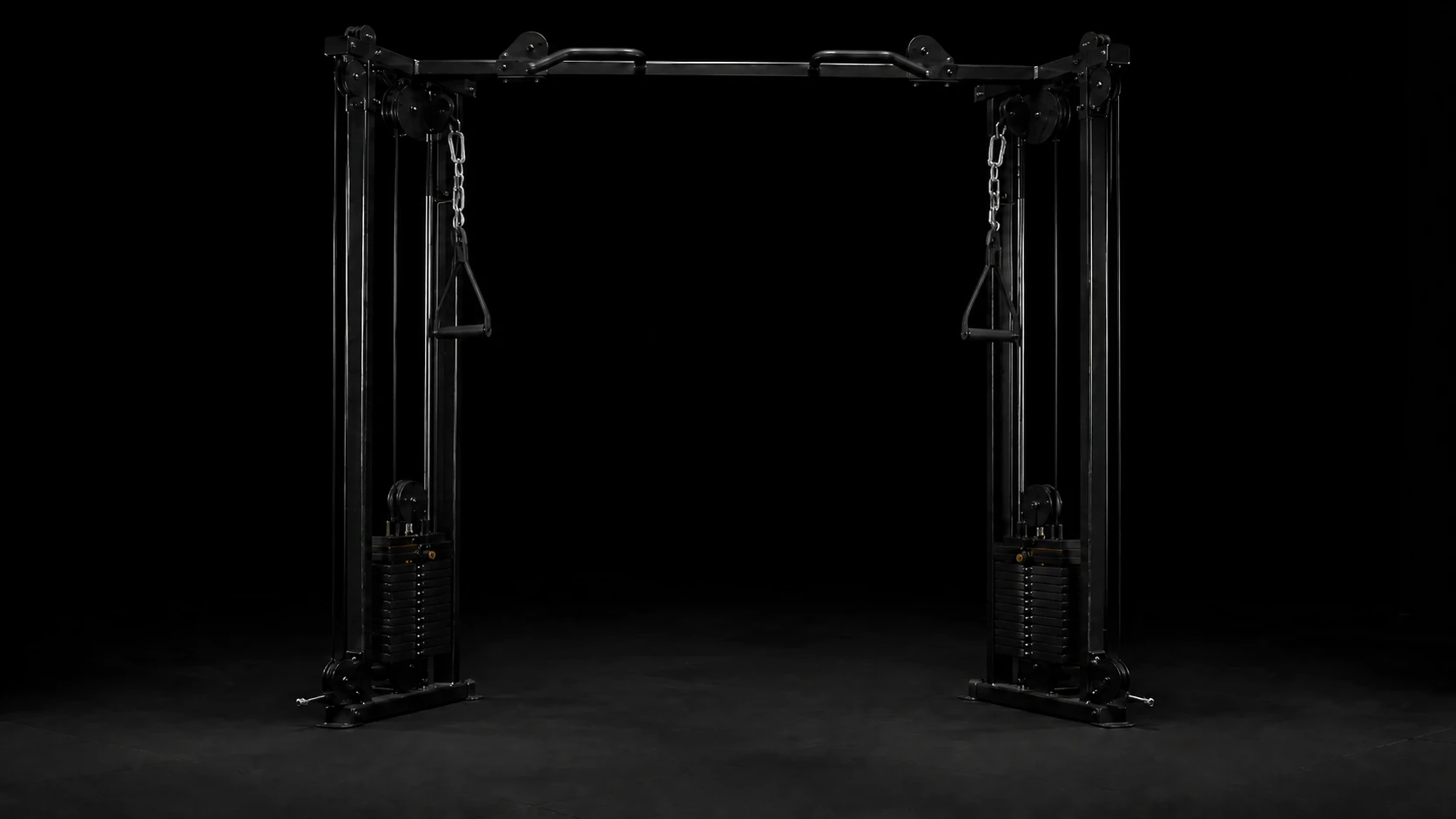
- Clip a bar or rope to the high pulley. Step back, hinge slightly, and reach overhead with the elbows softly bent — that bend stays.
- Sweep the attachment to the thighs by moving at the shoulder, not by bending the elbows. Ribs down, cable clear of the face.
- Squeeze at the bottom without leaning back into a standing crunch. Return slowly to a comfortable overhead reach.
- Pick bar or rope and keep it. A rope can separate at the bottom; a bar keeps both hands honest.
COMMON MISTAKES
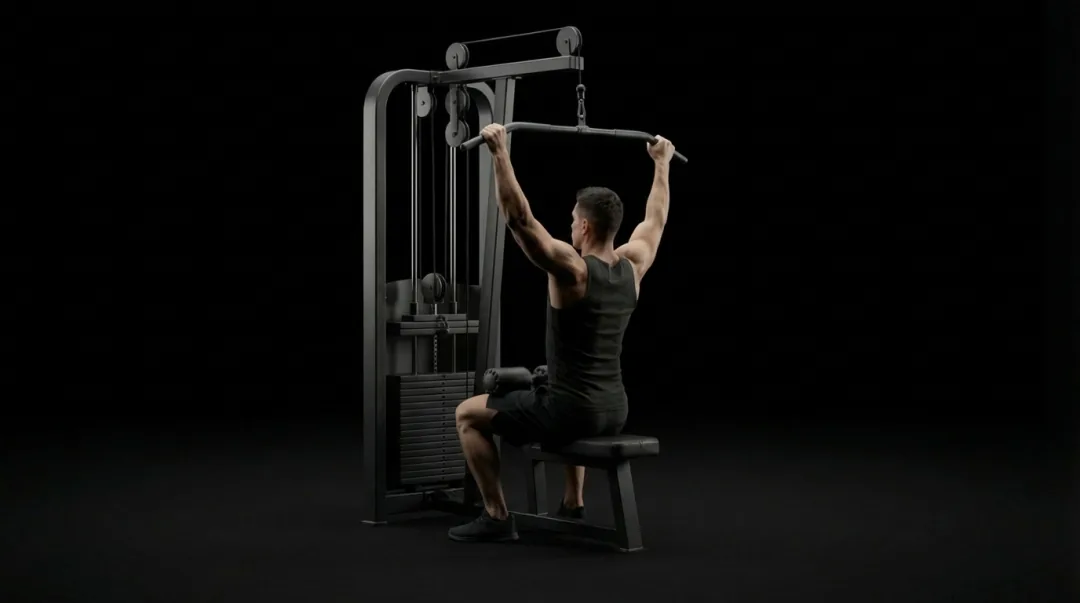
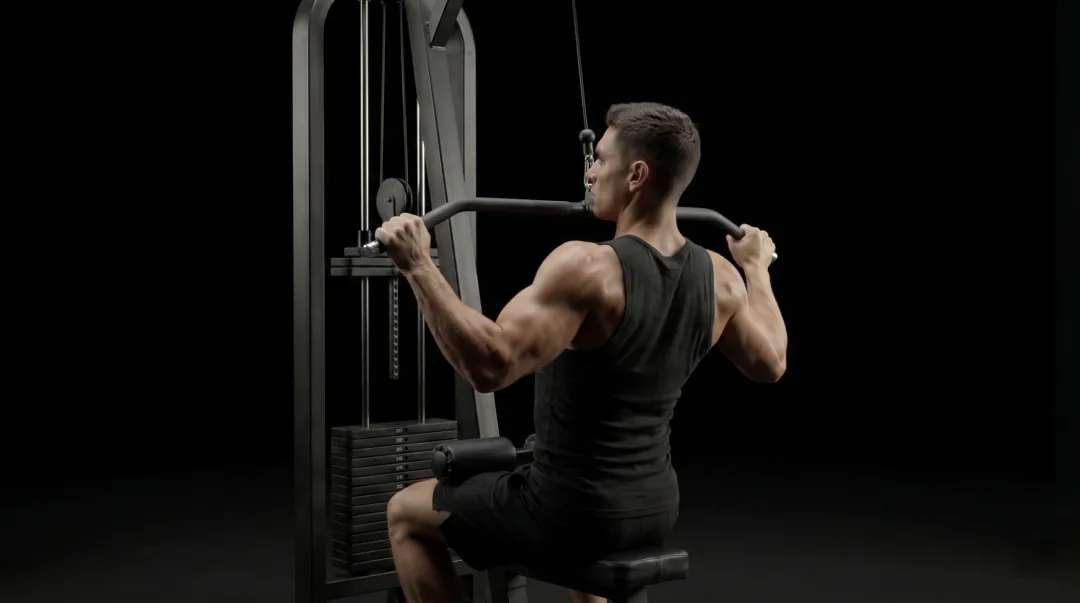
- Turning it into a pulldown. If the elbows keep bending, you are doing a standing lat pulldown. Lock the elbow angle and drop the stack.
- Finishing with spinal extension. The lats take the bar to the legs. A laid-back finish is ego, not range.
- Logging this as lat pulldown. Different joint action, different PR. Isolation stays on this slug.
- Standing so close the cable hits your face. Step back until the line of pull is a long arc. Crowding the stack shortens the lat and crowds the shoulders.
VARIATIONS
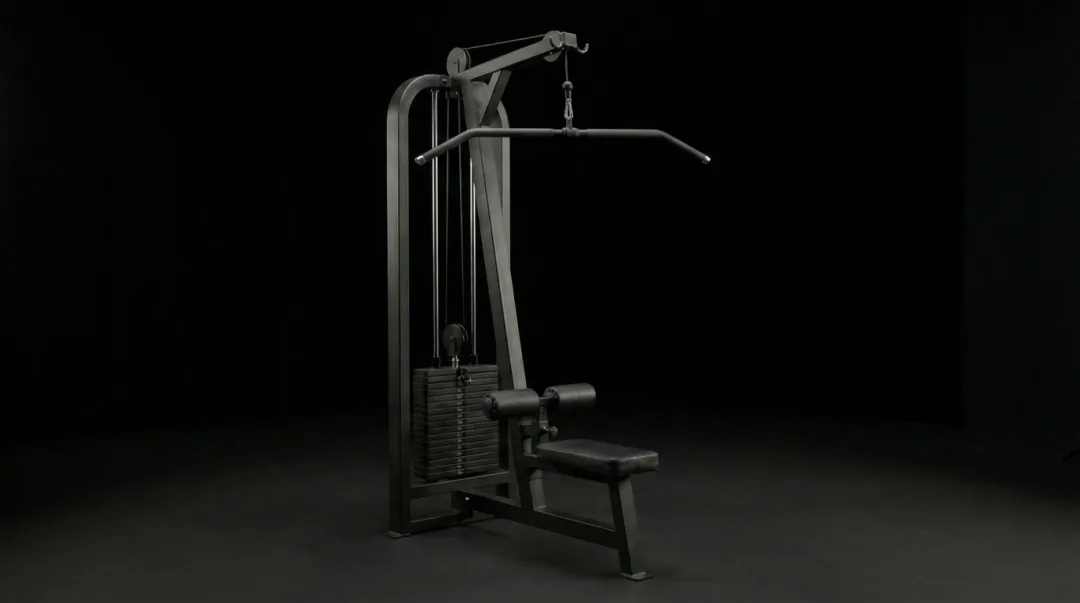
- Lat pulldown — The compound version: elbows bend, you sit, you can load more.
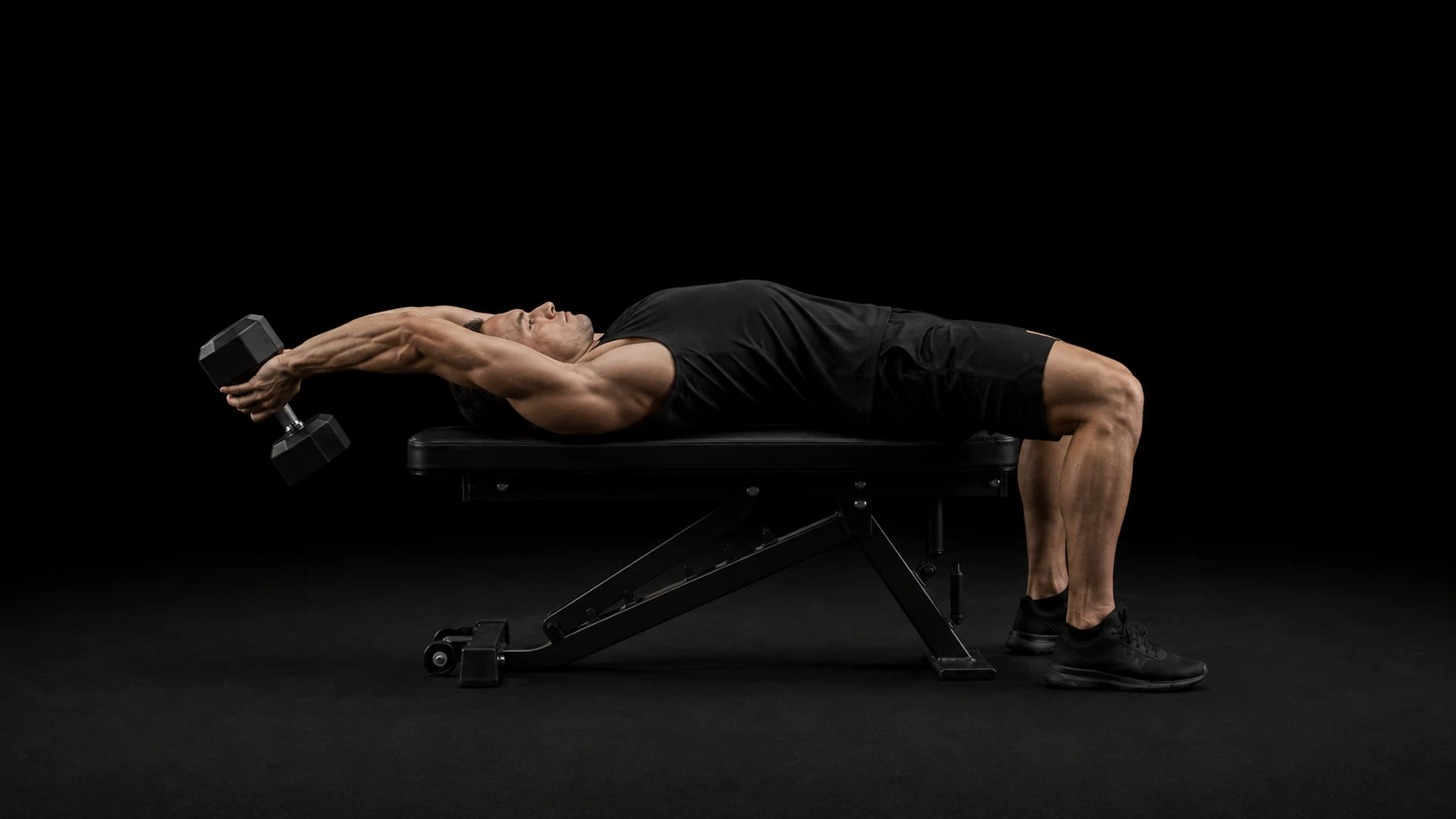
- Dumbbell pullover — Same long-arm shoulder sweep, now on a bench.
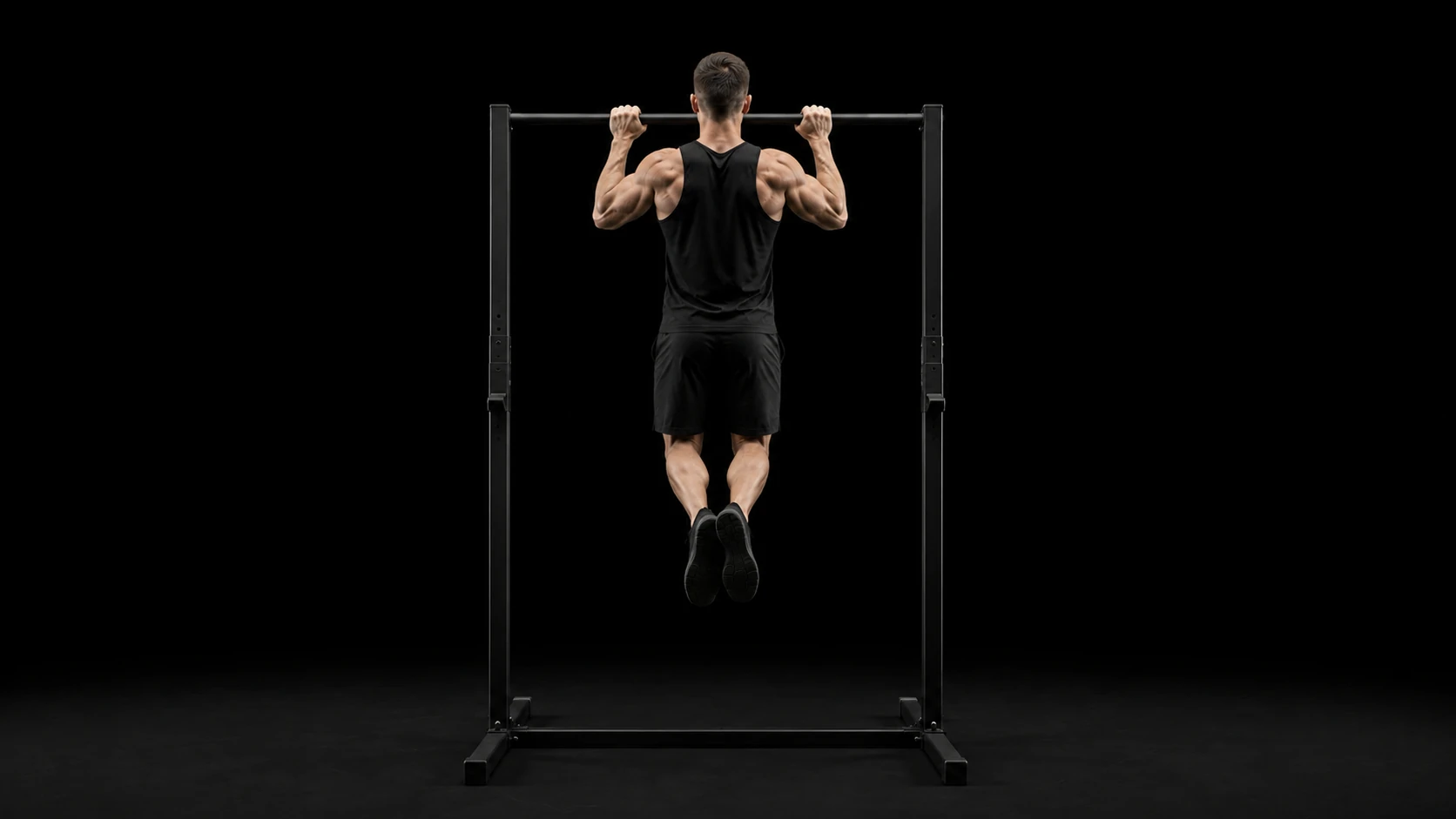
- Pull-up — Vertical compound pull this isolation is supporting.
PROGRESSIONS
- Light rope, slow sweep, elbows locked in a soft bend.
- Working sets of 10–15 where the bar still reaches the thighs without a lean.
- Add load when the last three reps still look like the first three.
- Pause at the thighs or a longer overhead reach when you stall.
PROGRAMMING NOTES
Lat isolation after pull-ups or pulldowns: 2–4 sets of 10–15. It will be light compared with a pulldown. That is correct. Do not chase pulldown numbers here or the elbows will start helping.
FREQUENTLY ASKED QUESTIONS
Open Straight-Arm Pulldown in LIFTAG, or tap the NFC tag / scan the QR code on the machine at a partner gym. Log each working set as weight × reps. The rest timer starts after you save the set, and PRs plus estimated 1RM update automatically.