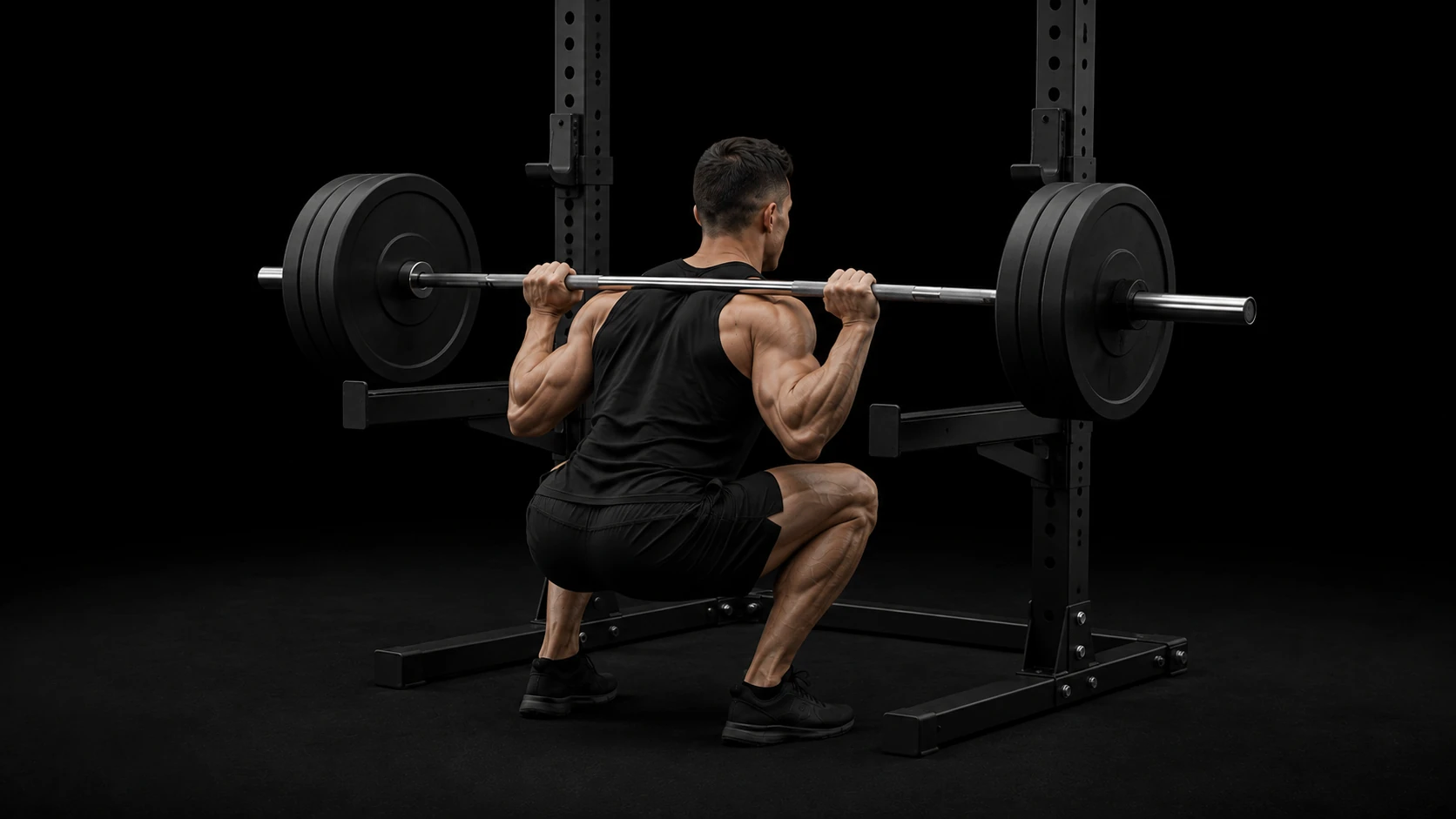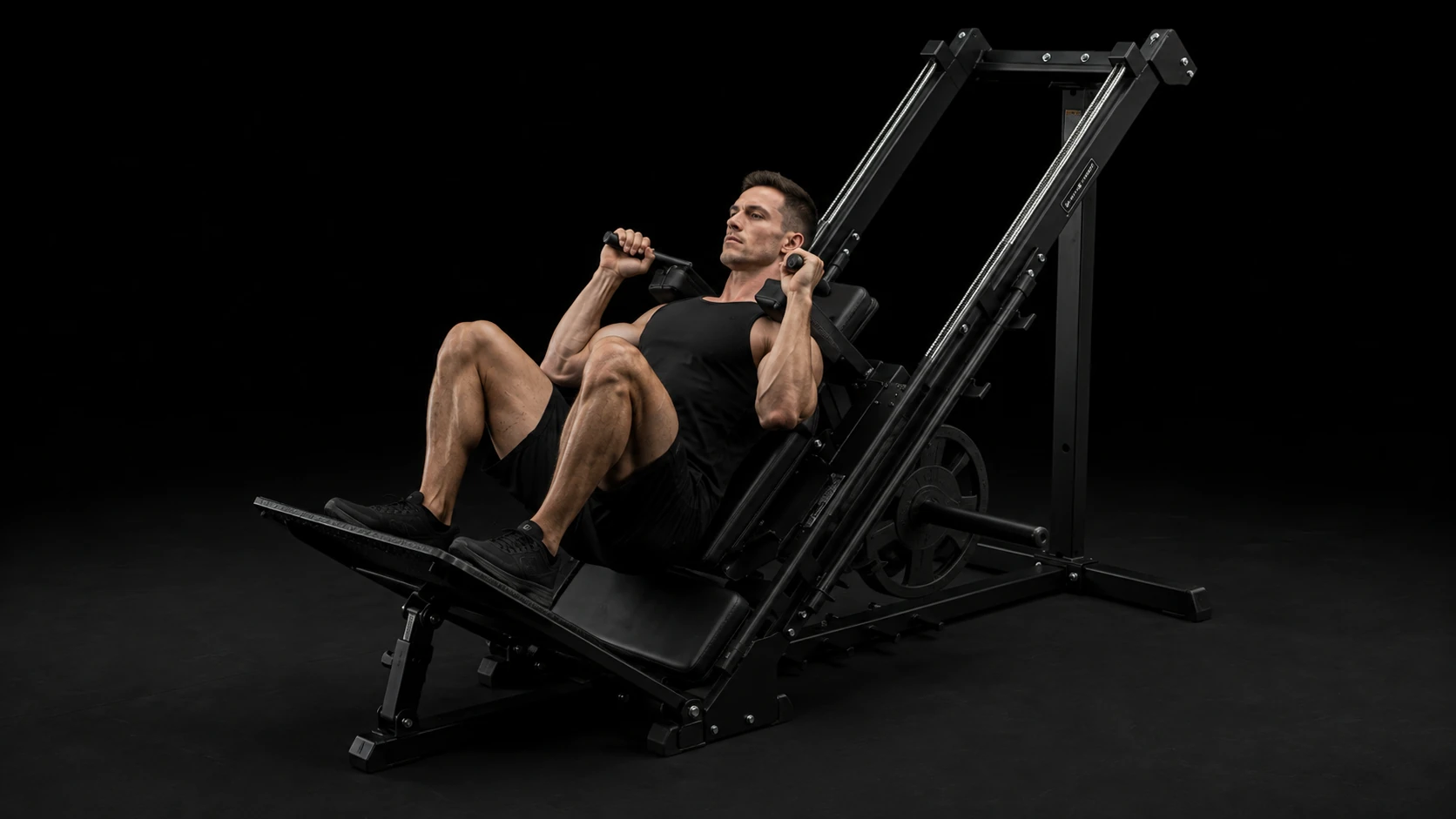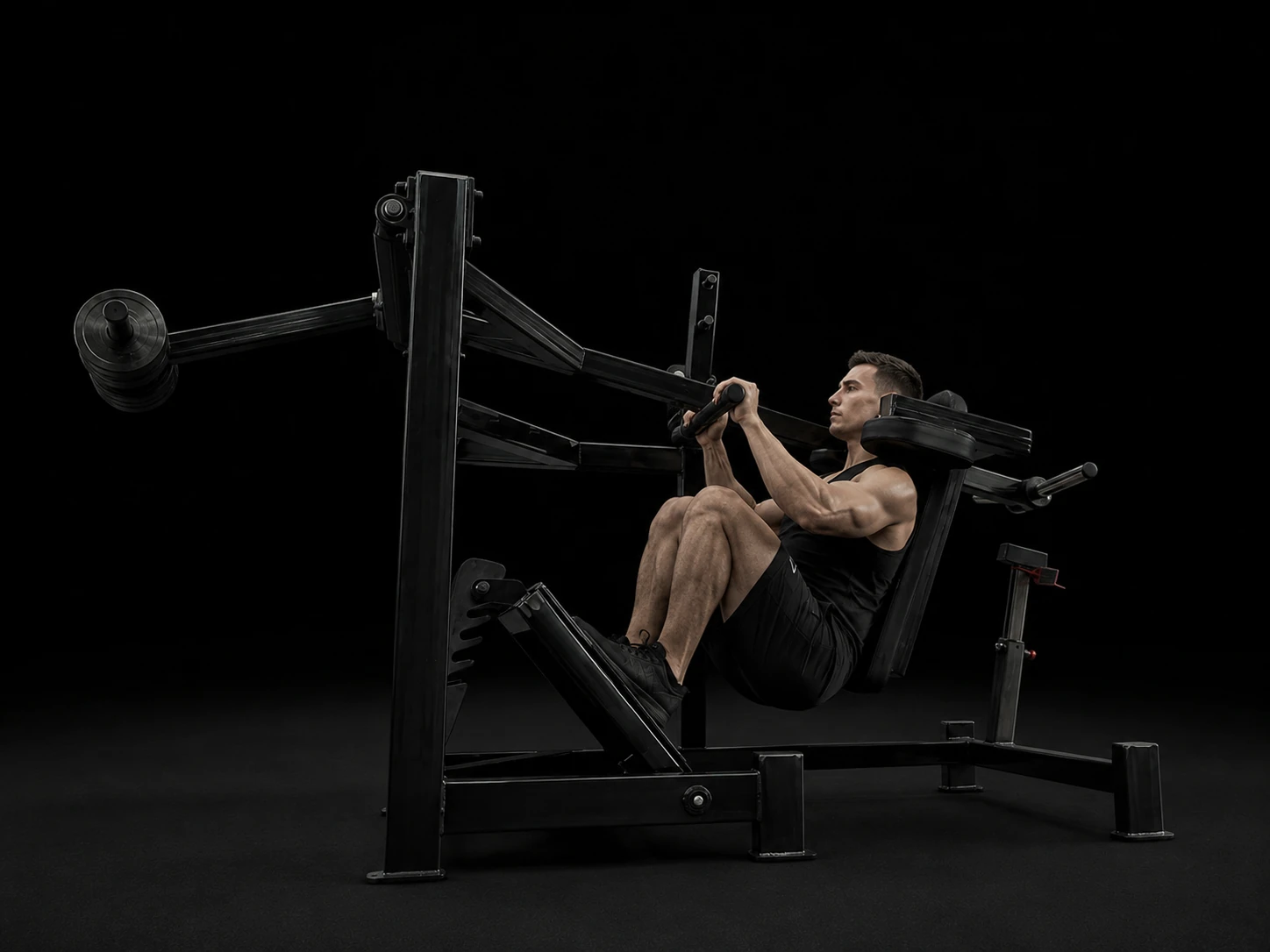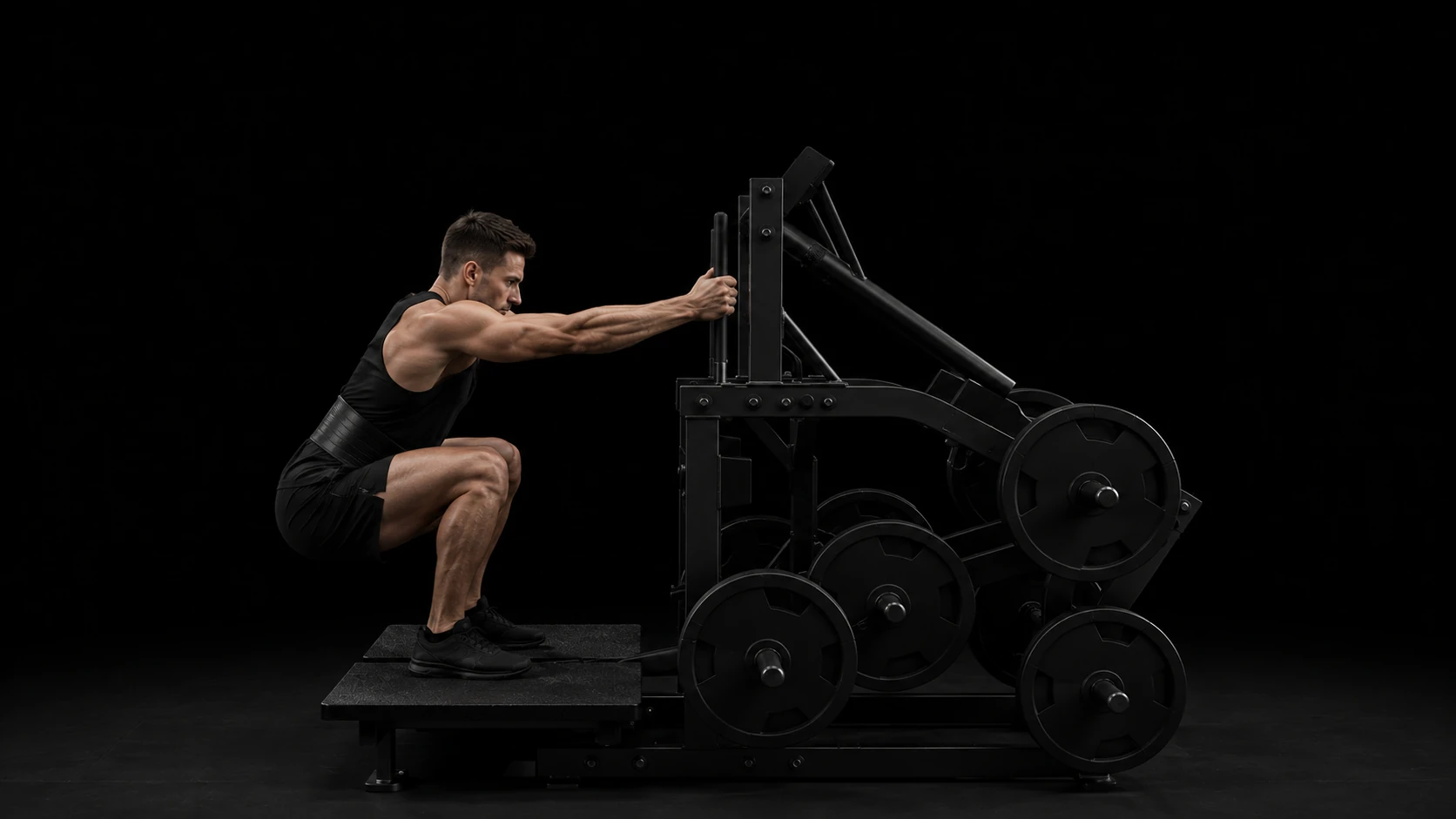
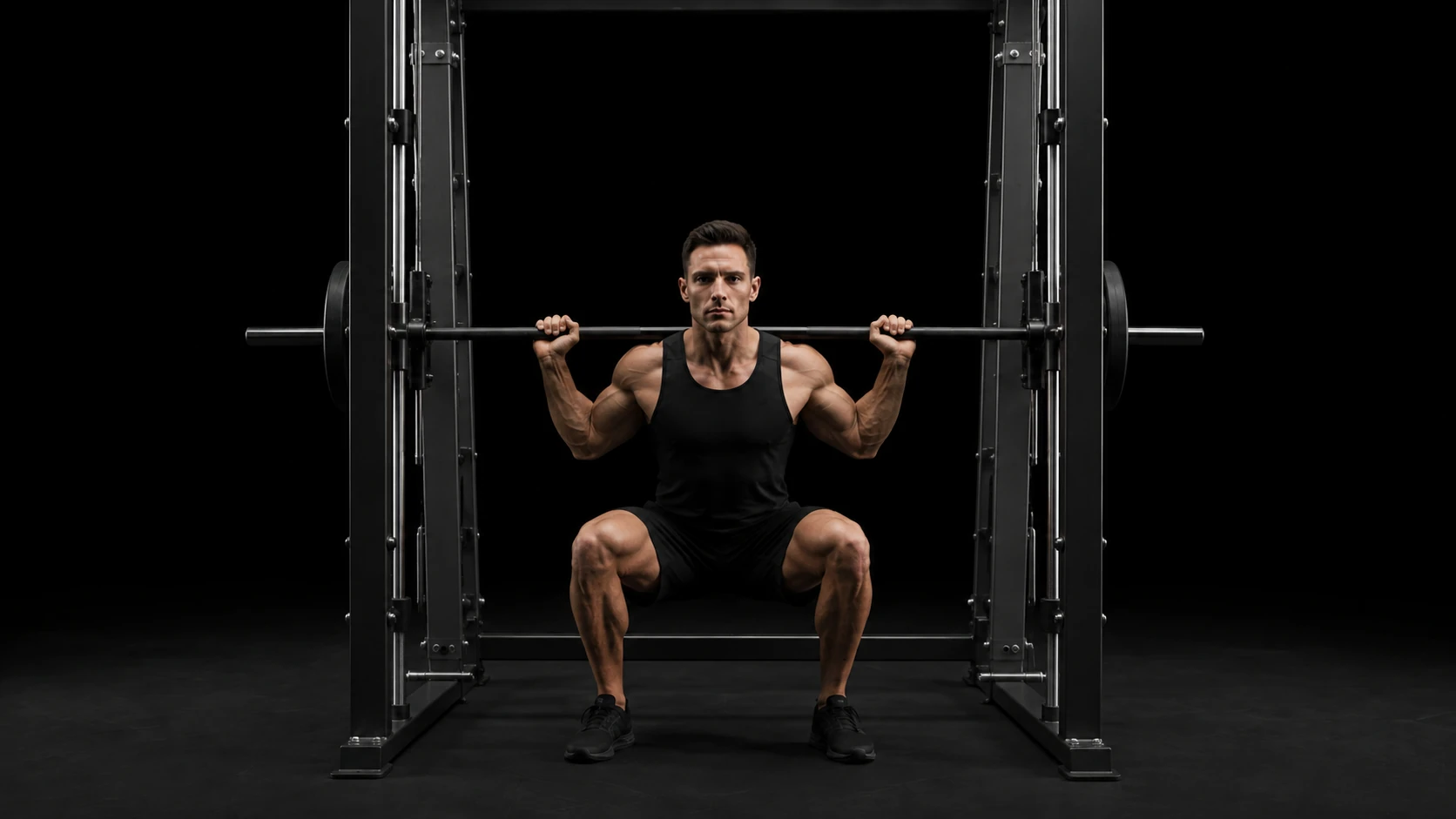
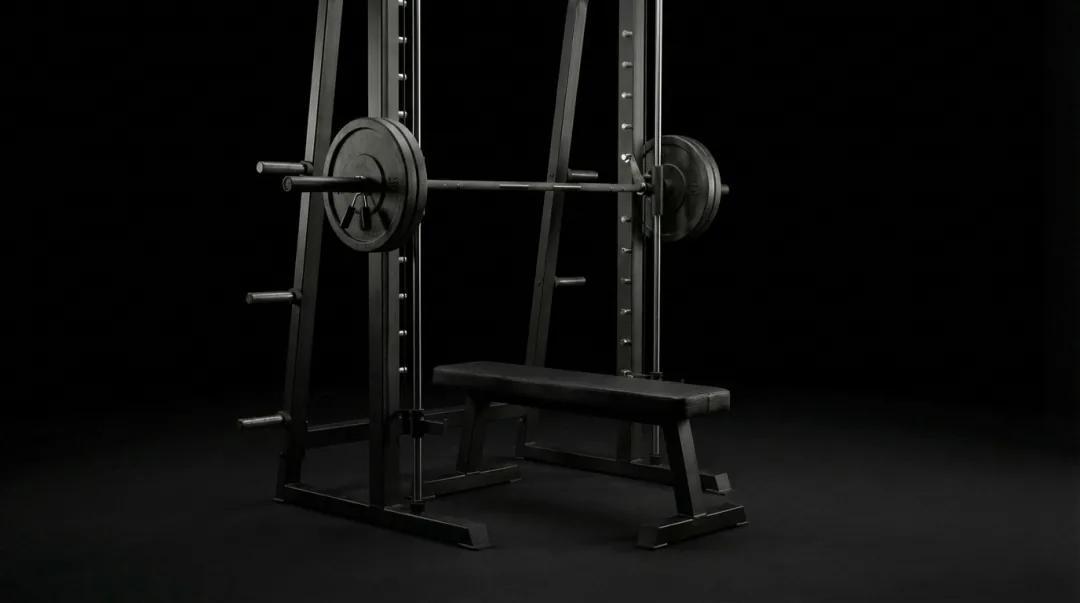
HOW TO DO SMITH MACHINE SQUAT
- Set the safeties just below your planned depth. Bar on the upper traps, not the neck.
- Place the feet slightly in front of the bar so the vertical rail matches a squat, not a good morning.
- Unrack with a wrist twist, brace, and sit between the legs to a repeatable depth — hip crease below the knee if the hips allow.
- Drive up without the knees caving. Re-rack with a deliberate hook, not a bounce into the catches.
COMMON MISTAKES
- Feet under the bar like a free squat. The rail will not travel back with your hips. Start with the feet a few inches forward so the knees and torso can share the work.
- Logging it as a barbell back squat. No walk-out, no bar path to manage. Different groove, different PR. Keep this slug.
- Skipping the safeties. The hooks are not a bottom-position safety. Set the stops. Spinning out of the bar at the hole is a bad day.
- Cutting depth because the machine feels stable. Stability is not a free pass to quarter-squat a huge stack. Film a side set or pick a depth you would count in a rack.
VARIATIONS
- Barbell back squat — Free bar, walk-out, the version that transfers to a meet.
- Machine hack squat — Sled squat with a back pad when you want even less balance tax.
- Pendulum squat — Arcing lever, usually more quad, still a guided squat.
- Belt squat — Load hangs from the hips when the spine is the limiter.
PROGRESSIONS
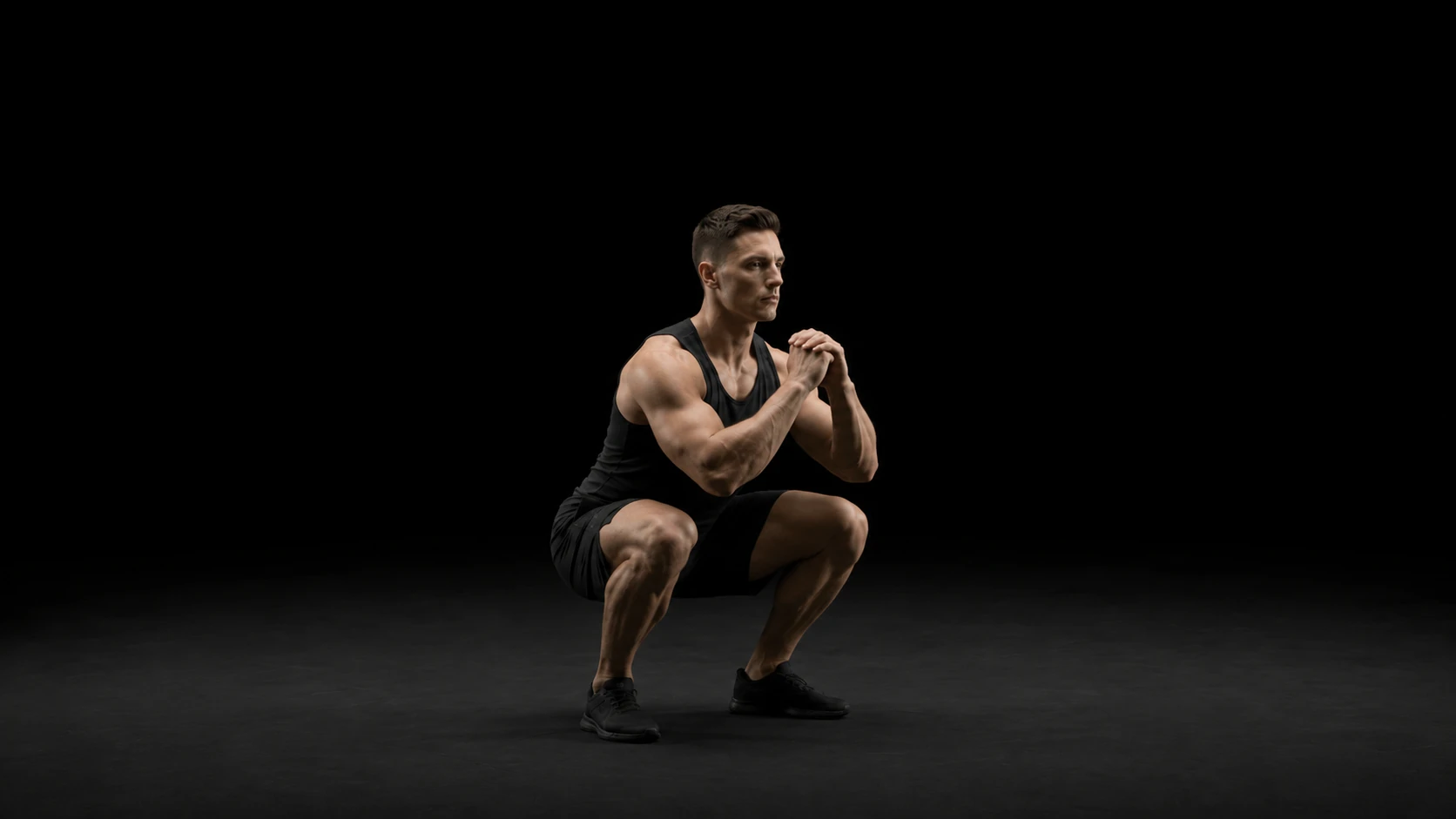
- Bodyweight squat to a consistent depth.
- Empty-bar Smith with a three-second descent and safeties set.
- Working sets at RPE 7–8. Add load when every rep hits the same depth.
- Pause reps if you are bouncing the hole and calling it strength.
PROGRAMMING NOTES
Useful volume squat when you are training alone: 3–4 sets of 6–12. Log rest — three minutes is still normal on hard sets. LIFTAG estimated 1RM from a Smith PR does not transfer to a walk-out squat; do not chase it on barbell back squat day.
EQUIPMENT ALTERNATIVES
- Barbell back squat — Default free-weight version when a rack is free.
- Machine hack squat — Closest machine pattern in most gyms.
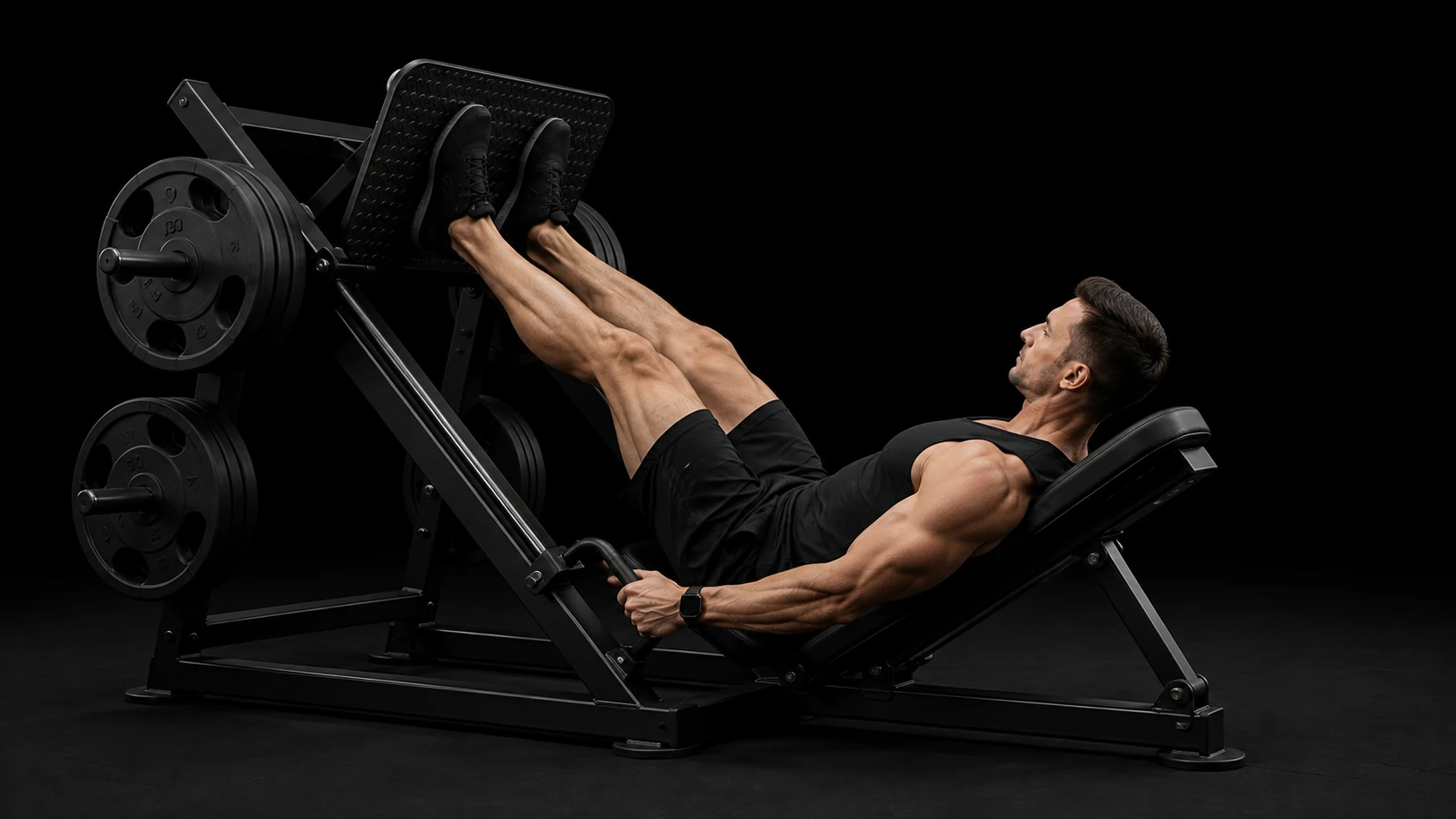
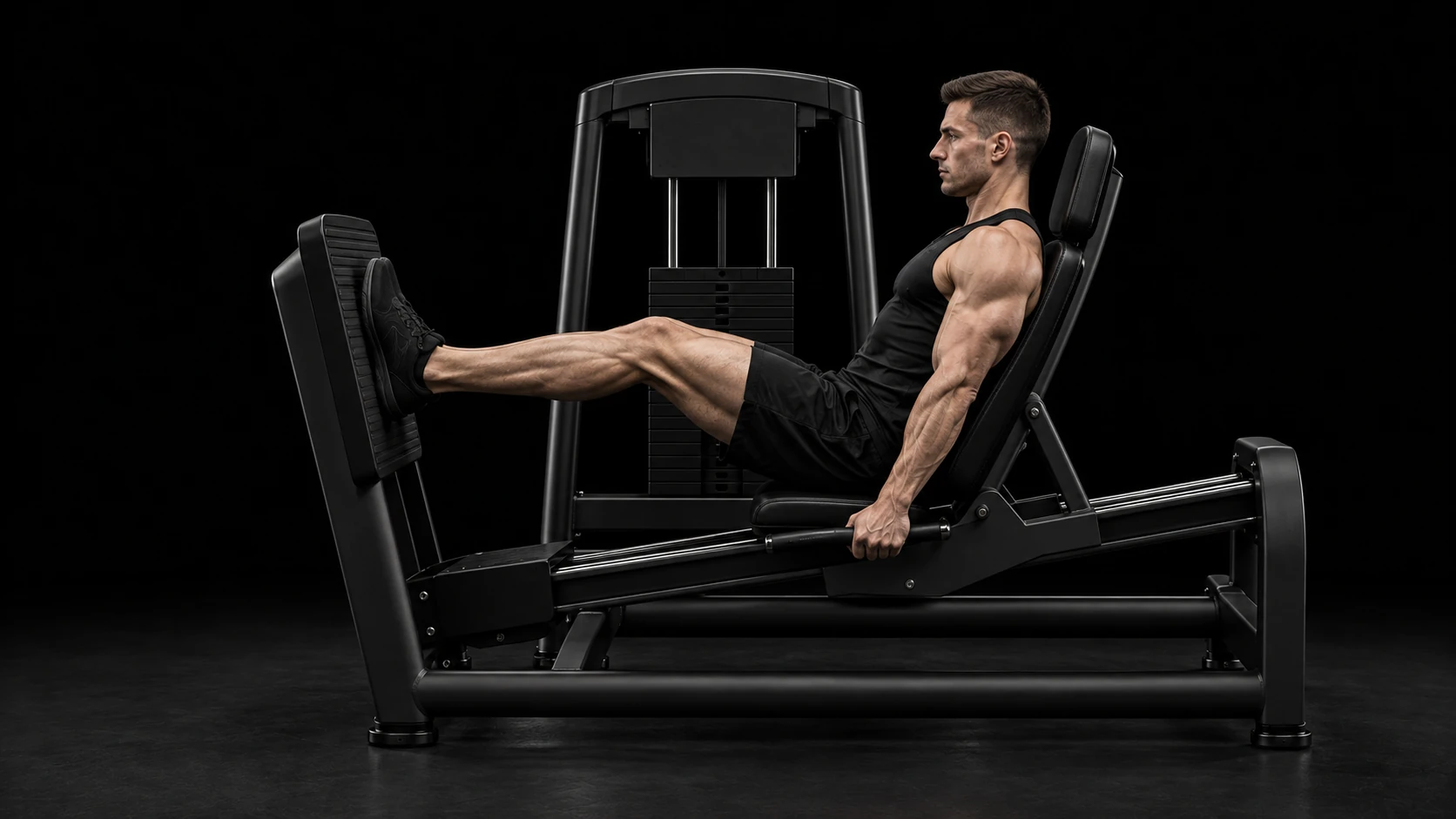
- Standard leg press — Keep quad volume if even the Smith bar bothers the back.
FREQUENTLY ASKED QUESTIONS
It is a different squat. The rail takes the balance and the bar path. Use it for volume, rehab, or a gym with no free rack — then log it here so the free-squat chart stays clean.