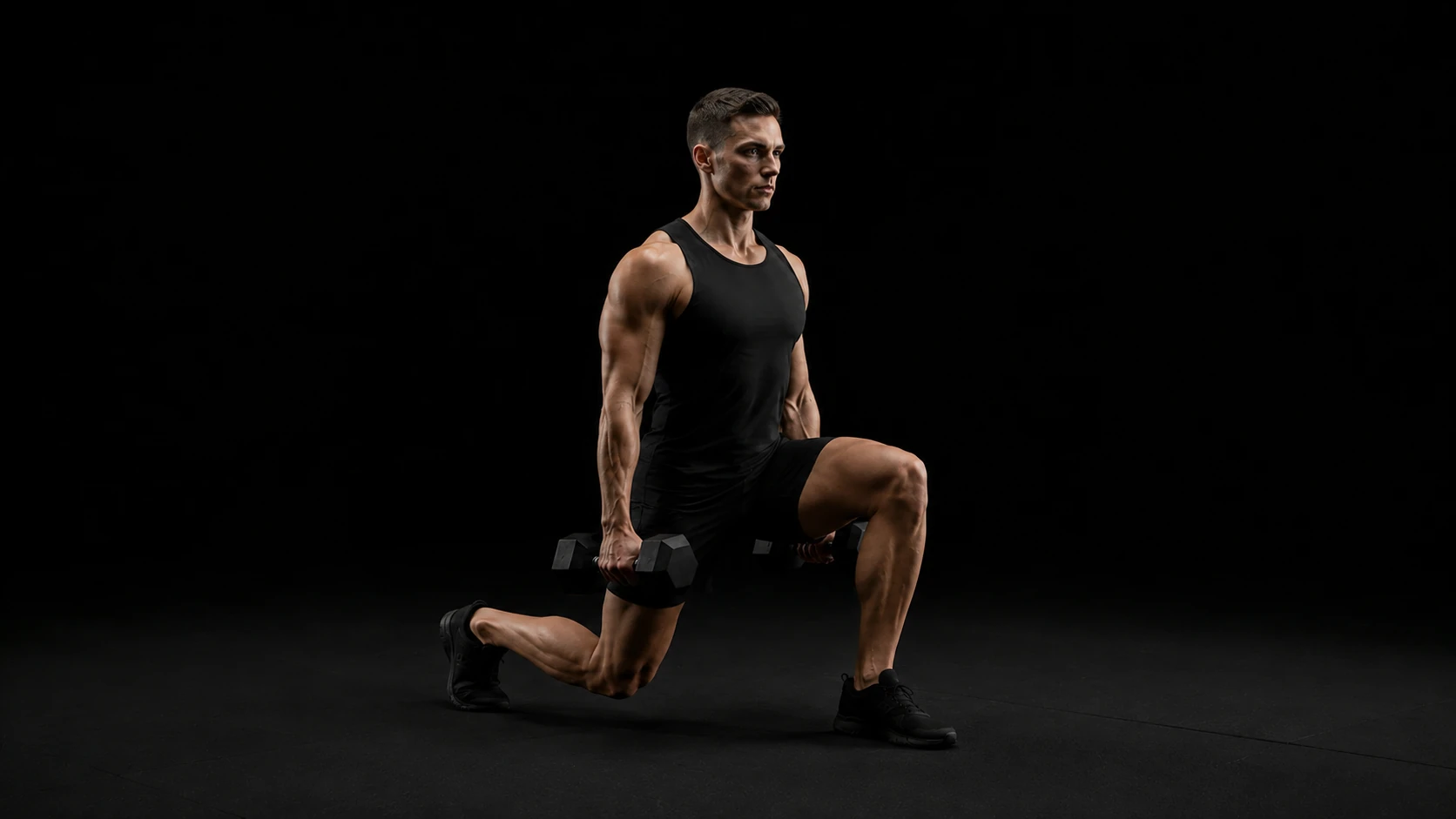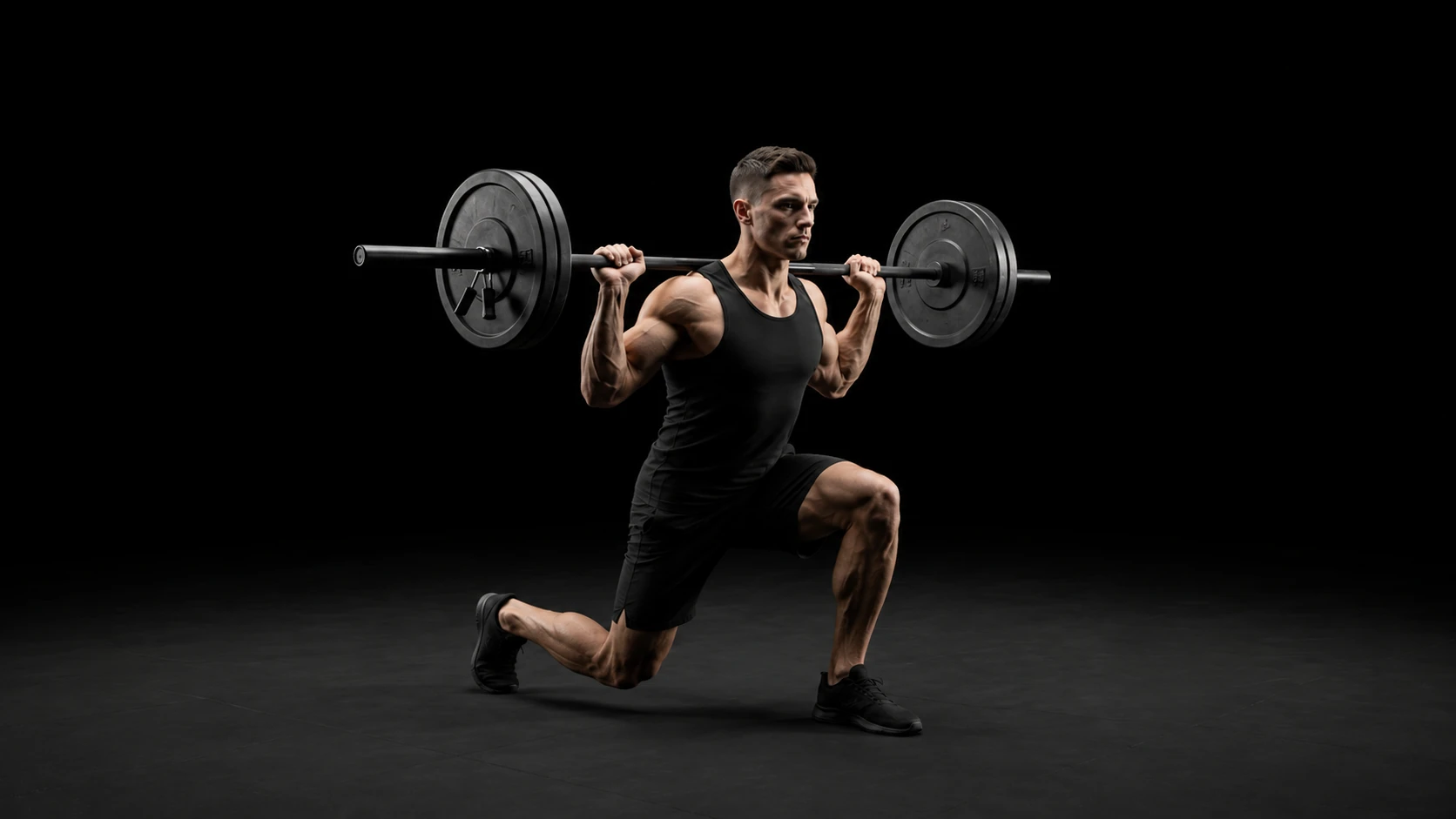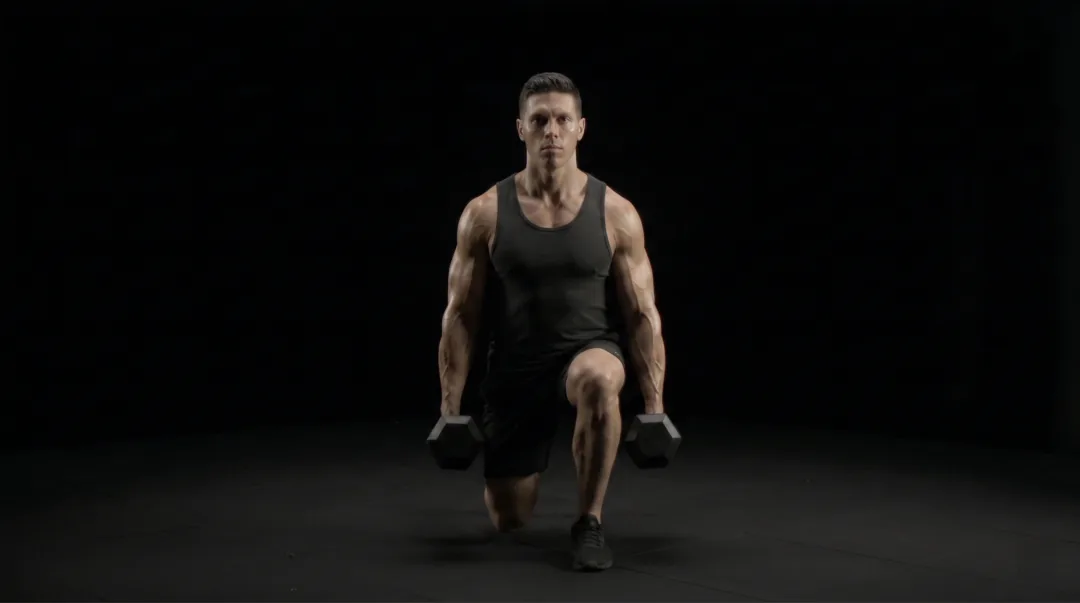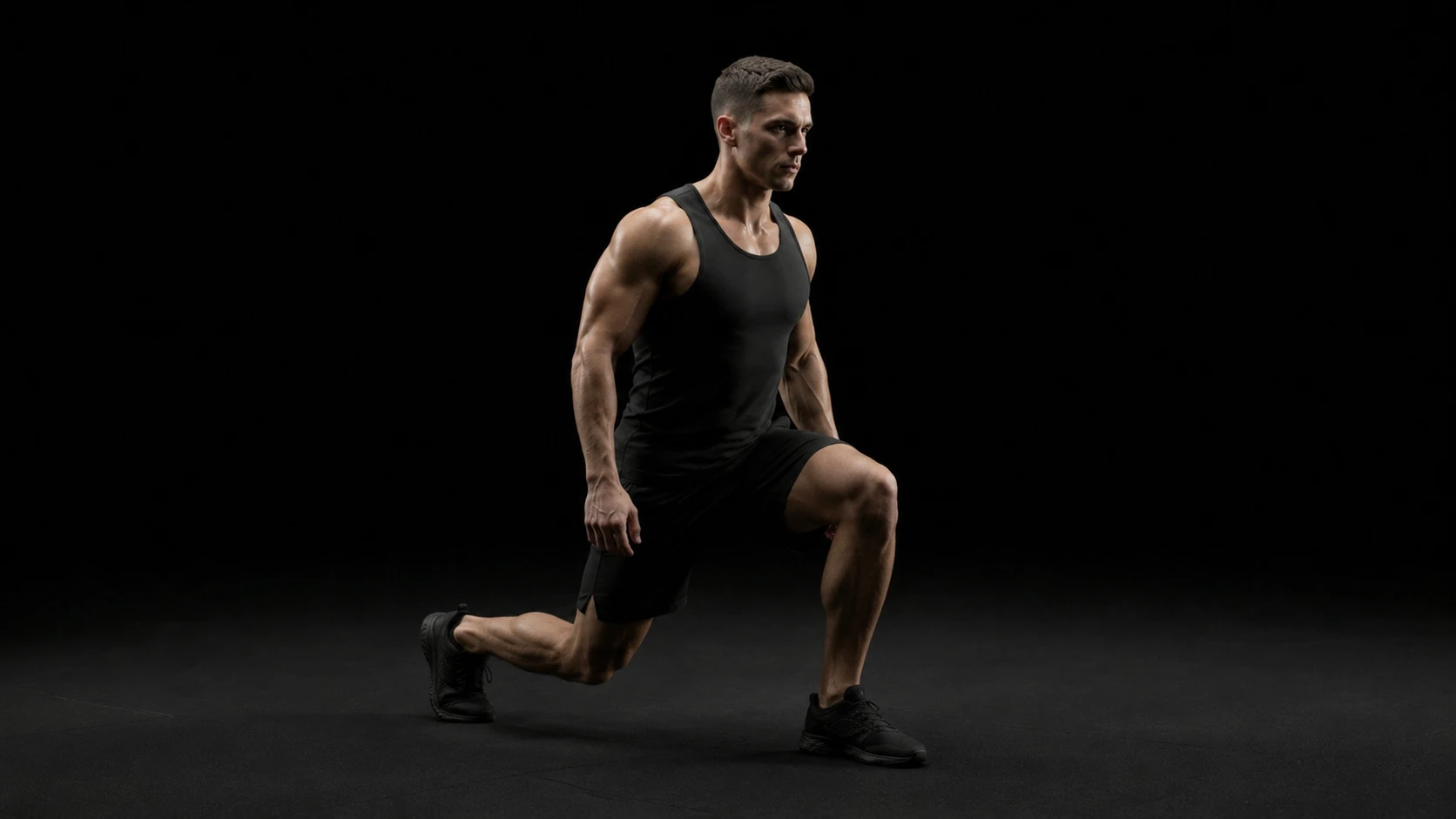
HOW TO DO WALKING LUNGE
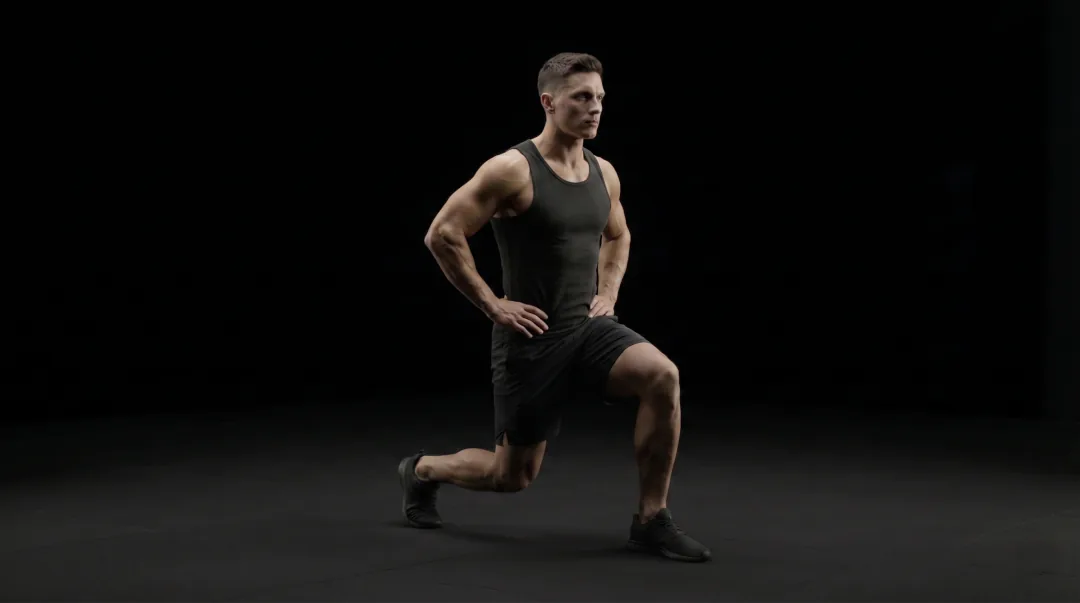
- Clear a lane. Stand tall, step forward into a split you can land quietly, and lower by bending both knees to a depth you can repeat.
- Front foot planted, knee tracking the toes, pelvis facing forward — not a tightrope line and not a wide sloppy step.
- Push through the front foot, bring the rear leg through, and keep walking. Pause a beat if momentum is doing the next landing.
- Shorter steps bias the knee; longer steps bias the hip. Pick one stride and keep it for the set.
COMMON MISTAKES
- Walking a tightrope. Feet should land about hip-width. A single-file line is why people wobble and dump the knee inward.
- Rushing the landing. If you cannot stop at the bottom, the next step is a fall. Slow down or drop the load.
- Logging reverse or split squats here. Walking lunges have a different landing and a different PR. Reverse lunges and split-squat have their own slugs.
- Counting only one side. Decide total steps or steps per leg and keep it. “20 walking lunges” that were 10 per side is fine; mixing the two week to week is not.
VARIATIONS
- Dumbbell lunge — Usually in-place or shorter. Same pattern, easier to control the landing.
- Dumbbell reverse lunge — Step back. Often kinder on the front knee.
- Split squat — Stationary. No walking tax.
- Barbell lunge — Same idea with a bar. Earn this first.
PROGRESSIONS
- Bodyweight walking lunges in a straight line with quiet landings.
- Goblet or light dumbbells once the stride is automatic.
- Working sets of 8–12 per leg. Add load when the last steps still look like the first.
- Reverse lunges or split squats if the walk is the limiter, not the legs.
PROGRAMMING NOTES
Conditioning and single-leg volume, not a max-effort lift: 2–4 sets of 8–12 per leg after squats. Log the implement (bodyweight, goblet, two dumbbells) in the note. A “PR” from switching bodyweight to a 20 kg goblet is real; a PR from shortening the lane is not.
FREQUENTLY ASKED QUESTIONS
Pick total steps or reps per leg and stick with it on this slug. Per-leg is easier to compare to reverse lunges and split squats. Put “/leg” in the set note if there is any chance future-you will guess.