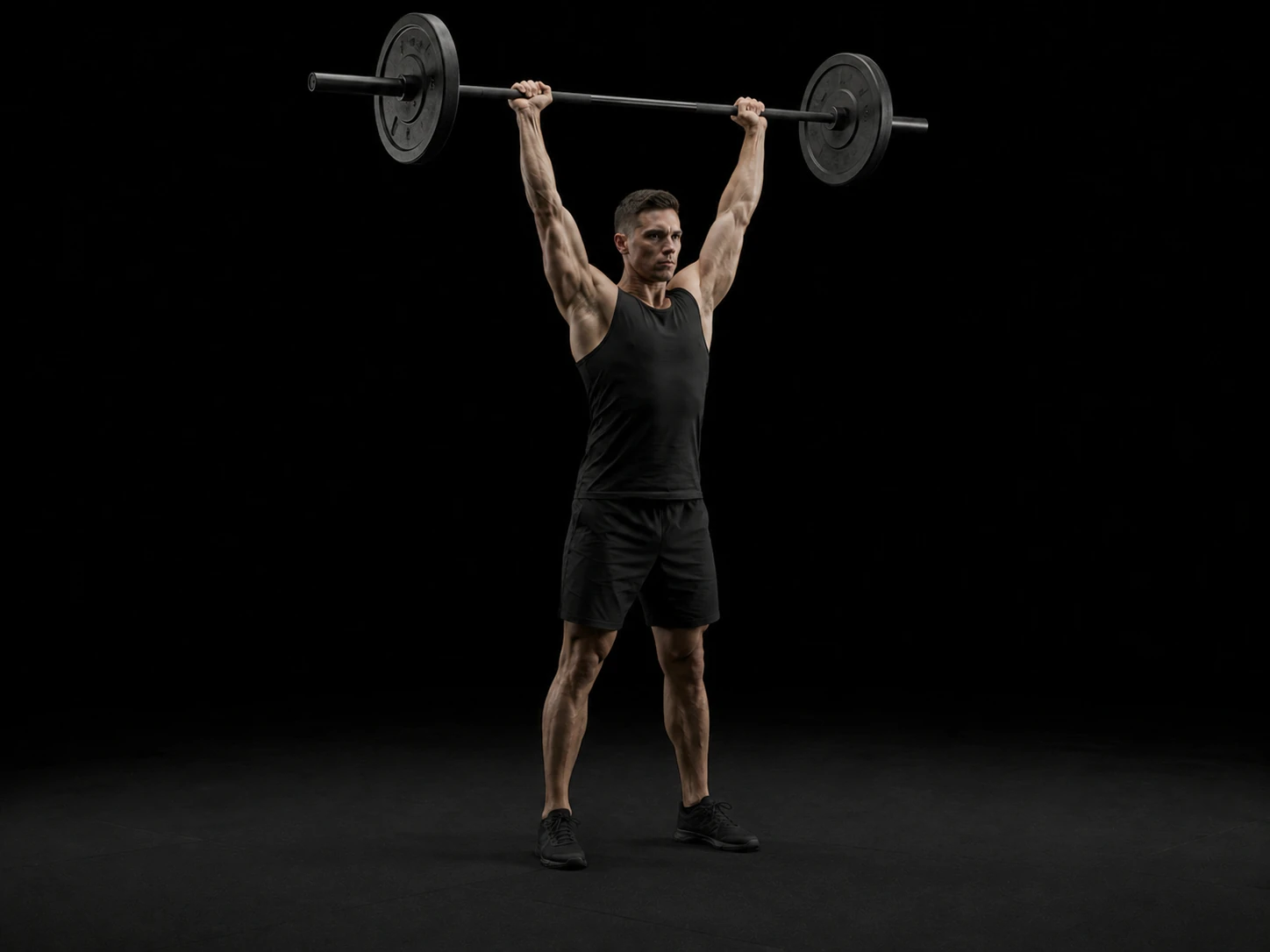
HOW TO DO BARBELL PUSH PRESS
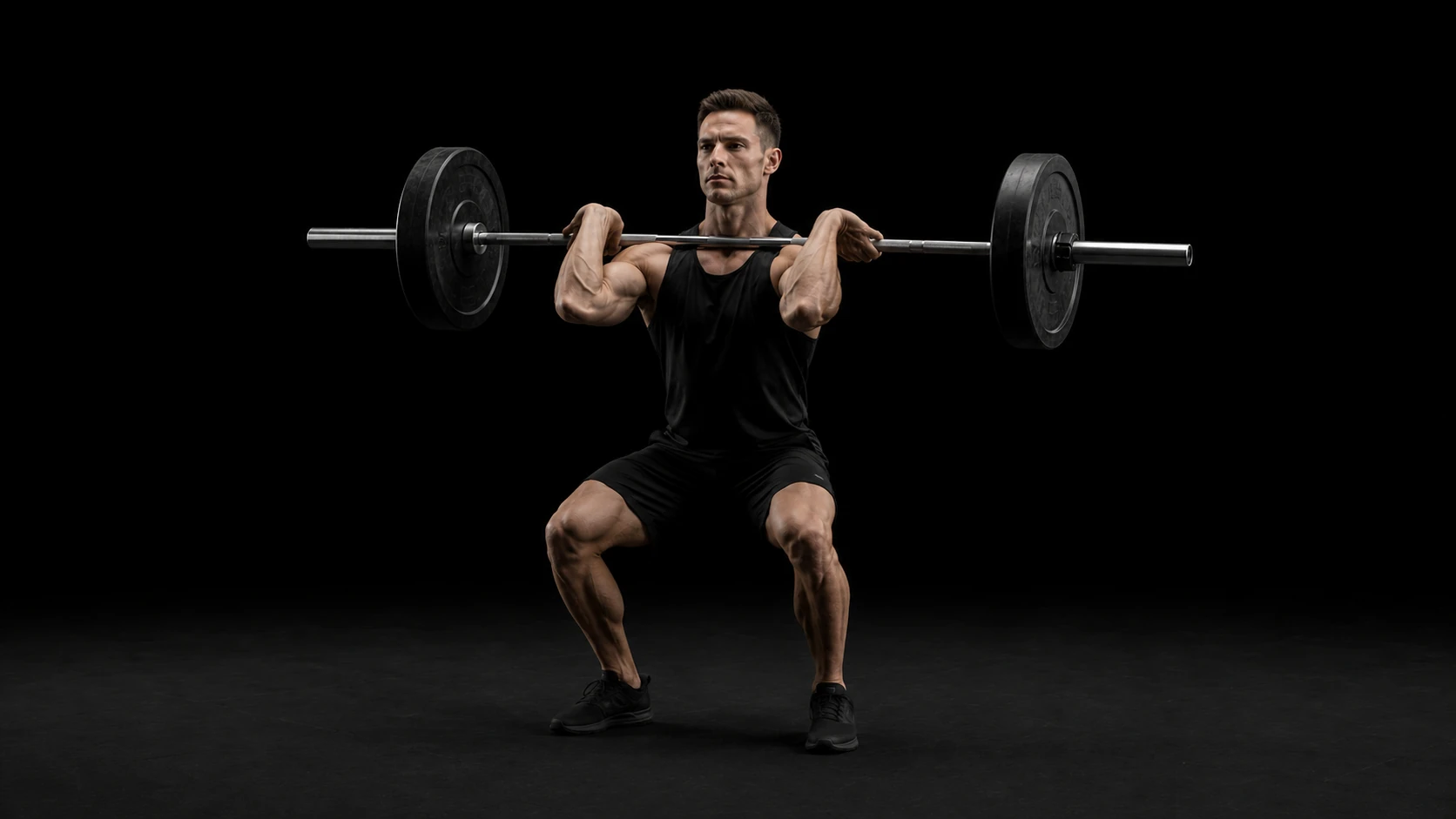
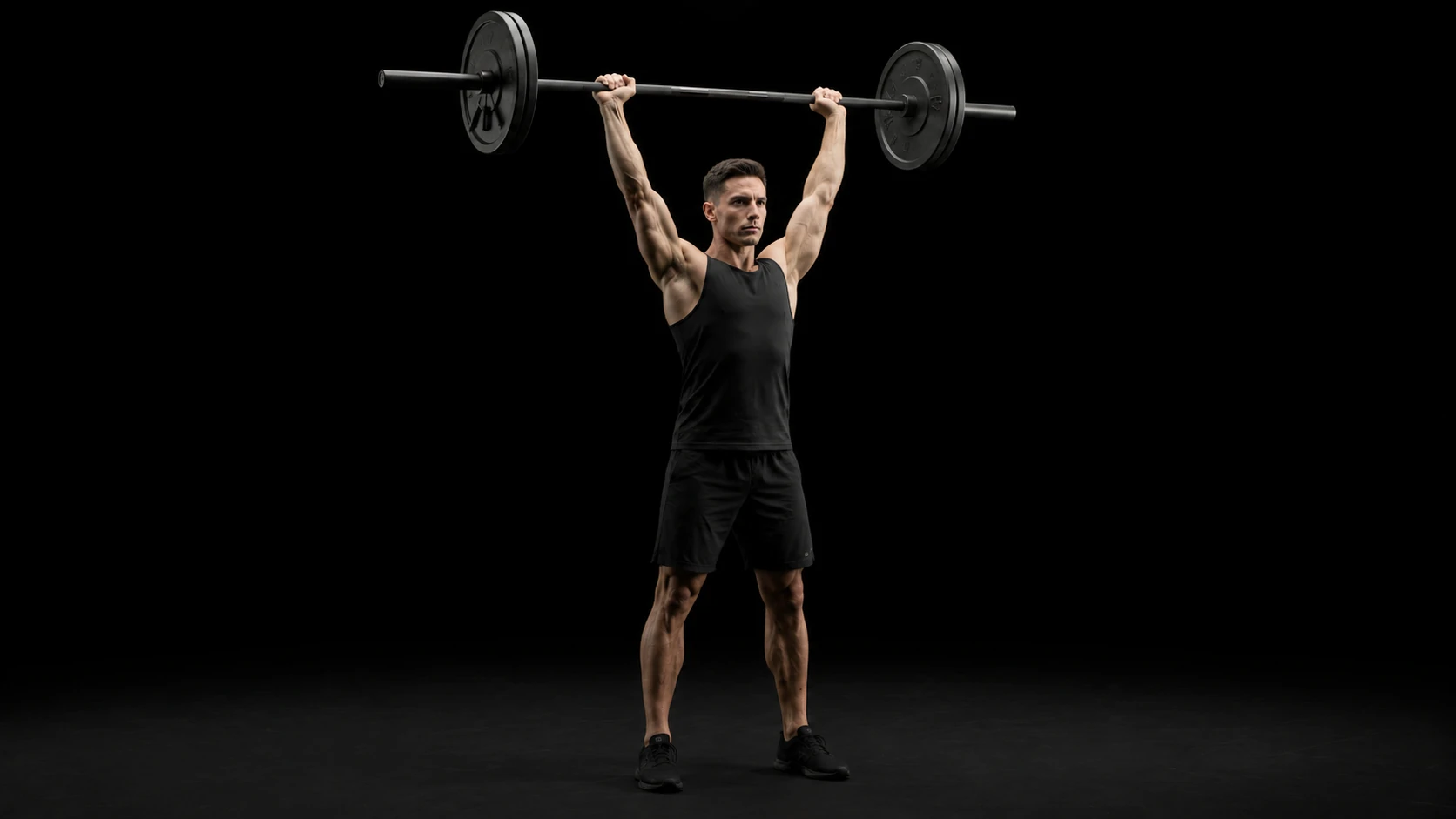
- Set up like a standing overhead press: bar on the front delts, grip just outside the shoulders, glutes on, ribs down.
- Dip two to four inches. Knees go forward, torso stays vertical. If the hips shoot back, you just good-morninged a bar on your delts.
- Drive through the floor so the bar floats off the shoulders, then punch to lockout. Do not press while you are still dipping.
- Finish with the head through and the bar over the midfoot. Lower to the delts, or recatch the dip, then reset the breath before the next rep.
- Feet stay planted. This is not a jerk, a split, or a squat. The legs start the bar; the arms finish it.
COMMON MISTAKES
- Pressing during the dip. The dip loads the legs. If the arms are already pushing, you stole the drive and the bar stalls at the forehead. Dip, drive, then press.
- Logging push press as strict overhead press. You will invent a fake strict PR in a week. Keep this slug. Note “strict” only if you actually switched lifts.
- A squat-depth dip. Long dips dump the torso forward and waste the stretch-shortening. Short and vertical. Think quarter-dip, not a front squat.
- Cutting the lockout because the legs already did the work. The point is still an overhead lockout. Stand tall at the top. A half-press with a bounce is just a dip shrug.
VARIATIONS
- Standing barbell overhead press — No dip. The strict version this overloads.
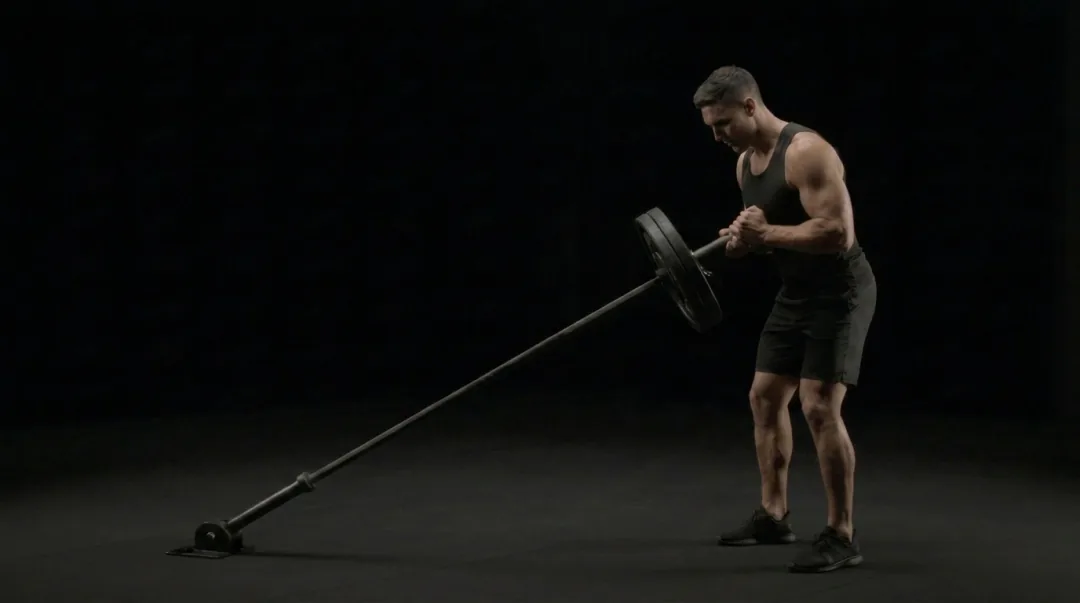
- Landmine press — Single-arm drive when a barbell lockout is not the goal.
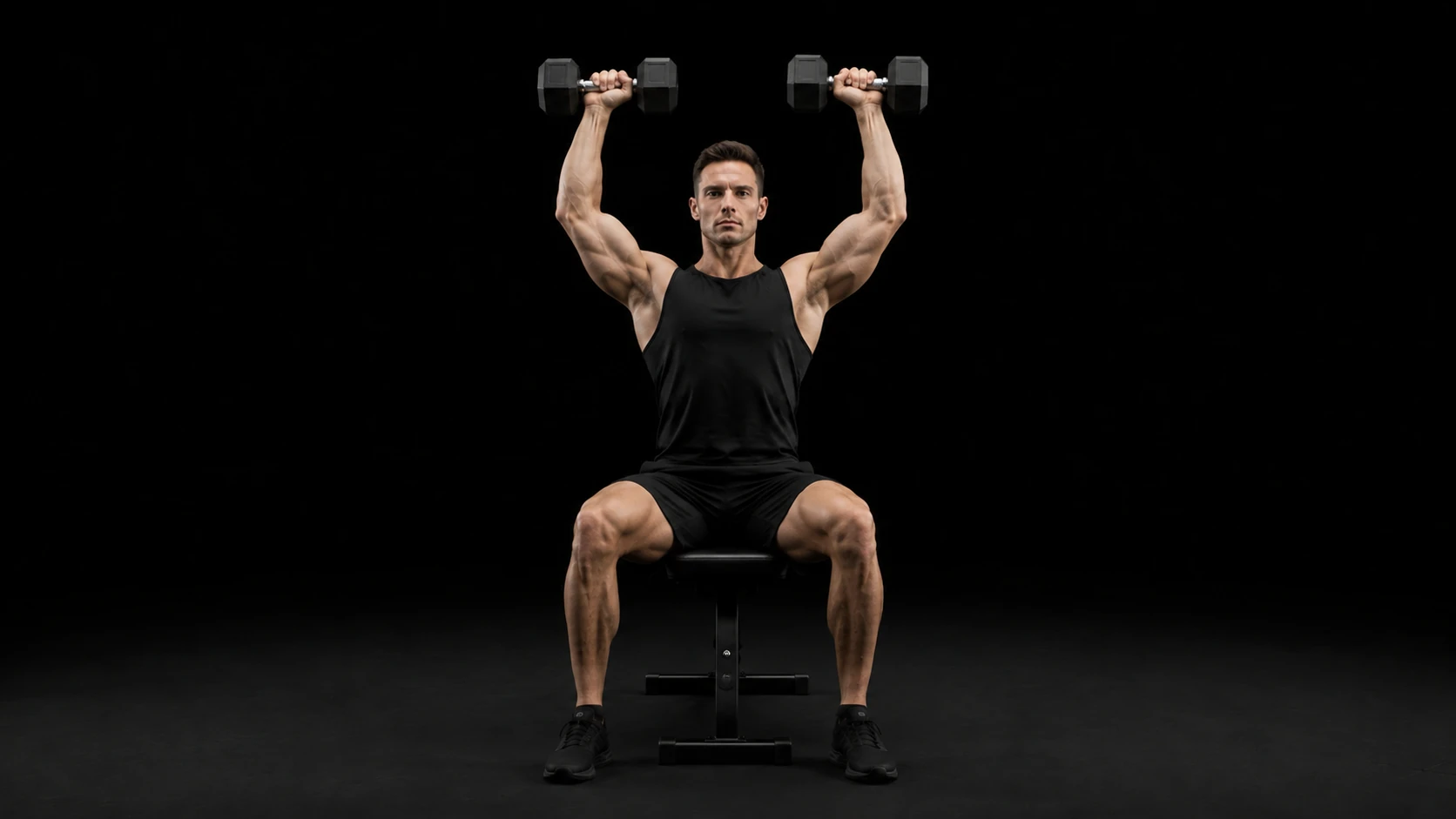
- Seated dumbbell shoulder press — Take the legs out when you want strict shoulder work.
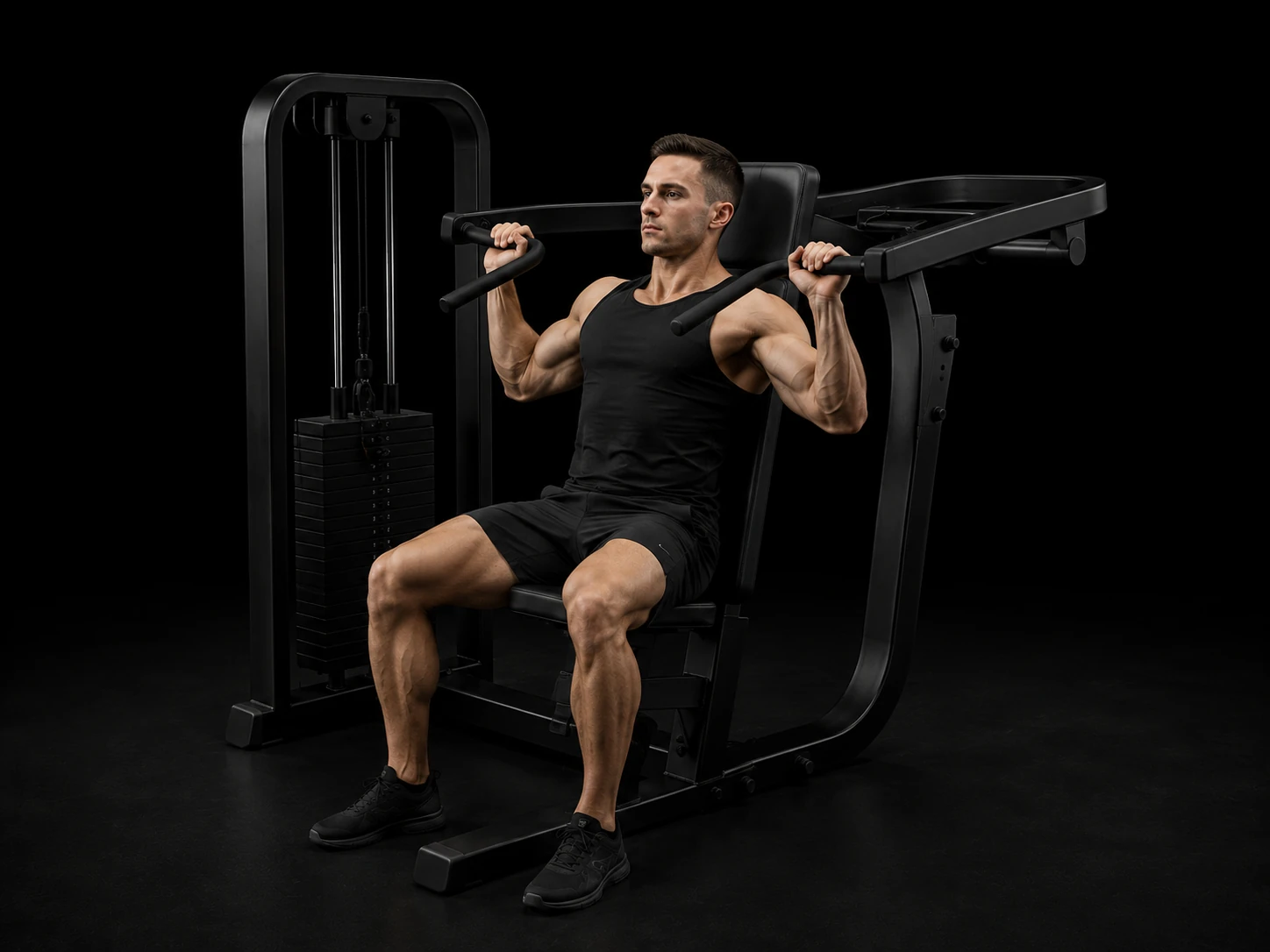
- Machine shoulder press — Volume without a dip or a dumped bar.
PROGRESSIONS
- Own a strict standing press with the same grip and setup.
- Light push press focusing on a vertical dip and a floating bar, not on load.
- Build triples and fives that still lock out over the midfoot.
- Use it to overload the strict press, not to replace it forever.
PROGRAMMING NOTES
Push press is a power lift and an overhead-overload tool. Three to five sets of 2–5, full rest — three minutes is normal, and the LIFTAG timer is there so you do not turn the last set into a grind. Do not feed these numbers into a strict estimated 1RM. If you use it as conditioning, log the rest you actually took so next week is not a surprise.
EQUIPMENT ALTERNATIVES
- Standing barbell overhead press — When the goal is strict strength, not drive.
- Landmine press — A drive you can do one arm at a time if the bar bothers a shoulder.
FREQUENTLY ASKED QUESTIONS
No. The legs contribute a lot. A push-press estimated 1RM in LIFTAG will overshoot a strict attempt. Use the strict slug to pick strict loads, and keep this one for the dip-drive work.