HOW TO DO STANDING CABLE CROSSOVER
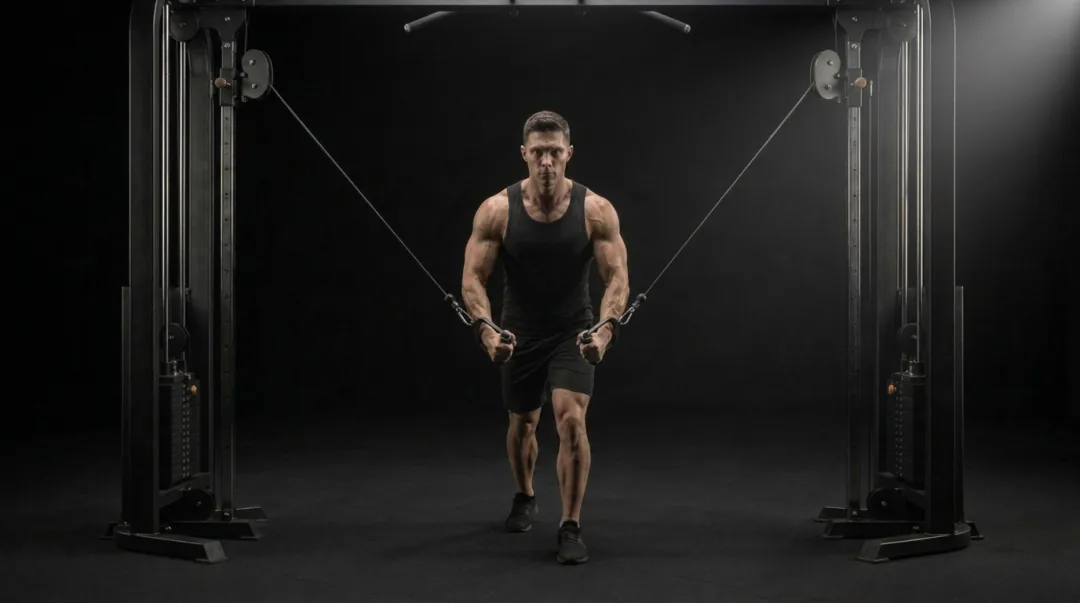
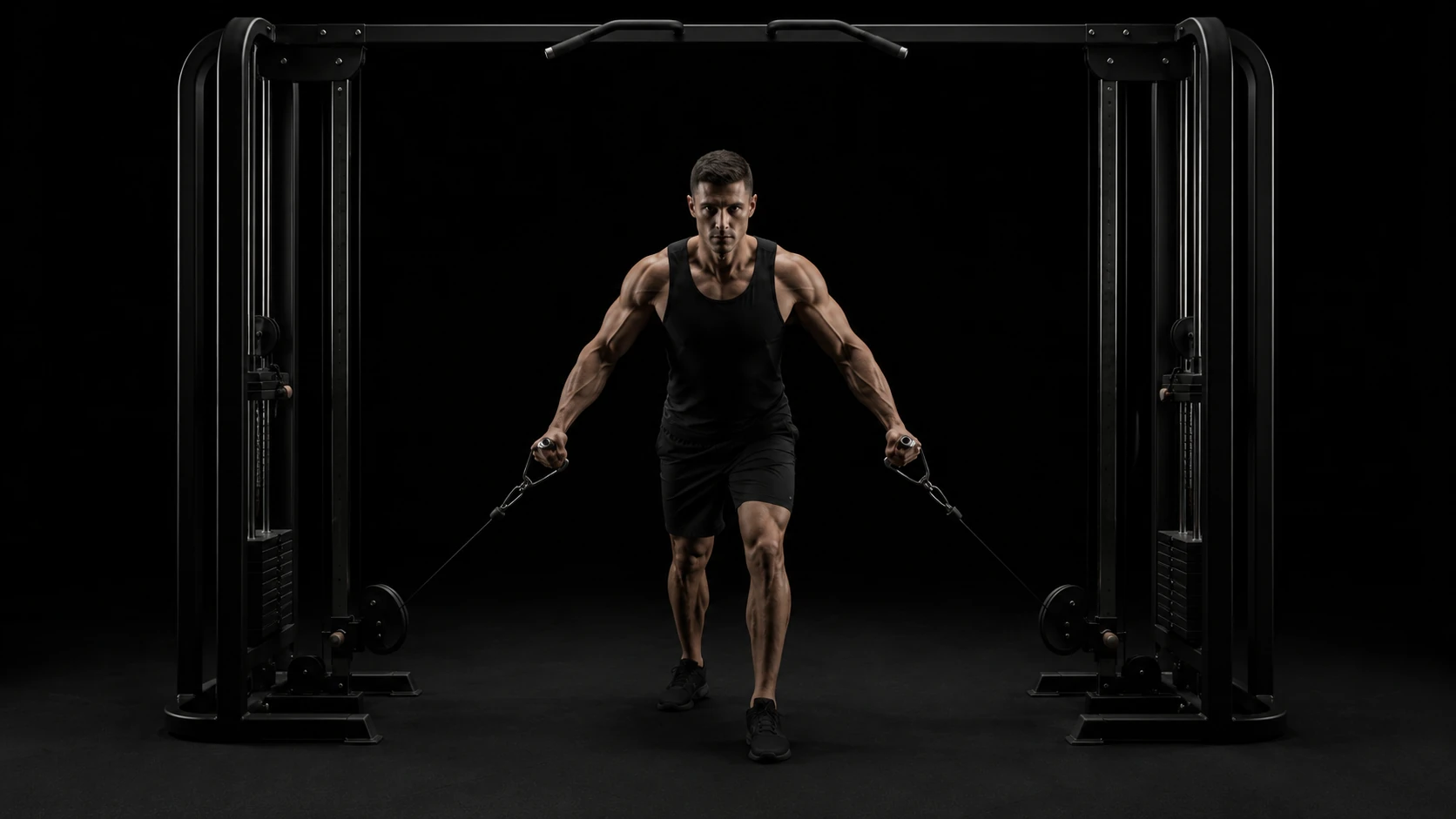
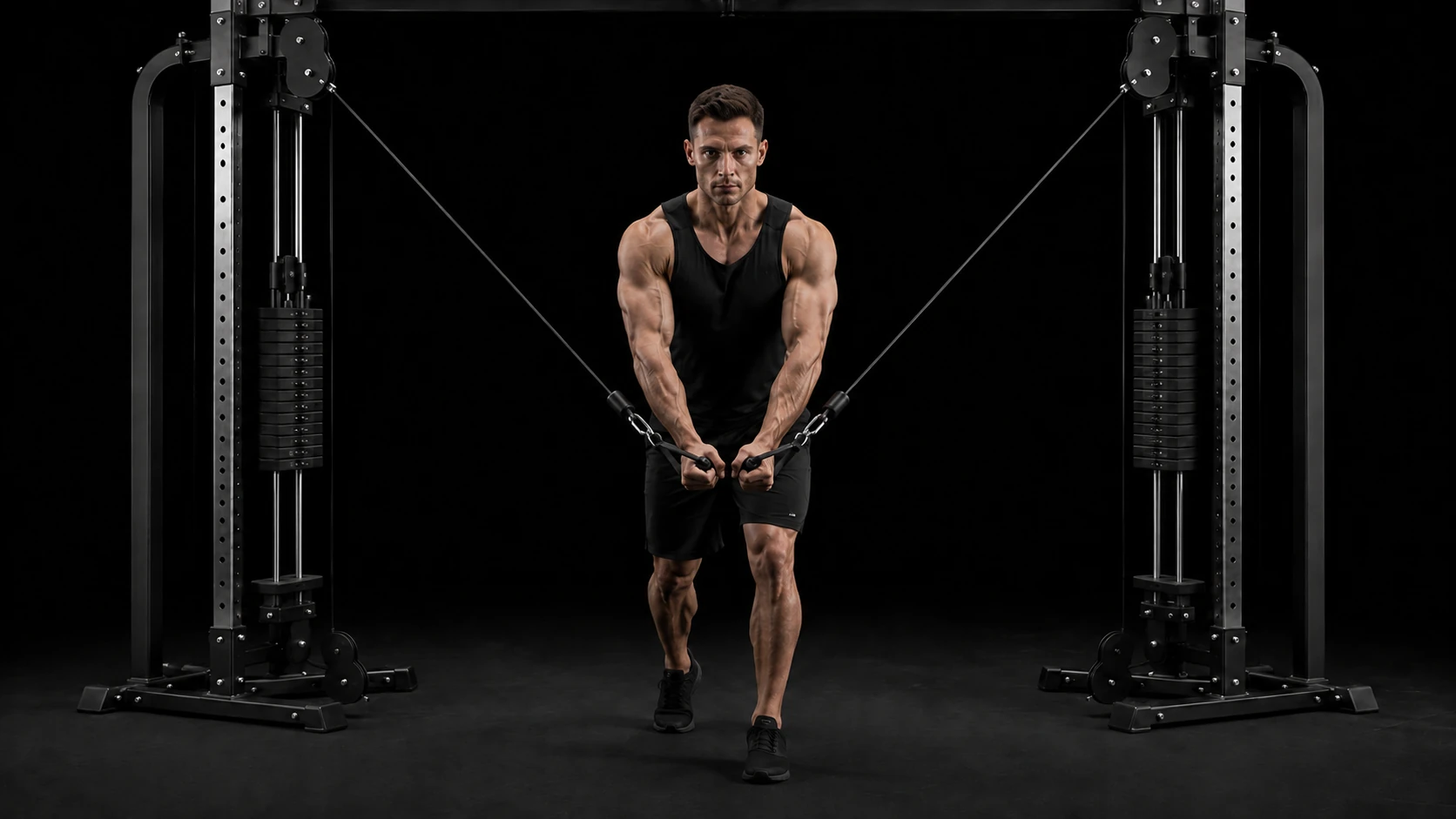
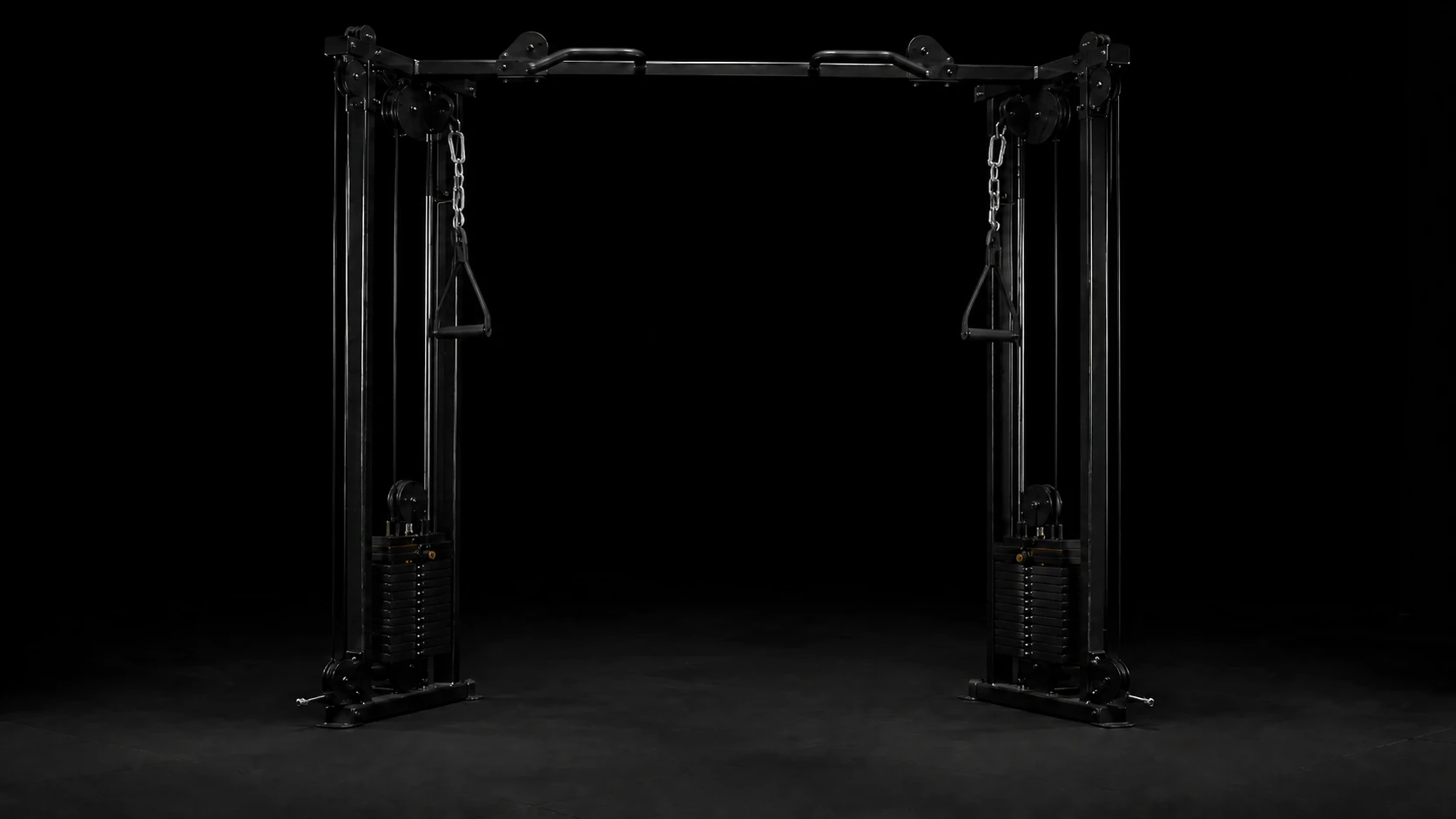
- Set both pulleys above shoulder height, take a handle in each hand, and step forward into a split stance with the cables behind you. Soft knees, ribs down.
- Keep a nearly constant elbow bend. Sweep the arms down and in until the hands meet or slightly cross in front of the lower chest.
- A small forward lean is fine. Twisting the torso to finish is not. The stack should still be floating at the stretch.
- Return until you feel a chest stretch, not until the weight yanks the shoulders back. Control the last third.
- If the elbows start to press, you picked a press. Drop the pins and keep the fly.
COMMON MISTAKES
- Pulleys at the hips. Then you are doing a low-to-high fly, which is a different slug and a different line. High pulleys for this lift. Note the hole if you ever run them mid-height.
- Turning it into a standing press. Elbows bending and straightening is a press with cables. Soft, fixed bend. Presses belong on a press log.
- Getting yanked backward at the stretch. That dump is why people hate crossovers. Step in, drop the pin, and own the eccentric. The stretch is the work.
- Logging high-to-low or pec-deck here. High-to-low is a stricter descending finish. Pec-deck is a machine. Keep this slug. Mixing them is how a cable PR appears on a pec-deck day.
VARIATIONS
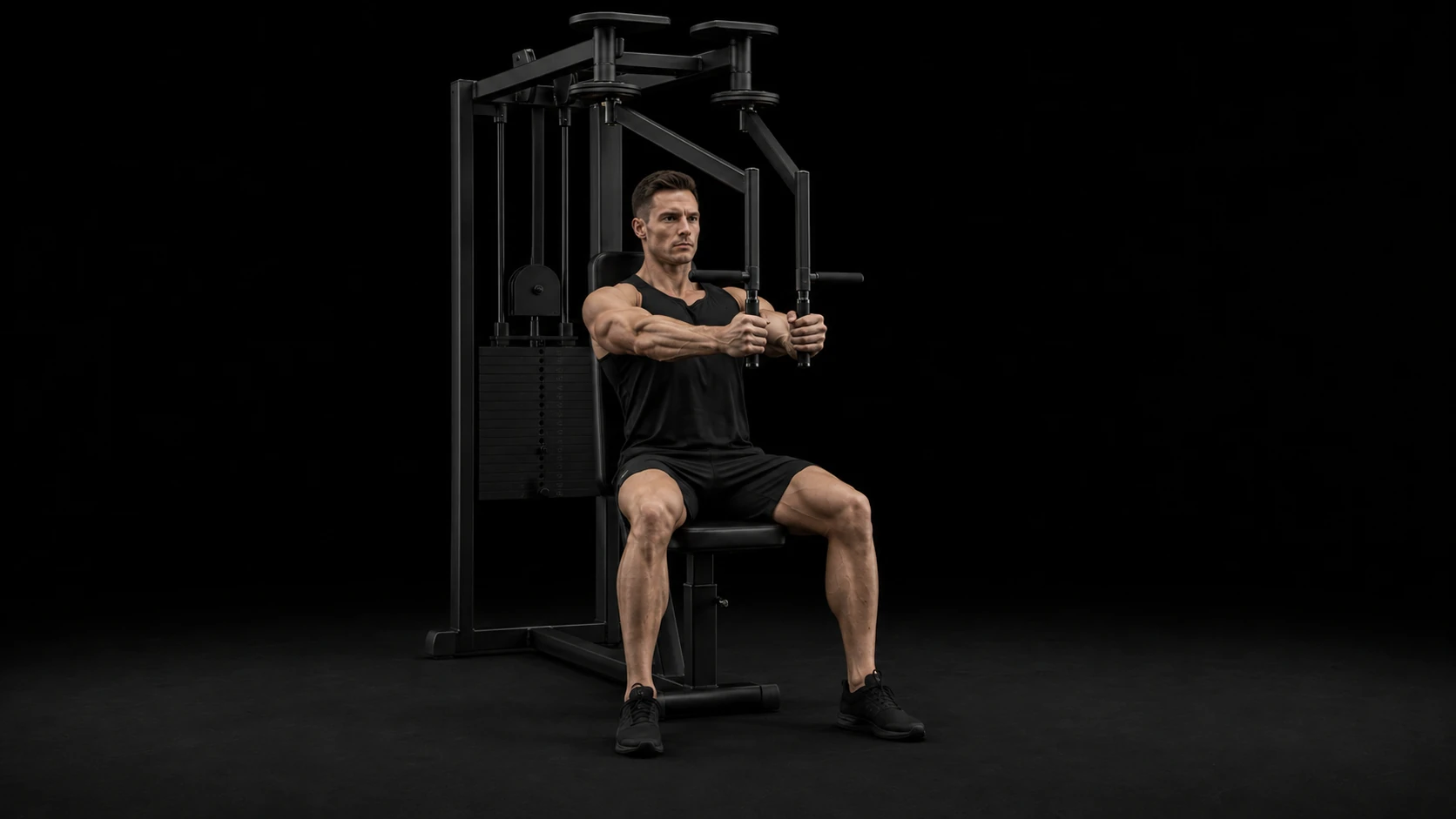
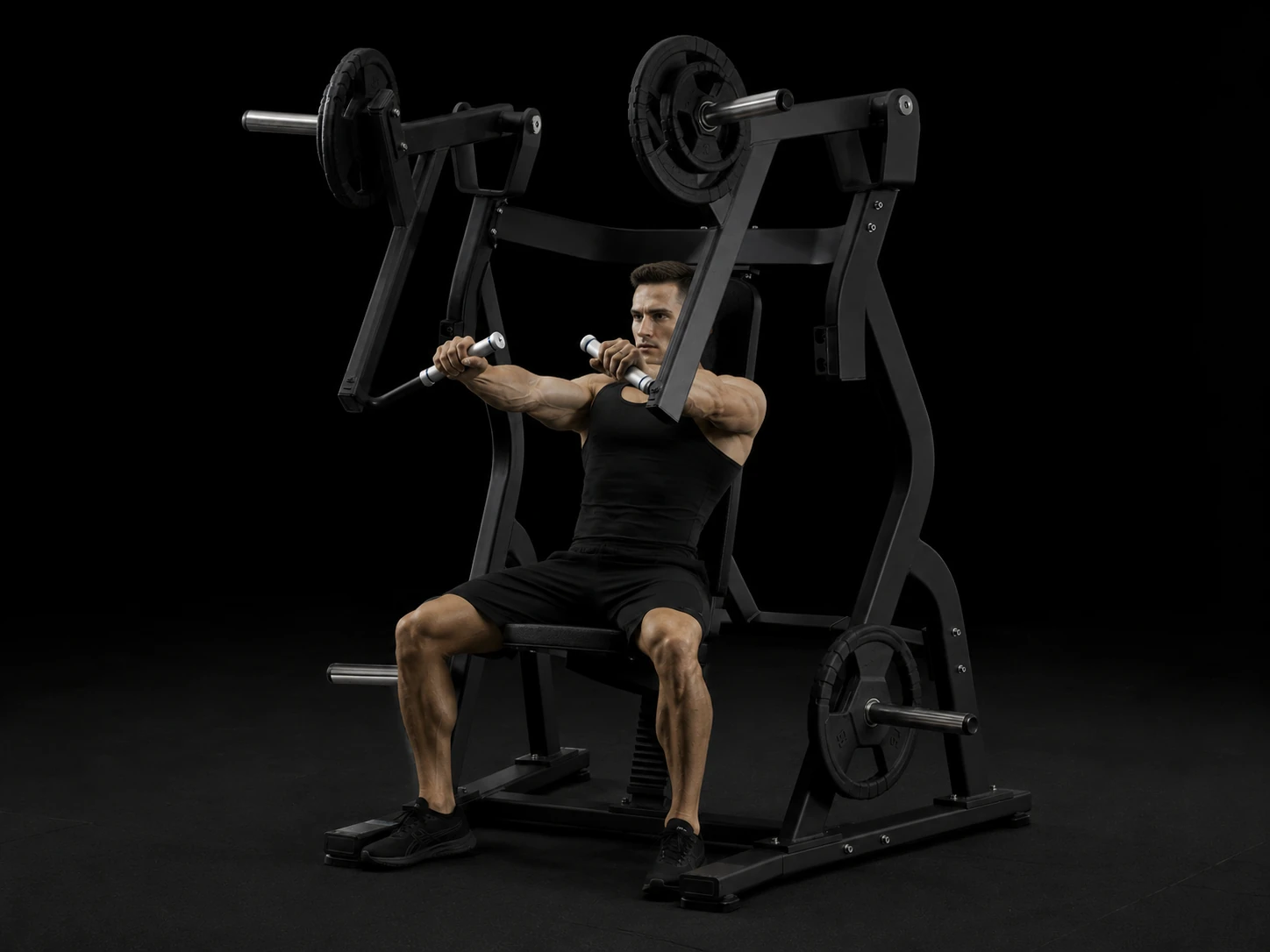
- Pec deck flys — Machine version, less stance to think about.
- High-to-low cable fly — Same high pulleys, more downward finish. Own slug, own chart.
- Low-to-high cable fly — Opposite line, more upper chest. Do not dump it here.
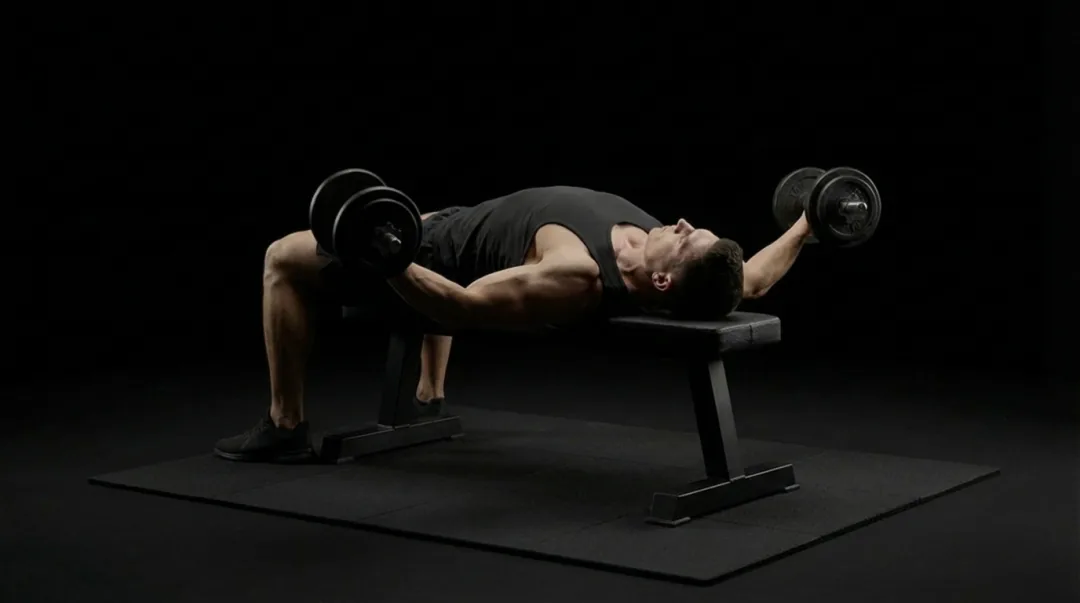
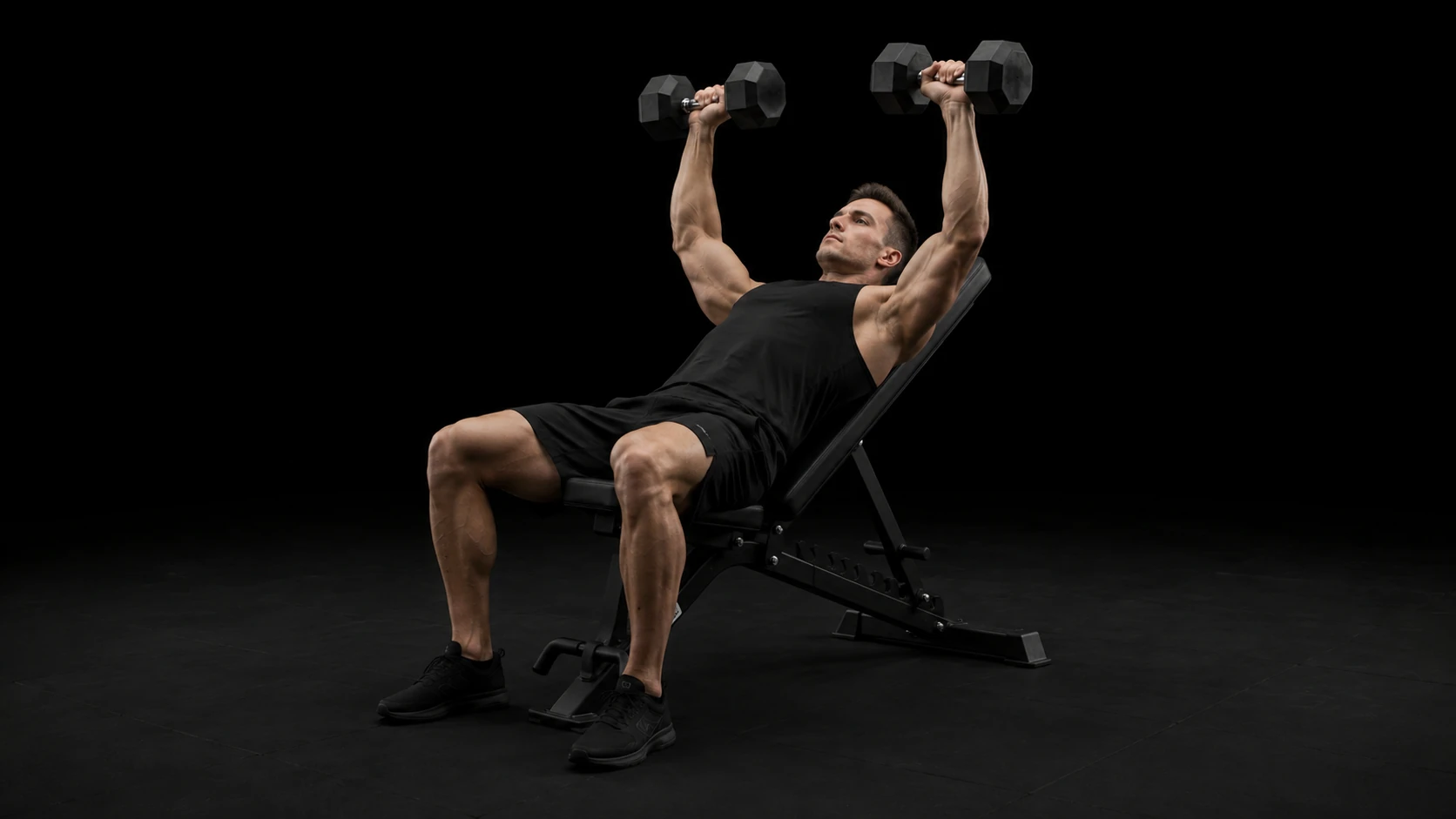
- Flat bench dumbbell fly — Free-weight fly when both cables are taken.
PROGRESSIONS
- Light pins, two-second sweep, two-second return, plates not touching.
- Add load when the torso stays quiet and the elbows stay bent.
- A slight hand cross at the finish if the meet feels empty. Note “cross” vs “meet.”
- Pec-deck if you want the same isolation without a stance to manage.
PROGRAMMING NOTES
Isolation after a press. Two to four sets of 10–15. Log the pin on one stack, not both added, and stay consistent so the chart means something. High-to-low and low-to-high stay on their own slugs even if the station looks the same. Put the pulley hole in a note if the gym’s “high” is not actually high. You do not need a LIFTAG estimated 1RM here. Let the rest timer run. Rushing crossovers just turns them into a standing crunch.
EQUIPMENT ALTERNATIVES
- Pec deck flys — When both cable columns are taken, or you want a pad on the back.
- Flat bench dumbbell fly — Free weights when there is no cable station.
FREQUENTLY ASKED QUESTIONS
Meet is enough. A slight cross can add a squeeze at the finish if the shoulder stays quiet. A big crossover with a torso twist is theater. Pick one, put it in a set note, and keep this slug. Do not start a second lift because you crossed your wrists.